• Hey Guest!
    British Car Forum has been supporting enthusiasts for over 25 years by providing a great place to share our love for British cars. You can support our efforts by upgrading your membership for less than the dues of most car clubs. There are some perks with a member upgrade!

    **Upgrade Now**
    (PS: Upgraded members don't see this banner, nor will you see the Google ads that appear on the site.)

1940 Stearman restoration (moved from Triumph forum so all can enjoy)

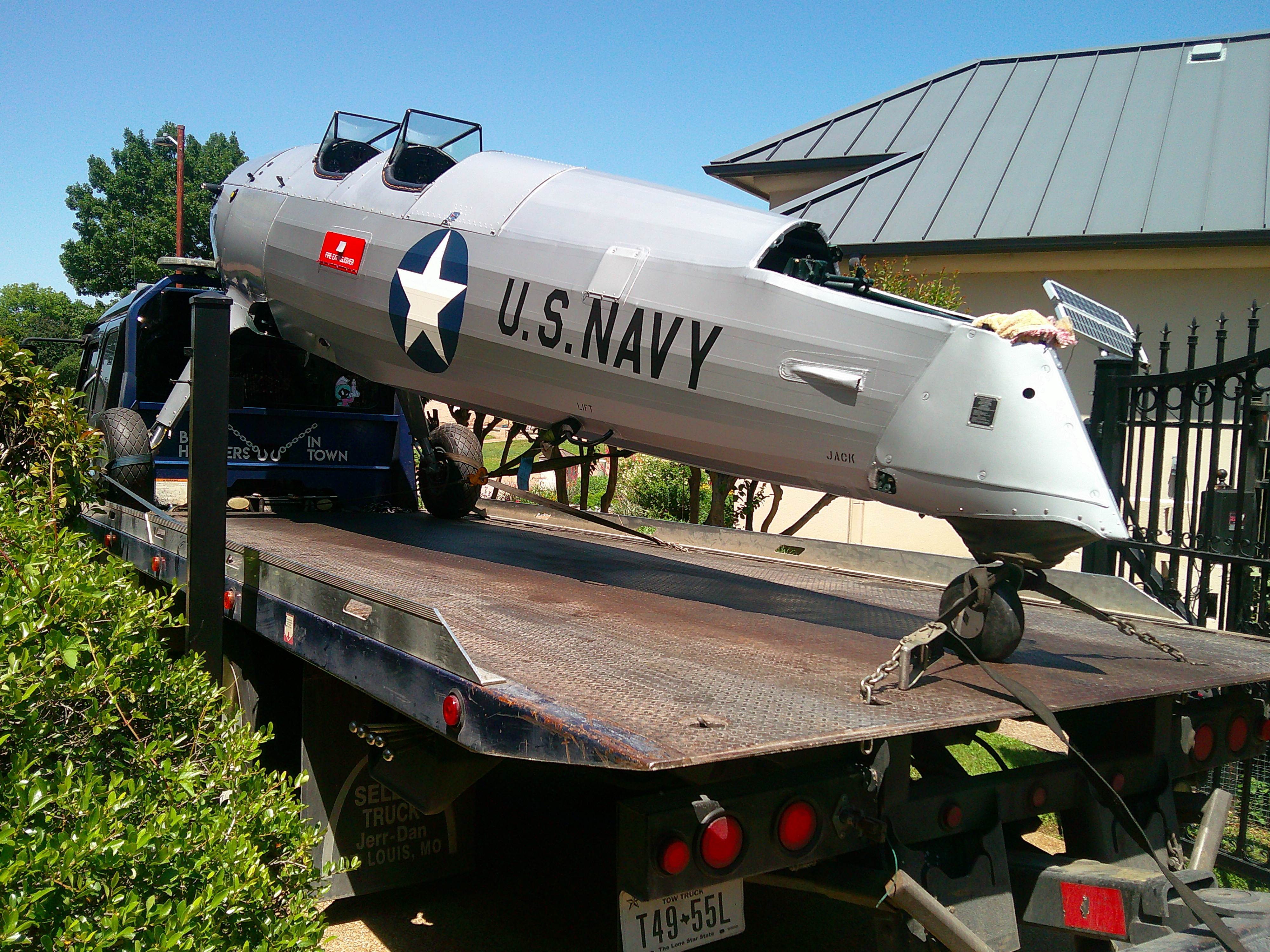
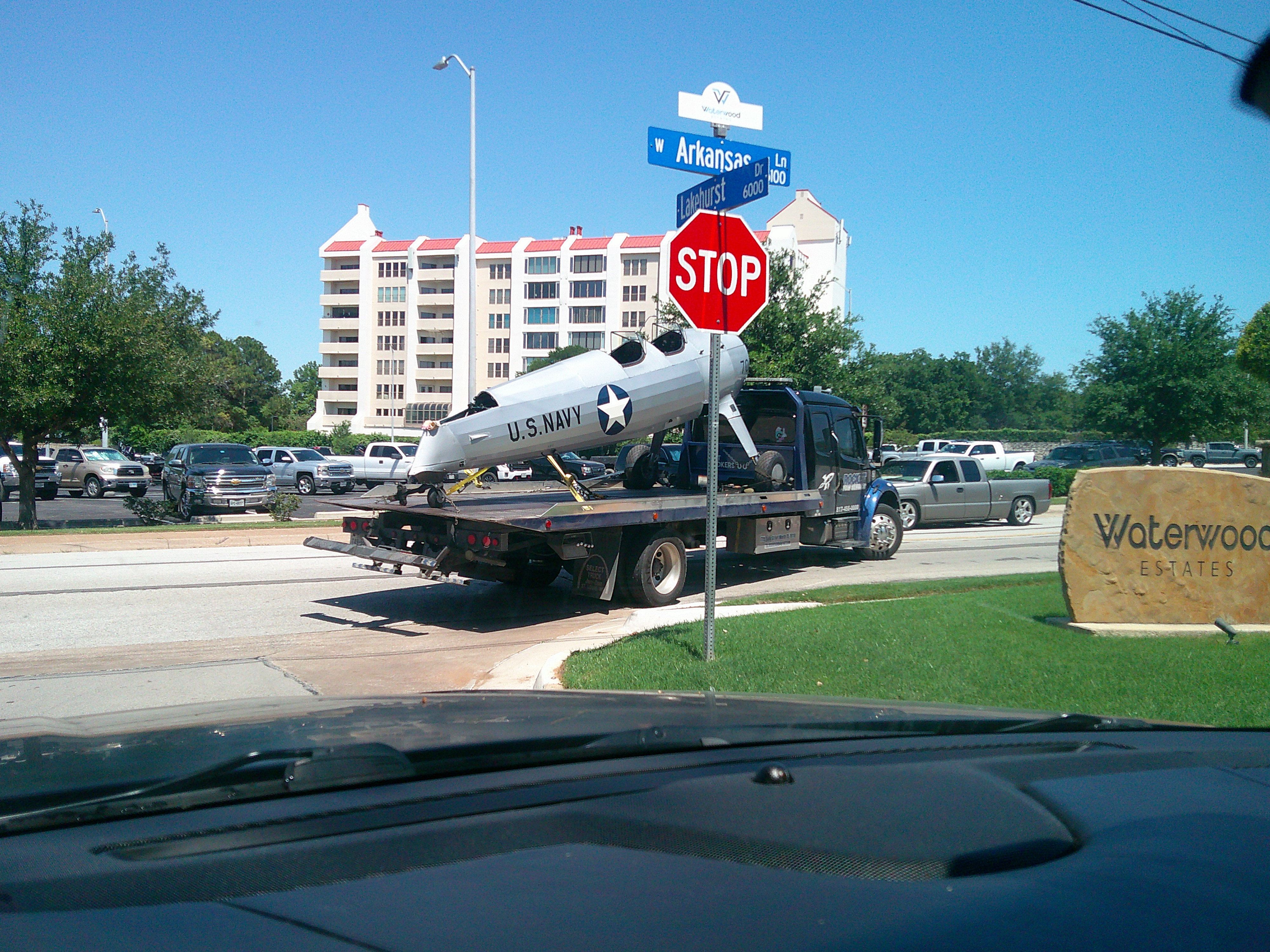
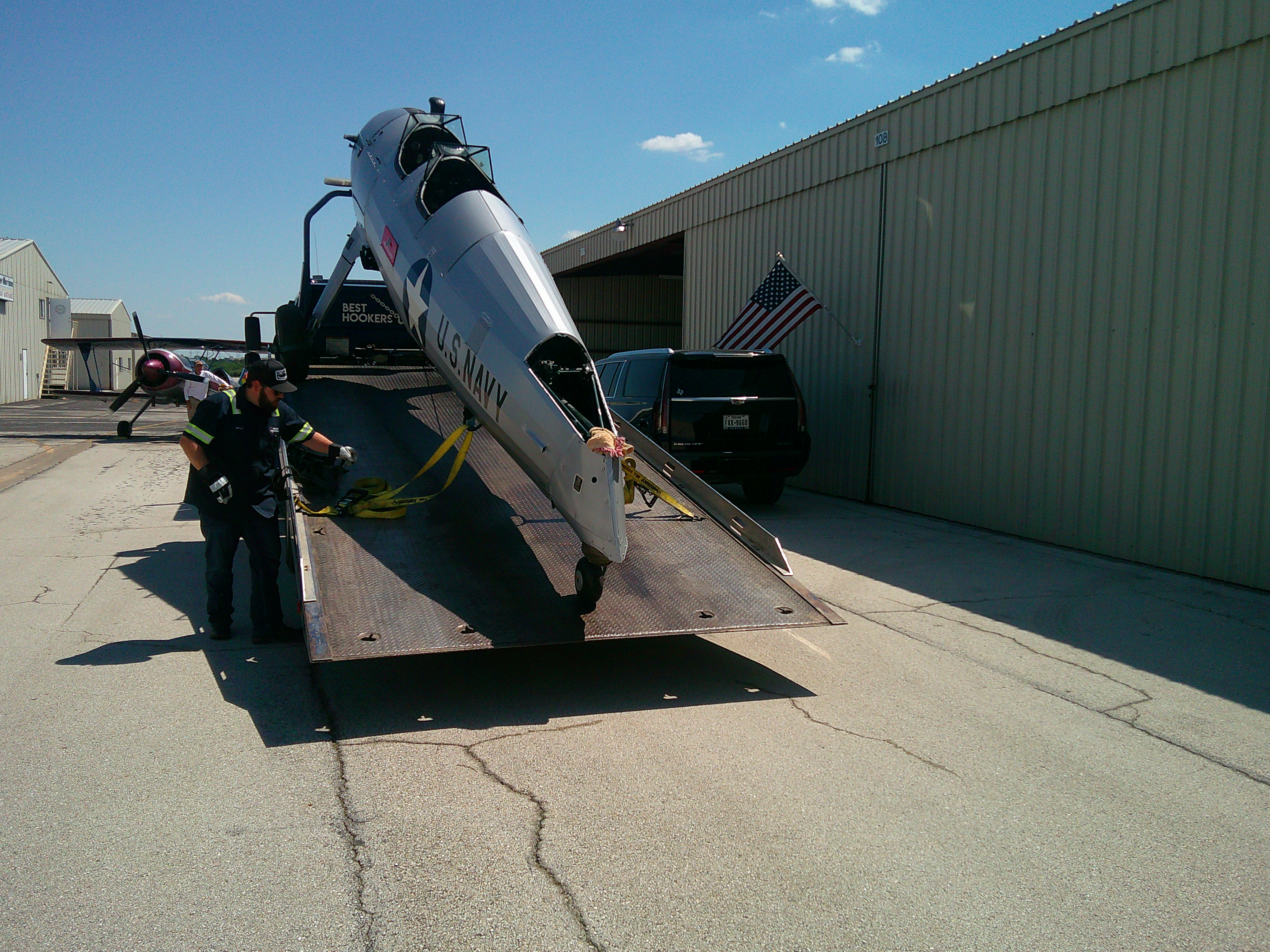
I cleaned up the odds and ends, and yesterday the fuselage went to the hangar. Even though my measurements said it would fit, it was a huge relief to see it tucked into the hangar and still have room for the other plane. Now for a bit of reorganizing and it's on to the engine rebuild...

DSCF0148.JPG


DSCF0152.JPG


DSCF0156.JPG
 
I plan to give plenty of rides!

Started working on the engine. I was bummed with the amount of rust on the parts...but my A&P says it's not enough to worry about. I guess airplane engines sit far more often than most cars between runs and rust is common. I hope. I will still clean everything and make sure I am comfortable before anything goes back in.

What really kills me about these plane engines is the size to horsepower. The TR3 is 2 liters, or about 122 cubic inches and produced about 100 horsepower. This big ole' continental is 670 cubic inches...but only 220 horsepower. I guess the difference is both the rpm range the R670 operates (below 2000rpm) and the fact it operates at 80% or higher power for most of its life?!?


Here is the rear of the engine. With 2 ignition systems (magnetos), 3 oil pumps, pressure regulators and starter....it gets pretty busy.
DSCF0157 (7).JPG


Here is the rear with all the accessories removed. Of interest in this pic are the pushrod tubes (thin tubes) and the intake tubes (the larger ones). Notice the intake tubes come out of the engine block...we'll look closer at this system in a bit...

DSCF0157 (26).JPG


And here the cylinders start coming off. I was not happy with the amount of rust, but my A&P supervisor says it's not enough to be concerned about. "It'll clean up". Notice all the cylinder nuts that must come off. I had to cut some wrenches and weld them into special tools to reach all these nuts. Pulling the cylinders was also a pain. The first took 2 hours with a leather mallet. But then I remembered a trick I read in the 1909 auto maintenance manuals (yes...I actually have a set of manuals that old!) The trick is to feed a rope into the spark plug hole until the cylinder is about 1/3 full of rope. Then turn the crankshaft gently. The rope spreads the force from the connecting rod to prevent damaging the piston or cylinder...then a few taps and the cylinder pops right off!

DSCF0157 (37).JPG


DSCF0157 (39).JPG


This view inside of the cylinder confirms that the engine had very low time before the crash. There is almost no carbon. The book says it only had 2.6 hours on it. What a shame! In plane engines the head and cylinder are made as a single unit.

DSCF0157 (41).JPG
 
Last edited:
Here's one of the big pistons...5-1/8" across! When my A&P saw the pic he commented on all the ring gaps being lined up. I would hope they rotated and just happened to be in this position...otherwise the last mechanic was not very conscientious?!? Again, very little wear or carbon.

DSCF0157 (48).JPG


DSCF0157 (59).JPG


As with all engine rebuilds, it is essential to keep the parts marked so they can be returned to the same location.


DSCF0157 (63).JPG


Here are all seven cylinders, stripped down bare. You will notice the number 7 on the lower right has crash damage. I will either need to replace it or attempt to weld it.


DSCF0157 (72).JPG


And the valves confirm little time on the motor...no carbon build-up at all.

DSCF0157 (70).JPG


Next the rear gear box comes apart. This is the rear cover. All the gears are mounted to it...the one in the middle his splined to the rear of the crankshaft to drive that crazy mess. I hope I don't lose these pics when it comes time to put it all back together!?!

DSCF0157 (76).JPG


This is the back of the engine casing. The large gear is actually the inside of the cam wheel. The lifters are all roller lifters, and they ride on 2 cam wheels...one drives the odd cylinders, while the other drives the even. Also of interest is the smooth, round part of the casting. That is the intake manifold! The carb mounts on the bottom, and feeds the circular manifold. Then, tubes lead the mixture to the intake valves.

DSCF0157 (78).JPG


I will continue the teardown. Once all apart, I will have to clean everything, strip the paint, inspect for damage, repair what I can, and make a list of what I cannot fix. So far I am both pleased and disheartened. Fortunately, so far nothing is beyond repair.

More to follow....

 
Last edited:
One thing that radial engines and motorcycle engines (and really, any air cooled engine) have in common is the use of jugs and a crank case rather than the block and head layout most of us here are familiar with.
 
I am amazed at how simple...yet BIG everything is!!

I've been spending about 3 days making special tools for every day of disassembly. Here are some pics of where we are...


To go farther, it was time for some specialty tools. Here is a thrust nut wrench along with a crankshaft wrench. One holds the shaft wile the other either installs or removes the thrust nut.

DSCF0204.JPG


DSCF0209.JPG


This cap is both a propeller thread protector AND provides the crankshaft puller a place to push without damaging the propeller threads. I have to say it amazes me that all that holds the propeller on are those 13 threads!

DSCF0225.JPG


The crankshaft is 2 pieces that bolt together. I'll post pictures later to show how it works. For now, I pulled the back of the crank apart, which allows the main and connector rod assembly to come out. I spoke with Pete in Mississippi (the main R670 guy in the country) about all the corrosion. He says it is typical and not to be worried about. Because the engine sits in the direct airflow with no cowling, it runs very cold. It never gets hot enough to burn off the condensation, so a lot of water remains trapped in the crankcase.
DSCF0243.JPG


This is the rear part of the crank...including the "stretch bolt" that holds it together.

DSCF0245.JPG


And here is the front crankcase with the forward part of the crankshaft.

DSCF0244.JPG
 
This is the crankshaft puller. This specialty tool was a 4 day build. I started looking in my scrap pile and some stainless steel caught my eye...so shiny! So pretty!! I bit on it...big mistake. If you have every machined stainless steel...you know what happened! Stainless has a habit of getting hot, which then hardens it. I mean, like, harder than your cutting tool hard. Stainless machining must be done perfectly as far as tools and speeds used. I forgot about this, and obviously lost my mind, as, who needs a shiny stainless tool that will only be used once?!? After breaking 3 drill bits and 4 end mills (not cheap)...I threw the stainless steel in the garbage and switched to mild steel, which I should have used to start with!!

DSCF0254.JPG


DSCF0255.JPG


And, a short 15 minutes after the 4 day build...the front crank pops out. Notice how all the small parts are organized on a rack, so they can go back exactly as they came out.
DSCF0256.JPG


This is the front thrust bearing, in it's own little chamber. I don't know about you guys, but I wonder how so much crud built up in 2.6 hours since rebuild?!?
DSCF0262.JPG


I now have to build a tool to take apart the rod assembly...and a rack to measure the runout on the crankshaft (very important for an engine that crashed). More to come...


Cheers,

John
 
I love the tools you've made. You show a high level of workmanship in their execution.
 
I have not been on this site for years! Just now doing some catch up and thought you might like the attached. If you ever get back this way this place is seriously worth a visit. They are doing a fly in June 16th but I'm thinking you won't be ready for that. I will be there.


If you come through SW Oklahoma hit me up.
 
What brought me back is I have been trying to find the thread you (CJD) did on your TR-2 restoration. I hope to be soon (this winter?) getting back on my TR-3. That is the best.tutorial.I have ever seen.

Thanks,

Bill
 
Thanks, Walter. Hill, not this year, but next year I plan to barn storm the old girl across the country to see some areas where I have never been!
We enjoyed visiting Waco Field, south of Dayton, Ohio. Neat museum. And there's the Liberty Aviation Museum in Port Clinton, Ohio. They're restoring a Ford Tri-Motor and a PT boat. Have a second Tri-Motor that one can ride.
 
Thanks again, guys!

Bill, most of the TR2 are on these 2 threads. Photobucket is holding the pictures hostage...sometimes they show, but with watermarks, and others they delete them. Unfortunate. If you have any questions, I do have all the pictures I can send you directly if need be. There are a few other threads, like tranny, engine, and upholstery that I can direct you to when you get to those stages.

This is the assembly thread, once all your parts are ready to go on: > TR2/3/3A - Recipe for a TR2 <

Then, this is the bodywork thread: > TR2/3/3A - Beginning the TR2 Bodywork <

Bob, I'll have to check out that museum! I just watched a video on PT boats. Although they made thousands during the war, apparently they were all scrapped and burned, so only 4 or 5 still exist. Very sad how much history is lost!
 
I just watched a video on PT boats.
As a boy growing up in Brooklyn we would see one now and then in the Great South Bay, cir. 1955.
We rarely got to see it on the bay run in anger but when we did it was a thing of beauty.
 
Back
Top