• Hey Guest!
    British Car Forum has been supporting enthusiasts for over 25 years by providing a great place to share our love for British cars. You can support our efforts by upgrading your membership for less than the dues of most car clubs. There are some perks with a member upgrade!

    **Upgrade Now**
    (PS: Upgraded members don't see this banner, nor will you see the Google ads that appear on the site.)
Tips
Tips

Crypty's front hubs-advice needed

T

Tinster

Guest
Guest
Offline
Crypty's front hubs:

The front wheels wobble pretty good on Crypty.
Instead of ordering 2 TRF new hubs, I took the advice
of some mechanical gurus here and got up early today;
pulled one wheel for a closer inspect and to tighten
some castle nut as instructed.

Tinster being Tinster, I had to see what was underneath
that castle nut. I found a set of tapered roller bearings,
dry as a bone with no grease present. What the heck-
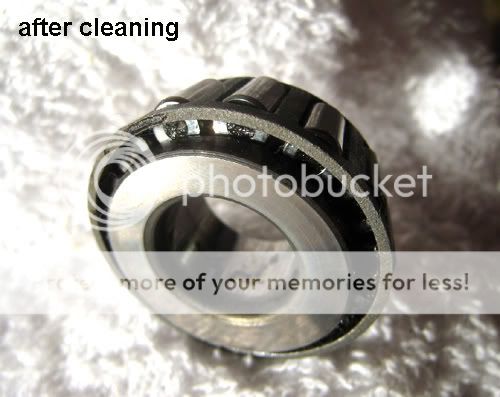
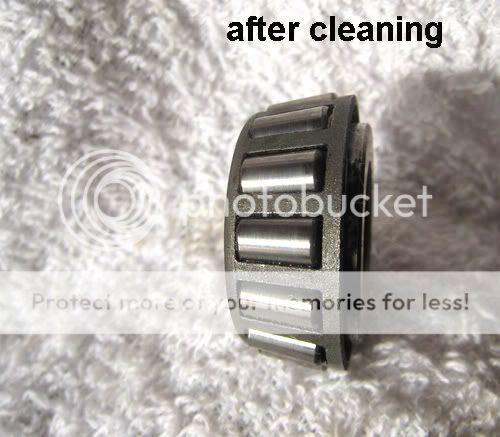
I pulled the bearings out to inspect and clean them.

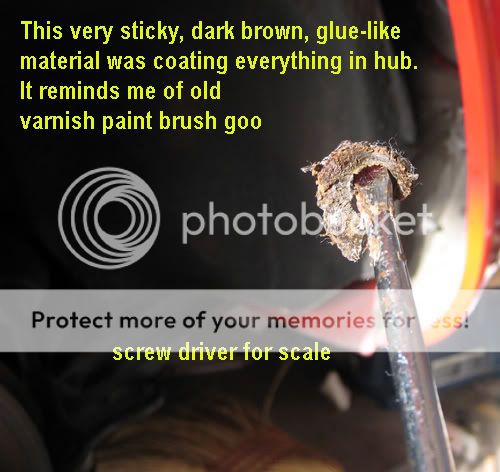
Wow! They hardly rotated due to some hard, brown, glue
like substance covering everything.

I cleaned out the brown goo and the bearings rotated very
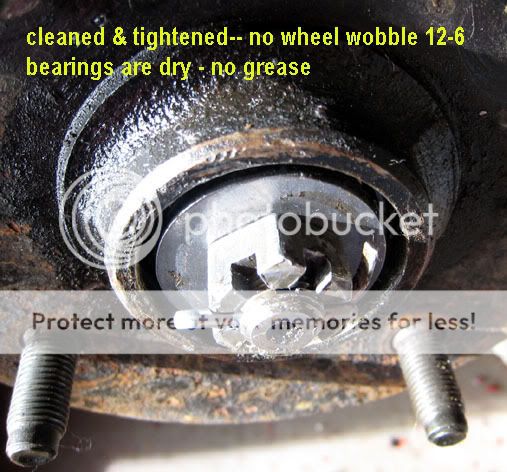
smoothly. I put them back in (dry for now) tightened the
castle nut as per Bentley and stuck in a new cotter pin.

Mounted the wheel and COOL!!! No wheel wobble at 12 and 6.

Now what do I do? How do these bearings look? I think the
castle nut is missing a cap or something to fill with a
supply of grease. I could probe back to the inner bearing
set and it was dry also.

Here's some photos- All advice appreciated /bcforum/images/%%GRAEMLIN_URL%%/yesnod.gif
front1.jpg


bearing1.jpg


bearing2.jpg


goo.jpg


final.jpg
 
Hate to tell you this, but the bearings inside and outside should come out and be packed with grease. What you cleaned out was old dried up grease.
An easy way to pack a bearing with grease is to put a blob of grease on your palm and bump the end of the bearing into the grease and your hand. Once grease comes through to the other side, that section is done but continue on around until you have grease in all the rollers.
The inside bearings will have to be removed. You should get new bearing races since the old are usually damaged during removal.
There are also bearing packing tools that work well, but this method is easy and thorough.
There should be a washer directly underneath the castle nut. If they are not there, I would order them.
 
Bearings look fine.. You should never assemble without at least putting some oil on them.

Pull inner and outer bearings and inspect the races (They are pressed into the hubs and they are what the bearings ride on). If they look pretty smooth and are not grooved you could probably grease up the bearings and everything would be ok.

To get to the inner bearing you need to remove the hub seal with a seal puller or a screw driver. If you are careful you might be able to reuse it but it is best to replace.

Get some wheel bearing grease and and pack those bearings.. Any kind will work for Crypty..
 
DO NOT DRIVE THE CAR WITH "DRY" WHEEL BEARINGS.

Well, some good luck has come to your car. The wheel bearings MUST have a liberal supply of special wheel bearing grease. And, wheel-bearing grease is not expensive! Roughly, there is grease for non disk brakes and grease for wheel bearing used with disk brakes. Usually found any automotive supply place.

You have done the hardest part of cleaning up the bearings and if your careful inspection did not reveal any imperfections on the outer race and none on the roller bearings, the bearings are ok (you can not see the inter race on the roller bearing but if the rollers are ok, it usually means the race is too). The bearings have to be greased a special way to insure plenty of grease is all though the bearing; NOT JUST SMEARED ON THE SURFACE. Yes, you will need a dust cap too but you can test things out w/o one. You will likely need a "seal" too. The seal is not expense either. The seal fits on the backside of the hub (the side that would face the motor or center of the car). With a little good luck, it keeps the grease inside the hub. BTW, there are 2 roller bearings and 2 races in each hub. They are usually referred to as inter and outer bearings. Be sure you check out both of them.

Refer to a reference book for the correct way to tighten the big nut that holds it all together. Ever model car is different and the torque is very, very important.
 
vettedog72 said:
DO NOT DRIVE THE CAR WITH "DRY" WHEEL BEARINGS.

Well, some good luck has come to your car. The wheel bearings MUST have a liberal supply of special wheel bearing grease. And, wheel-bearing grease is not expensive! Roughly, there is grease for non disk brakes and grease for wheel bearing used with disk brakes. Usually found any automotive supply place.

You have done the hardest part of cleaning up the bearings and if your careful inspection did not reveal any imperfections on the outer race and none on the roller bearings, the bearings are ok (you can not see the inter race on the roller bearing but if the rollers are ok, it usually means the race is too). The bearings have to be greased a special way to insure plenty of grease is all though the bearing; NOT JUST SMEARED ON THE SURFACE. Yes, you will need a dust cap too but you can test things out w/o one. You will likely need a "seal" too. The seal is not expense either. The seal fits on the backside of the hub (the side that would face the motor or center of the car). With a little good luck, it keeps the grease inside the hub. BTW, there are 2 roller bearings and 2 races in each hub. They are usually referred to as inter and outer bearings. Be sure you check out both of them.

Refer to a reference book for the correct way to tighten the big nut that holds it all together. Ever model car is different and the torque is very, very important.

The seal Vettedog's refering to is a piece of fabric mounted in a piece of stamped aluminum. The last few I've gotten have been way too thick, making the wheel bind when you torque the wheel. Keep the old seal until you're sure the new one works...it'll be better than nothing and get you on the road.
Good luck ,... Bob
 
Why fool around. The cost of the bearings and races isn't that bad and replacing them will allow you to not worry about them.
Just my 2 cents worth.
 
"The cost of the bearings and races isn't that bad"

I guess it's how you look at it.

My cost for a new clutch throwout bearing was not too bad.
The $600. to install it on the fork of the cross shaft was
kinda costly.

I have been told to let the professionals change out the
TR6 wheel bearings, if they need to be changed. I am
not convinced the front wheel bearings are shot.

I already have the can of disk brake bearing grease.
I'll get so grease on the rollers, if nothing else.

d
 
Dale one of the 1st things I did on my TR6 was to change out all the wheel bearing reguardless of weather the looked bad or not. not to mention peace of mind! /bcforum/images/%%GRAEMLIN_URL%%/angel.gif
Consider the fact that they are over 30+ years old, its time!
not costley & good experience...
It's a very simple job, that you could do yourself.
 
Dale,
Have you looked at the inner bearings yet? Most likely will look like those outer bearings you had to clean up. I agree that the bearings should be changed. Not a hard job at all. Took me about 2 hours on my TR4.
 
Ok- I'm game since I've personally tackled just
about everything else on this car.

But if I need to purchase $$ hundreds of dollars
in specialty tools like arbor presses, hydraulic
presses, pullers, etc - I'm better off purchashing
the two entire units from TRF for $240 total plus
shipping of maybe $75.

So......... who can provide me a detailed, step by
nut and bolt step how to accomplish this task?

But first things first. What speciality tools must I purchase?

d
 
On the tool front, I think you may actually be able to rent those from Auto Zone, Pep Boys, etc. I know I have been in the store and saw signs posted about tool rental available. I have also found that sometimes a tool may be on the pricey side and you may only use it a handful of times, but those times when you need it and it IS in your tool box, it's priceless. One of my mottos is "It's better to have it and not need it than to need it and not have it." Now if I can only get my wife to believe that about another LBC in the garage!
 
Dale, the most exotic tools you will need to accomplish this will be a hammer and drift.
Your manual should give clear instructions on doing wheel bearings. It'll take about an hour per side.
Jeff
 
I didn't see it in the pics, but I think there should also be a stamped metal cup/cap covering the castle nut?
 
Dale, yes, you definitely need to get dust caps for the hubs. Otherwise some of that fine Puerto Rican sand will find its way inside.
Jeff
 
If the TR6 hubs are the same as the TR4 then look at a recent thread where I asked similar questions to remind myself on this. It is currently at https://www.britishcarforum.com/bcforum/ubbthreads.php/ubb/showflat/Number/310897/page/13#Post310897

Hammer and drift to remove the inner races see TR3Drivers (Randall) response re the slots. When you clean the hub you will find them. Then just tap each side evenly and they should come out nicely. When refitting I used a socket that fitted nicely over the new race, without being too big, and gently tapped them back in. Make sure that they seat all the way down.

Pack with plenty of grease as mentioned and make sure that you torque the castle nut down properly; you don't want it too tight (early bearing failure) or too loose (like it recently was).
 
The front wheel bearings are easy, no special tools required. Hammer (2-3 pounds), long punch/drift, pliers & screwdriver/pry bar will do for the bearings. You'll also need a jack, jack stands, and a lug wrench to get the wheels off; plus a suitable wrench or socket+ratchet to remove the brake caliper. A felt-tip permanent marker (Sharpie) is handy, too.

You'll want new bearings, new dust seals, new dust caps and new cotter pins. Plus anything that is missing or damaged, like the special washers between the castellated nuts and outermost bearing race and possibly the nuts themselves. I also used two short #10 flat head screws & nuts to block off the hole in the dust cap.

Loosen the lug nuts on both wheels by 1/2 turn or so, then jack the car up and secure it on the stands. Since TR frames are kind of flexible, I don't like to jack just one corner; so I'd suggest lifting the entire front end. Finish removing the wheels.

Remove the two bolts for the brake caliper, and collect the shims (if any) from the mount. Don't disconnect the hydraulic line to the caliper, just tie the caliper up with wire so it doesn't strain the line.

Pry off the dust cap. The book says you can jack it off with a screw through the hole, but it's never worked for me even on brand new caps. If your old cap doesn't have a lip to pry on, you may have to drive the screwdriver into it to pry it off.

Remove the cotter pin and nut, collect the washer and bearing cone. (You may have to wiggle the hub to get the washer & cone to pop out.) Pull the hub off the stub axle.

Tap the inner cone out, driving the dust seal with it. Now tap both races out, working through the center of the hub with the punch & hammer. Just tap, tap, tap; moving back and forth. If the race gets cocked in the bore, it won't move until you tap on the other side to straighten it out, so you don't want to use any heavy blows here (which can damage the hub).

Clean the hub thoroughly, and look for cracks or damage. Tap the new outer races into place, using the same light taps and switching back and forth that you used to get them out.

Different books give different procedures from this point; but here is what I recommend (found in at least one book, but I don't recall which one offhand).

Set the inner cone into the hub, and slide both of them onto the stub axle (without the dust seal at this point), and add the outer cone, washer and nut. Tighten the nut until the bearing binds (to make sure the races are seated), then back off and only tighten the nut until the bearing just barely drags. Use the felt-tip marker (or whatever means you have handy, a scribe will do) to make witness marks on both the end of the stub axle and the nut, so you can put it back in the same place later. Also note how many threads are exposed.

Now remove the nut, washer, outer cone, hub and inner cone. Go wash your hands with soap and water, because they need to be scrupulously clean for packing wheel bearings.

Pack the inner cone thoroughly with grease, working it through the rollers until it oozes out on all sides. This is something of a skill in itself, you basically put a blob of grease in your hand and use the edge of the roller separator on the bearing cone as a scoop to scrape it off your hand. Repeat, working your way around the cone, until it comes out everywhere. Also give a generous coat to the race. Set the cone into the race.

Lots of people like to (partially) pack the hub with grease, and some books recommend it as well; but IMO it's just a waste of grease.

Put the dust seal onto the stub axle & spigot, with the felt towards the vertical link. Slide the hub onto the stub axle, and give the outer race a generous coat of grease. Pack the outer cone same as the inner cone, then install it, the washer and the nut.

Tighten the nut to where it was before. The hub will come tight sooner than it did before, because of the dust seal. Now back off 1/2 flat, plus as far as it takes to get the holes to line up (no more than one additional flat).

Insert the new cotter pin, bend it over, tap the dust cap into place. Reinstall the brake caliper, putting those pesky shims back, and reinstall the wheel.

Repeat for the other side, then lower the car to the ground and finish torquing the lug nuts to 50 ftlb.
 
Tinster said:
I am
not convinced the front wheel bearings are shot.
Although normally very reliable, this is one of those areas where you do NOT want to have a failure.

Problem is, you have to remove the dust seal in order to clean and lubricate the inner bearing (or inspect it). Because of that, some people will only service the outer bearing. (And Pedro sounds like that sort of person.)

When inspecting the bearings, the main thing to look at is the race where the rollers ride on it. If you can see any difference between where the rollers run, and where they don't touch, then IMO it's time to replace the bearing. Even just a matte appearance rather than shiny means the bearing is on it's way out. It may have thousands of miles left in it; but it might only have 100; and a bearing failure can be quite expensive.

BTW, TRF sells a kit with quality Timken bearings and all the other parts, RFK1443. Not cheap, but Timken are the best bearings and will last a long time, IMO. And it's currently on sale.
 
Good news!

They have been replaced!

The number of rollers shows that someone, sometime in the past has replaced them with the more modern SKF/Nice/Timken bearings. More rollers.

Basic agreement with following the others, Remove the seal, pop out the inner bearing, clean like you did the outer, clean the hub between the two races, Check the inner races with a flashlight. Take the seal down to a good parts store or a bearing supply house and get modern rubber lip equivalent. That way you do NOT have to worry about the felt thickness, soaking with oil, felt coming loose, etc.

If the races are good, It's just a straight simple bearing repack. Pack the bearings, put a tablespoon of grease between the two races in the hub, with the inner bearing packed put in the hub, install the bearing, put the hub on the spindle, put the packed outer bearing in the hub, washer and nut on, as you are slowly turning the hub, tighten the nut until it won't tighten any further, and the hub starts dragging. Back the nut of one hole to insert the cotter pin, put the grease cap on, with one teaspoon of grease in the cap, mount the wheels and voila!. So, you need seals, might need washers and one or more grease caps.

Looks like Crypt is now Amos, because you've overcome a concern and didn't have to spend a lot of money.
 
Here are the part numbers for Timken bearings for the front wheels. I was able to get them from a local bearing supply store who had them in stock.
Inner bearing 07100S
Inner race 07210X
Inner seal 340823
Outer bearing 03062
Outer race 03162
You need two of each to do both wheels. Total cost for both wheels was CDN$115 in early 2006 which at the time was about US$100. I think TRF charges about $80 a side (plus your shipping costs).

You also need the felt seal as mentioned above (I got mine from TRF).

I also have the rear hub part numbers if anyone wants them.

Cheers,
Martin
 
Back
Top