• Hi Guest!
    If you appreciate British Car Forum and our 25 years of supporting British car enthusiasts with technical and anicdotal information, collected from our thousands of great members, please support us with a low-cost subscription. You can become a supporting member for less than the dues of most car clubs.

    There are some perks with a member upgrade!
    **Upgrade Now**
    (PS: Subscribers don't see this gawd-aweful banner
Tips
Tips

TR2/3/3A Using DOT 5 Brake Fluid On TR3A

Quelch

Member
Offline
Does anyone know if you can use synthetic brake fluid (DOT 5) safely on a Triumph TR3A brake system.
My TR3A has DOT 5 in it which was put in by the previous owner (I am told 5 years ago). The system appears to work Ok but I do have concerns about the long term durability of the seals.
Can anyone advise?
 
Many views if you do a search. I am changing over to DOT 5 today if I get in gear. I'd say good sign previous owner researched what he was doing even if you don't agree.
 
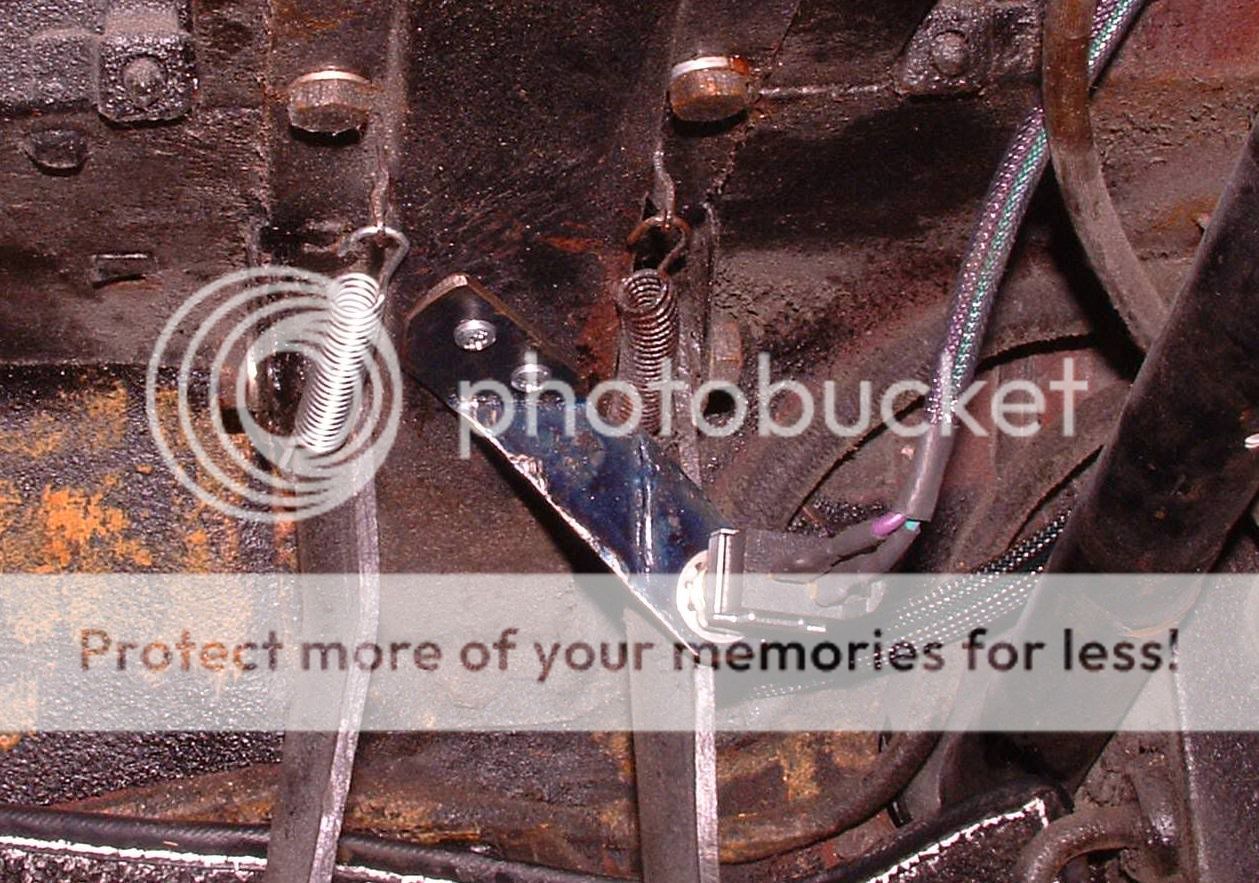
I used DOT 5 in my 3A twenty-one years ago; I flush and replace the fluid every 8-9 years...never a seal problem...It did render my brake switch inoperable so after the 3rd failure I rigged a mechanical switch. Details on the mechanical replacement have been dealt with on other posts. The nice thing about DOT 5; It won't eat your paint if a leak or spill occurs.
 
I've been running DOT 5 in first my TR3A and now my TR3, for a total of something like 20 years. My experience is that the seals last much longer with the DOT 5 than with conventional brake fluid. There is also basically no corrosion of metal components (while conventional fluid becomes rather corrosive in service).

ISTR it was around 1990 when I rebuilt the front calipers on the 3A with new seals & DOT 5. They are still working great today. I thought the bleed screws might be seized as I hadn't touched them since installing the calipers, but when I moved them from the wrecked TR3A to the current TR3, they weren't stuck at all.

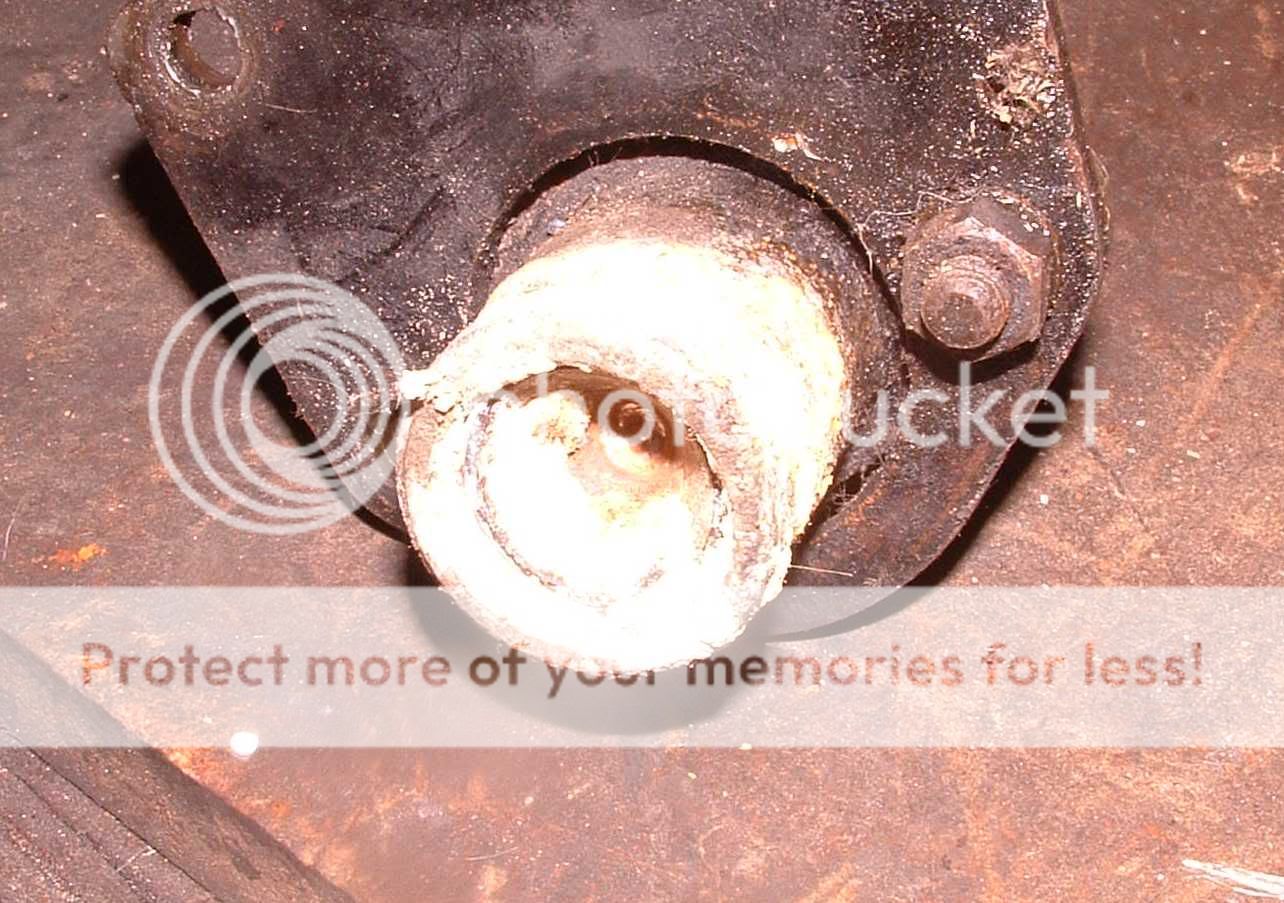
And hopefully, I'll never have to see this again (clutch slave from TR3, stored for 25 years with DOT 3 inside)

DSCF0002_cropped.jpg
 
THanks for the information Guys. I've just been reading on another forum that other people have had trouble with their brake switches using DOT 5. apparently there's something in the diaphram that the fluid deteriorates. One person say's that a Harley Davidson brake switch P/N 72023-51D (which is designed for synthetic fluid) can be used.
As mine has failed twice,I think I'll go that route!

Thanks again.
 
Let us know how the Harley switch works out. I also had brake switch trouble, but wasn't sure at first whether it was the DOT 5 or the high output brake light bulbs. So I solved both problems (along with some other changes) and I'm very pleased with the result

DSCF0029_crop.jpg


DSCF0010.jpg


(PS The camera tends to exaggerate, they aren't really that bright. But they are quite a bit brighter than original.)
 
Many years w/ DOT 5 and the brake light switch has not failed... but I did put a relay on that circuit as I have more bulbs/amps than original.
 
I rebuilt/replaced the TR3A's entire brake system 2 years ago and decided to go with DOT 5. When I was rebuilding the system, all the componants looked like Randall's slave! That was why I went with DOT 5. It has worked flawlessly since.
 
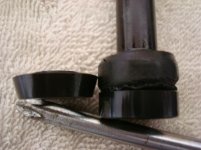
I wish I could say I always had good results. Here are a couple pictures from my brake master cylinder rebuild a couple months ago. The cylinder was new from TRF when the DOT5 was put in 6 years ago. Fluid started to run down the front of the servo, that's how I noticed the problem. My clutch slave cylinder fails every three years. I't's now part of my tune-up I do every other year to rebuld the slave cylinder. I think the brakes are going to be watched much closer for now on. Look inside the reservoir to see if there is any black inside. If there is it's time for a rebuild. I always buy the best parts you can get at the time for the rebuild.

Look at the seal in the first picture and notice how much it has swelled, it's also very soft.
 

Attachments

  • 28418.jpg
    28418.jpg
    79.7 KB · Views: 394
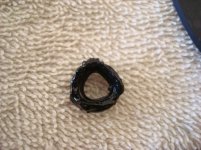
This last picture is of the small cup on the other end of the shaft. It is just mush. I don't know it it's because my west facing garage may get up to 130 degrees in the summer or not. The fluid used was the NAPA brand. I'm going to try another brand in the TR3 this time. I wish I could say silcone works great but unless you are going to keep up on it don't use it.
 

Attachments

  • 28419.jpg
    28419.jpg
    95.5 KB · Views: 395
A can of worms, to be sure. I've used DOT5 in my TR3 for 25 years. Never a problem. Wired a relay into the brake light switch circuit; never a problem there, either.

Ted Enderle
 
I wonder if the rubber compound used to make the seals matters and the process is not really regulated dependent on the fluid used

ie, most recipe compounds work with DOT3 but only certain recipe's work with DOT5. The user's results are really nothing more than a crap shoot with dramatically different results based on what box you got.
 
A lot of new cylinders i have seen, mainly for TRW branded parts, all say "USE OF SILICONE FLUID WILL VOID WARRANTY". I guess it causes enough of a concern that they do not want involved.
 
GBRandy said:
I wonder if the rubber compound used to make the seals matters and the process is not really regulated dependent on the fluid used

ie, most recipe compounds work with DOT3 but only certain recipe's work with DOT5. The user's results are really nothing more than a crap shoot with dramatically different results based on what box you got.

That may be exactly the case.

It is apparently not true any more, but it used to be that Girling seals were not compatible with American DOT 3 brake fluid either. I didn't believe it at first, but I did a test where I rebuilt all the cylinders in my (previous) TR3A with new seals at the same time, and filled the system from a fresh can of Wagner brand fluid. Drove the car around the block a few times to be sure everything worked as it should, then parked it for a few months. 2 months later, both rear brake slaves and the clutch slave had leaked enough to drain the reservoirs!

Then I switched to Castrol brake fluid, and had no further trouble for a year or two. Of course, that is the same car where one of the hard lines rotted through, and left me with no brakes while going downhill into an underground parking garage (with no outlet). The car was no great loss, but I sure do miss that engine...

If I had to change all the seals to convert to DOT 5, I would still feel that it was worth it.

One other anecdote: When my first (and only) new car (a Chevy) got to about 80,000 miles, one of the front calipers started to leak. I replaced the one caliper with a rebuilt, and converted to DOT 5 by just bleeding through (no flushing). After that, I never touched the hydraulics again. They were still working fine when the car got junked with over 250,000 on the clock.

 
I wish I could get the right recipe. I bet going downhill with no way out and no brakes was a real eye opener. The cylinder was not a TRW brand, but all the internals may come from the same place except fot the company that makes them out of the right material.
 
I have used silicone in a couple of cars now with no issues, the first was my Healey, I drained and flushed the old system, then blew the lines out with air, then in went the DOT 5. I didn't disassemble and clean or rebuild anything.

I drove it for 9 years after that no hydraulic issues.

The current TR250 is all new or rebuilt hydraulics, no issues on the dot 5.

I don't have exact figures, but recall having periodic leak/replace/rebuild issues when I ran Castrol LMA, not every time a went to run the car, but certainly not as good as the record with DOT 5. I too have concluded it is better on my seals.

I know others have had issues, so maybe it is the luck of the draw with the seals.

I have also heard people say it is harder to get the bubbles out when bleeding, again I haven't had issues.
 
It's got to be more than the luck of the draw with as many people here that are having great results. Maybe it was the NAPA fluid that I was using. This time it's going to be the red and white bottle Cartel brand that you get from Moss. I hope it works well.
 
I stumbled across a white paper today, written by Michael Grant at Moss Motors about brake fluid. Here's an interesting quote from that paper:

<span style="font-style: italic"><span style="font-weight: bold">What About the Stories of Silicone Brake Fluid Causing Seals to swell?</span>

These stories abound on the internet, but I have not actually spoken to the person it happened to, so I cannot comment on the actual incident that started the story. We do know that it is very, very unlikely that a brake fluid meeting FMVS 116 would do that. The testing is designed to make that sort of thing impossible. I can tell you that the literature is full of reference to the grotesquely swollen and gooey seals that you get if the brake system is contaminated with petroleum based oils or solvents. It does not take much of this kind of contamination to ruin all of the seals in a system. The contamination can usually be traced to the use of improper cleaners, rags contaminated with motor oil or grease, or handling the seal with hands that have petroleum based contaminants on them. We have tried to duplicate these reported problems by soaking brake cups in DOT 5 fluid, but we have never found a problem. However, these stories have a life of their own and it is doubtful that they will ever go away.</span>

Full text at https://www.mossmotors.com/SiteGraphics/Pages/Brake_Fluid/brake_fluid_long.html
 
Quelch said:
Does anyone know if you can use synthetic brake fluid (DOT 5)

I overlooked this before; it reflects a potentially dangerous misconception. All brake fluid is "synthetic", it is not petroleum based at all. Typically in the past, the cans did not say "synthetic", today many of them do. It doesn't mean anything at all.

<span style="text-decoration: underline"><span style="font-weight: bold">Only</span></span> "<span style="font-weight: bold">DOT 5</span>" brake fluid is actually silicone-based.

Even "<span style="font-weight: bold">DOT 5.1</span>" is <span style="font-weight: bold">not </span>silicone based and does not share it's characteristics (except for a very high boiling point).
 
Back
Top