• Hey Guest!
    British Car Forum has been supporting enthusiasts for over 25 years by providing a great place to share our love for British cars. You can support our efforts by upgrading your membership for less than the dues of most car clubs. There are some perks with a member upgrade!

    **Upgrade Now**
    (PS: Upgraded members don't see this banner, nor will you see the Google ads that appear on the site.)
  • When posting a classified ad, you MUST select a prefix from the drop-down next to the subject line. If you don't you will get an error and your ad will not be posted!
Tips
Tips

TR4/4A TR4 & 4A, Flywheels and Clutches Oh My...

T

TRDejaVu

Guest
Guest
Offline
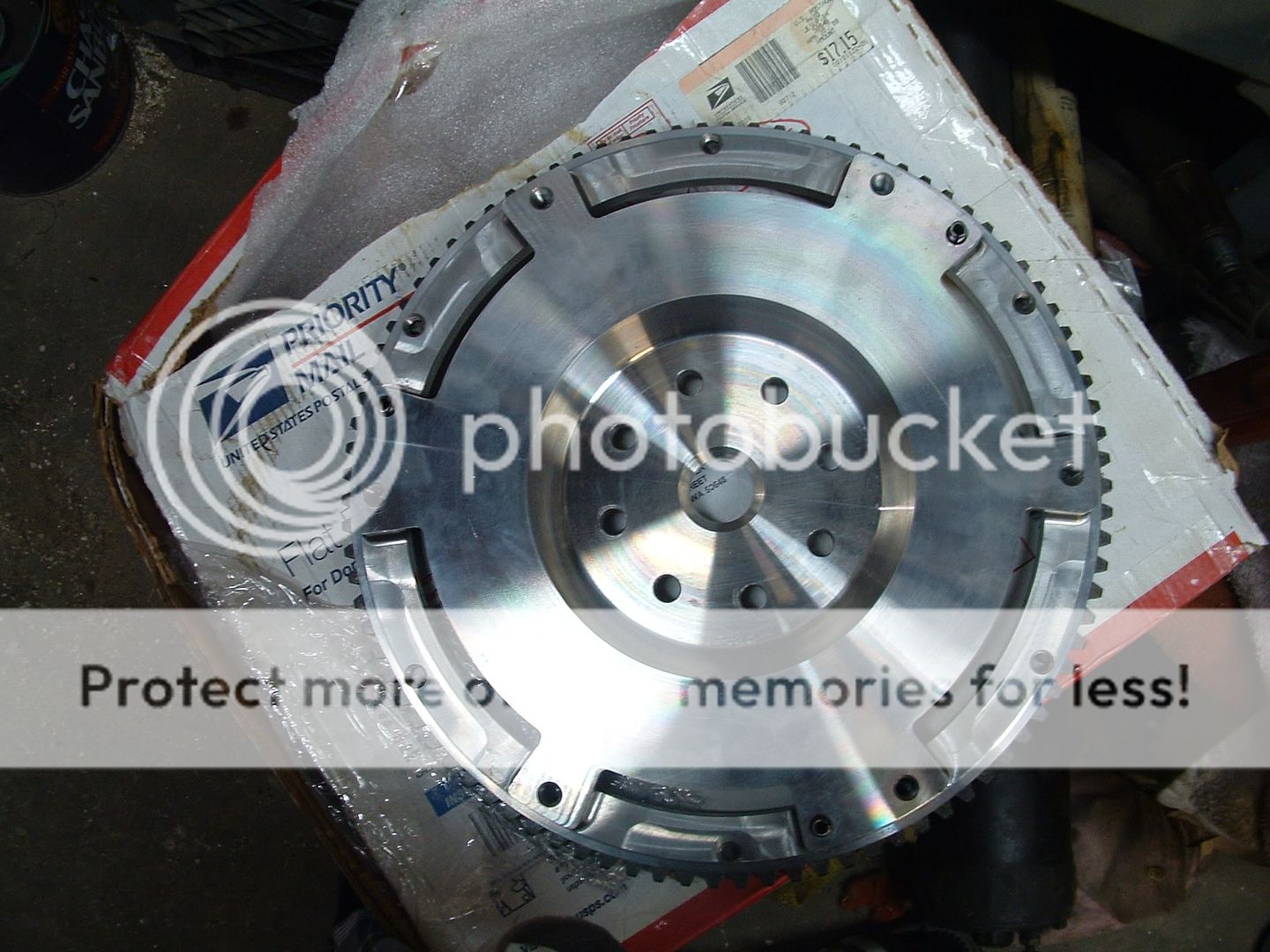
Getting ready to pull the TR4 transmission to replace the clutch and convert to an OD trans (finally decided). I am thinking about going the lightened flywheel route as well; nothing too extreme as I want it to retain street car driveability.

So, a couple of years back, I obtained a spares job-lot that included what looks like an unused flywheel (no surface marks and perfect starter ring), but it is from a 4A. There is also a diaphragm pressure plate in good condition with minimal wear.

I also have a "lightly used" TR4 pressure plate in excellent condition.


Finally, the questions:

Are the diaphragm clutch issues limited to the 6 cylinder engine application? Are they also due to the later gearbox? My OD box will be from a TR6.

Basically, do I stick with the robust and reliable TR4 setup, or is it safe to go with the 4A setup and make use of that flywheel?
 
Ian-

The racer crowd certainly like the 4A setup as the pressure plate is also lighter I believe. I don't think there's anything wrong with going with the diaphragm clutch if you have it as a spare. If anything the TR6 box will be more compatible with the diaphragm clutch - the front cover on the transmission box is longer on the TR3-4 than the 4A-6 (part 55 shown here) . Not sure if that is an actual problem, but it is a difference.
 
I have a diaphragm clutch in my TR3, on a Fidanza aluminum flywheel. Same setup I had on the wrecked TR3A, no doubt in my mind about keeping it for the TR3.

Of course you'll also need the throwout bearing for a 4A, and shortening the front cover is mandatory. Otherwise the fingers on the pressure plate will hit the front cover when the clutch is disengaged.
 
TR3driver said:
and shortening the front cover is mandatory. Otherwise the fingers on the pressure plate will hit the front cover when the clutch is disengaged.

Randall,

Since he is using a TR6 transmission, this shouldn't be needed since it should already have the short front cover, correct?

Ian,

Responding to your question on whether the issues are limited to 6-cylinder applications of the diaphragm clutch, I would say no with regards to new replacements since they are supplying the same TR6 clutch components for TR4A's. I checked my TR4A SPC and they did have different part numbers at least when compared to the part numbers TRF is using for Borg and Beck and Laycock pressure plates and discs, but TRF doesn't list those parts in their parts database.

I do know that the clutch that I installed in my TR4A when I restored it took a *lot* of strength to operate. I never had a problem with it otherwise but I was always concerned about wear on the various components (rods and pins).

Can you identify which pressure plate you have?

Randall,

Did you mention reusing an original pressure plate on your car?

Scott
 
HerronScott said:
Since he is using a TR6 transmission, this shouldn't be needed since it should already have the short front cover, correct?
Normally, yes. But it's worth checking, IMO, unless he personally saw it removed from a car with a diaphragm clutch. Just for example, I am using a TR6 transmission, but it had the longer front cover on it, because I originally installed it with the stock TR3 clutch.
<div class="ubbcode-block"><div class="ubbcode-header">Quote:]
Did you mention reusing an original pressure plate on your car? [/QUOTE]
Could be, I've mentioned several alternatives, and I don't recall ever wearing out a TR pressure plate. (Although I did tear one up, by continuing to drive with a bad TOB.) The original TR3 clutch just seems to last forever (the failed TOB was a used replacement part installed by mistake).

But I didn't have an original 4A clutch (and the Fidanza was only drilled for a 4A clutch), so I'm currently using a B&B PP (from eBay as I recall). It looked fine when I pulled it out of the wrecked 3A (although the flywheel had rather more wear than I expected) so I just moved it all to the project TR3 along with the OD gearbox (which is a TR6 box with a TR4 OD & TR3 top cover).
 
So, flywheels...

- Pro's/con's of lightening a stock unit vs buying a Fidanza

- What is a good weight for street driveability?
 
TRDejaVu said:
So, flywheels...

- Pro's/con's of lightening a stock unit vs buying a Fidanza

- What is a good weight for street driveability?
Starting with a stock flywheel means you can't remove as much weight, plus they sometimes explode. The main advantage is that it is a little cheaper.

Lots of racers report having trouble keeping the alloy ones on the end of the crank. They add more bolts (as one put it, his crank looked like swiss cheese) and they still come loose. The Fidanza unit has some special features to hopefully lessen this problem, including more meat in the center section (where it has relatively little effect on rotational inertia), and a very snug fit onto the crankshaft flange (you have to heat the flywheel to install it).

But I drive mostly on the street, so I don't turn over 5000 rpm for any length of time and so far, it's not been a problem.

There is a third option, which is the way I will go if the Fidanza comes loose. Joe Alexander (I think it was) had a run of billet steel flywheels made.

BilletsteelTR4Aflywheel-ARE.jpg


PS, the above photo shows a ring gear installed, but it does not come with the flywheel. Joe also sells new, lightened ring gears.

PPS, Hopefully someone else will remember the weights for sure. Best I can recall, the Fidanza was 11 pounds, the billet from Joe was 14, and Kas Kastner said not to go below 18 when lightening a stock wheel. But I could be mistaken on any of those.

With the motor I had in the TR3A, there was a definite learning curve with the lightweight flywheel. Had to keep the revs up when launching, or it would stall. But the engine in the TR3 seems much more forgiving, I've only stalled it once since installing the Fidanza. Part of that could be the 4.10 gears (combined with the same short tires I had on the TR3A). But I also need to work on the throttle linkage, as it's kind of loose and vague at the moment.
 
Back
Top