Ok, so now you know you're getting juice into the cables; my next test would be at the starter solenoid, from the battery post to a ground on the body somewhere. Then check terminal A1 on the control box to ground. If there is still juice on A1, then the ammeter, control box and the wires to them are OK.
With the ammeter, you don't expect to find any voltage across the terminals. So that would tend to indicate that the ammeter is not the problem.
To bypass the ammeter, you can run a heavy gauge wire from the battery post on the starter solenoid, to terminal 'A' on the control box. Or just pull the wires off the ammeter and securely link them together. But if you are going to eliminate the ammeter, I would prefer the first approach.
FWIW, I ran for many years with a 60 amp Ford alternator and the stock ammeter in my TR3A. It's certainly personal preference, but I much prefer keeping the original ammeter. To avoid having the needle hit the stops, I added a shunt across the ammeter terminals, so the ammeter only indicated about half of the actual current.
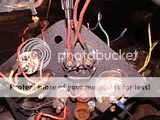
Depending on how your alternator is wired, you may not even have trouble with the needle hitting the stop all the time. I used the external sense line to sense battery voltage directly, so the alternator would go to full output for a few seconds every time I started the car from cold. But if you just jumper the sense line at the alternator (or use an alternator without a sense line), then it won't charge as quickly and pegging the ammeter might not be a problem.


 Hey Guest!


 Cheers, Tush