
• Hi Guest!
    If you appreciate British Car Forum and our 25 years of supporting British car enthusiasts with technical and anicdotal information, collected from our thousands of great members, please support us with a low-cost subscription. You can become a supporting member for less than the dues of most car clubs.

    There are some perks with a member upgrade!
    **Upgrade Now**
    (PS: Subscribers don't see this gawd-aweful banner
Tips
Tips

TR4/4A Send Unit Issues - 62 TR4

Country flag
Offline
My tank has at least a 1/4 tank of gas. Just yesterday for the first time I was driving and noticed the guage on E. I checked the tank level with a yard stick and jigged the float thing and now it reads 1/4 tank - so it might be going out? Something loose somewhere? Is it the guage cable? I cannot find any images on the web that show what the send unit looks like mounted in the gas tank. This car was upgraded to an electric pump mounted in the trunk.

Opinions on what I should try? Should I check one of the wires shown in the pics (fuel pump)? Should I check the cable coming from the gauge?? Stablizer - not sure where that is at - I'm not sure what to check but hoping I don't have to pull the tank out and pay for that. What safety precautions should I take. Thanks all
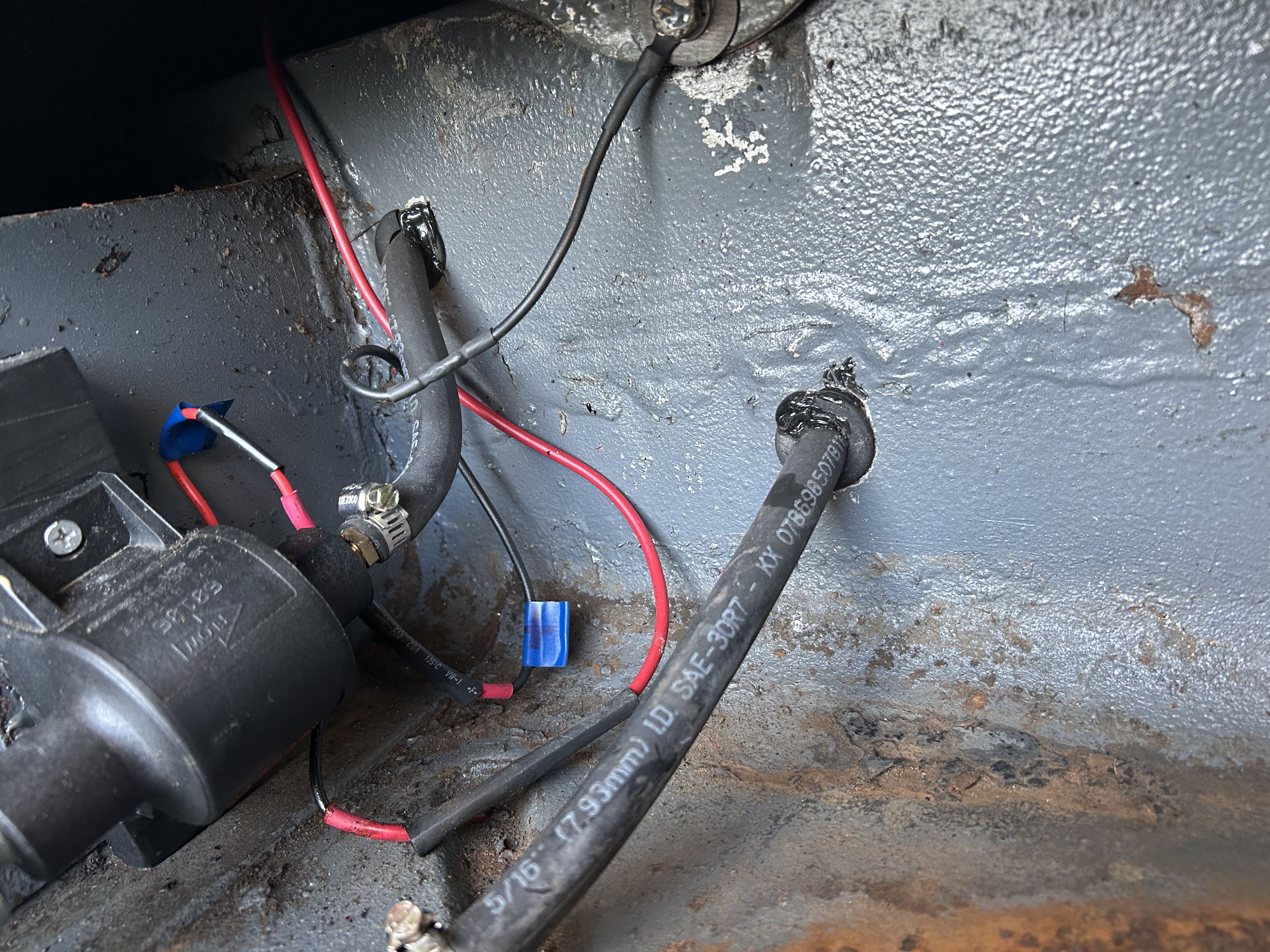
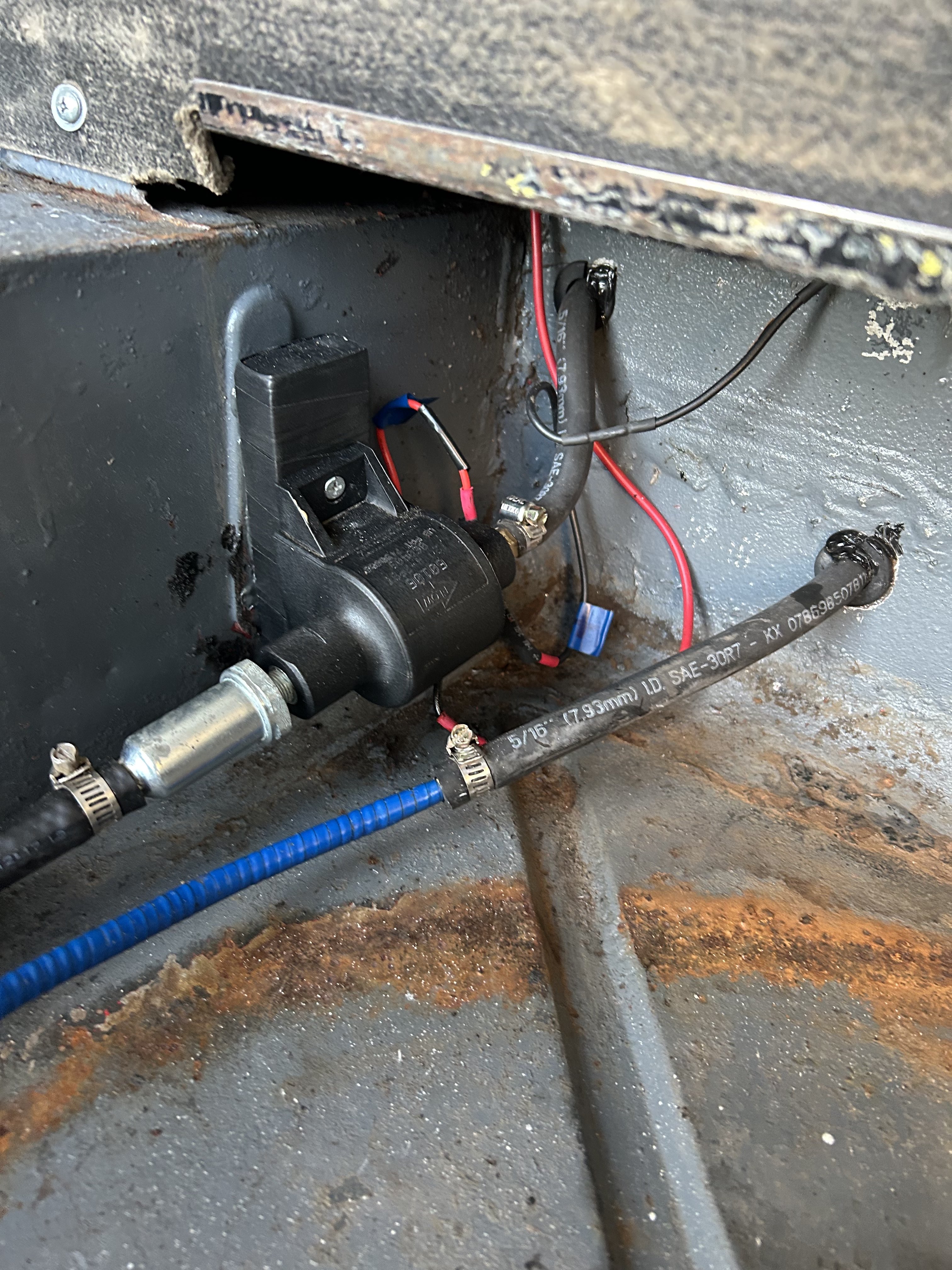
IMG_5410b.jpg
IMG_5408b.jpg
IMG_5406b.jpg
 
Last edited:
Wires at the fuel pump should have nothing to do with this. First check the wires between the voltage stabilizer (VS) and the gauge. The VS is located in the passenger footwell. On the very front upper right corner. PITA to get to but there it is . The wire then goes to the gauge and could be loose. Could also be a bad ground wire at the sending unit which is on the passenger side accessed from the trunk.
Think simple first.
Charley
 
The "sending" unit is a grounding rheostat that takes the 9V from the gr/bl, wire (on the gage)and makes the
gage move. The voltage stabilizer does go bad"green wire).If you purchase an AM unit , make sure you verify the
voltage!!!!
Mad dog
 
If you bumped the sender and it changed, that's a pretty good indication that the sender is the problem. I'd also check the connection of the wire to the top of the sender; make sure it is clean and tight. If that's good, it's worth the trouble to remove the sender and check it. You probably can do that with the tank in place, but I've never tried that. Check the sender with an ohmmeter--you should see the resistance vary smoothly as you move the wand up and down. I'll bet that you see a number of jumps. Then either service or replace the sender.

senderr.jpg
 
If you determine it is the voltage stabilizer (your coolant gauge would act up also) don't buy the Moss Motor unit. I ordered one about 5 months ago and then read shortly after on the forum that many were having failures quickly after installation. Mine just went out so I will source from someplace else. Not trying to bash Moss but if they read the forums they would know their unit is junk. Bruce
 
I have sold over 240 rebuilt voltage stabilizers over the last 2 years with no returns. Email me at dconnittATgmail.com for more details.
Dave Connitt
 
I’d chase down that voltage stabilizer. I’ve never been able to remove the sender with my tank still in the vehicle. What a hassle. Emptying gas, draining tank, all that. My recollection is that a bad stabilizer affects the gauge materially. Good luck.
 
Dave, do you have a company name or website?
One of my customers is working on a website for me but the “products” page isn’t posted yet. For the last 2 years I have just been selling them by word of mouth. I do have a brochure I can get to you but that is on my laptop and I am responding to you on my iPhone which of course doesn’t have access to to the brochure. I will get a brochure to you later today. The reason I sell them as “rebuilt” is I need the original metal can as a starting point as I don’t have a source for the can.
Each voltage stabilizer is tested at 3 different stages of assembly with the final test being a 24-hour run at 150% of its normal load. Additionally, each unit is serialized for quality control. I do have some units already rebuilt and can sell on an exchange basis as customers occasionally send me multiple old voltage stabilizers and just need one back. I have even had a couple of customers order a voltage stabilizer from Moss and had it shipped to me to rebuild and send in to them.
I charge $55.00 which includes shipping to the lower 48 states. I also ship out of the USA and the cost is $45.00 plus shipping via USPS Priority Mail.
 
If you determine it is the voltage stabilizer (your coolant gauge would act up also) don't buy the Moss Motor unit. I ordered one about 5 months ago and then read shortly after on the forum that many were having failures quickly after installation. Mine just went out so I will source from someplace else. Not trying to bash Moss but if they read the forums they would know their unit is junk. Bruce
I sell a very reliable rebuilt voltage stabilizer with over 240 sold so far with no returns, I attached a copy of my rebuilt voltage stabilizer data sheet.
Dave Connitt
 

Attachments

  • Voltage Stabilizer Data Sheet 2.pdf
    215 KB · Views: 31
If you bumped the sender and it changed, that's a pretty good indication that the sender is the problem. I'd also check the connection of the wire to the top of the sender; make sure it is clean and tight. If that's good, it's worth the trouble to remove the sender and check it. You probably can do that with the tank in place, but I've never tried that. Check the sender with an ohmmeter--you should see the resistance vary smoothly as you move the wand up and down. I'll bet that you see a number of jumps. Then either service or replace the sender.

View attachment 96019
What is the likely problem if whenever my fuel gets to around 1/4 of a tank my gauge suddenly shows I am almost empty? Is this more likely a sending unit issue, a voltage stabilizer issue, or a loose wire at the gauge issue?
 
I don't remember exactly how the TR sender works--but these usually have a slider that moves along a section of resistive wire as the fuel level changes. That changes the current in the fuel gauge and thus the indication. If there is a bad spot on that slider/resistor combination, you get zero current and the gauge reads zero. So, it's not an unexpected behavior for a bad sensor. Since that is the most likely problem, I'd remove the sensor and make the resistance checks I suggested. I suspect that the problem then will be clear.
 
here are some resistance readings you could use to verify if your fuel gauge sending unit is bad.
1/4 tank = 200 ohms
1/2 tank = 82 ohms
Full tank = 70 ohms

These are readings I used while designing my solid-state voltage stabilizer. They are approximate readings.
I have shipped over 250 rebuilt voltage stabilizers to date with one return and I’m not too sure that one was my fault.
 
here are some resistance readings you could use to verify if your fuel gauge sending unit is bad.
1/4 tank = 200 ohms
1/2 tank = 82 ohms
Full tank = 70 ohms

These are readings I used while designing my solid-state voltage stabilizer. They are approximate readings.
I have shipped over 250 rebuilt voltage stabilizers to date with one return and I’m not too sure that one was my fault.
How would I take those ohm readings? Ignition key on, which wires to volt meter?
 
How would I take those ohm readings? Ignition key on, which wires to volt meter?
With the ignition key off. Remove the panel in the boot covering the gas tank if you haven’t already done that. The fuel gauge sending unit is on the top of the tank on the right side.
You have to remove the sending unit to test it. When I replaced my sending unit a few years ago I was able to do it without completely removing the fuel tank by removing all of the bolts holding it except the very bottom ones which I just loosened. At that point you can pull the top of the fuel tank out enough to remove the screws holding the sending unit in the tank and then remove the sending unit.
Once you have the sending unit out use a multimeter set on ohms to measure the resistance between the 2 terminals on the sending unit as you slowly move the float up and down. You’ll probably need an assistant to do this. What you are looking for is a smooth change in resistance as you move the float up and down. If the multimeter goes to “0” at any point you have a bad sending unit and the good news is that you already have it out of the car. The sending unit was a bit pricey as I remember but you need it.
It’s not to bad of a job.
 
Back
Top