• Hey Guest!
    British Car Forum has been supporting enthusiasts for over 25 years by providing a great place to share our love for British cars. You can support our efforts by upgrading your membership for less than the dues of most car clubs. There are some perks with a member upgrade!

    **Upgrade Now**
    (PS: Upgraded members don't see this banner, nor will you see the Google ads that appear on the site.)
Tips
Tips

Question on seam welding - why not do it?

tdskip

Yoda
Country flag
Offline
While I'm at it...famous last words.

If you look at the attached picture you can see where the plug welds are, and while the are all holding it seems to me that there is a lot of metal that isn't welded in place. Would it make sense to run a MIG weld bead down all the joins? It occurred to me today that now is the time to do this if I'm thinking about. It would be pretty easy to run a bead down the metal joints.

Isn't that sort of seam welding done on race cars to help stiffen them up?
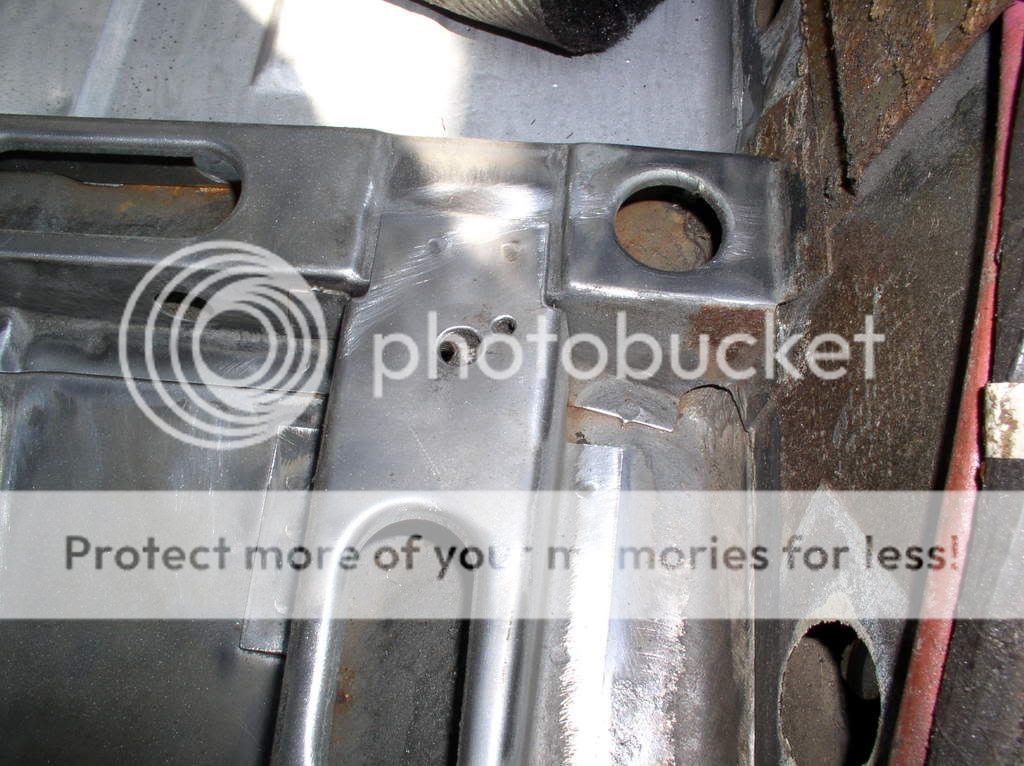
TR8passengersidefloorrustremoval-3.jpg
 
Yep... thats exactly what seam welding is. And they do it to stiffen unbody race cars, nowadays anyway.

Keep in mind that to weld this in place means never being able to replace it. Right now, should it rust through or get damaged, you can cut through the welds with a drill bit and weld a new piece in place. Not so easy with long beads.
 
Probably over kill in these areas, as well as what rlan said.
 
I agree, they worked well all these years, so something was right, so don't weld them up, just primer, seam seal and move one.
 
Welding creates an area along the weld called the "heat affected zone" HAZ. In this area the properties of the metal are changed and usually become more brittle. That can lead to an area prone to cracking. If the seams are all welded a crack could easily follow the welds and become a major failure.
 
You can skip anything that doesn't link frame component to frame component. Basically, anything that contacts the frame rails that is spot welded can be strengthened by seam welding. Leave the floor pans spot welded to the frame rails and don't seam weld to the firewall.

Your particular application may vary. I speak only of what I know, which is the third-gen Camaro. And even then, if you aren't running 500+ HP, then it's not really doing very much.
 
One other thing I should mention... Some racing classes don't permit the use of welded seams. If you ever plan to race the car, or sell it to someone planning to race the car, it's important to disclose that piece of information.
 
Now would be the time to install your roll bar, that should help stiffen the body some, and attach a metal panel on the rear bulkhead of the passenger compartment (underneath the fiber board panel).

The metal panel reduced the exhaust noise in the passenger compartment of my convertible. It also isolates the fuel tank from the passenger compartment.
 
philman said:
Now would be the time to install your roll bar, that should help stiffen the body some, and attach a metal panel on the rear bulkhead of the passenger compartment (underneath the fiber board panel).

The metal panel reduced the exhaust noise in the passenger compartment of my convertible. It also isolates the fuel tank from the passenger compartment.

Kind of like a ready firewall I guess.

Did you put in rectangular braces ala the TR6, or a full panel?
 
I put in a full sheet metal panel. My wife insisted on one in her '68 Mustang, so I did the same for my car. For Mustangs it was supposed to be some kind of safety modification to keep the gas out of the passenger compartment in case of a rear end collision.
 
Welding EVERYTHING solid will create stress risers {Don`t do it}!
Those parts are spot welded for a specific purpose and that is to accommodate some flexing of the body panels. And as mentioned by Randall once you seam weld everything not only do you create stress risers it also makes removal of any of these welded pieces very difficult at best. One thing I would recommend is that you check each and every spot weld for small cracks. IF you find any by all means put a spot of mig weld on the cracked spot weld.
P.S. a "Stress riser" is a point where stress builds to such an extreme as to cause cracking of the parent material either on one part or both.

The Heat affected zone depending on the carbon content of the parent material can also become brittle due to carbon precipitation.

The spot welds are there for a reason, unless damaged they are sufficent.
 
Spot welding is merely a cheap effective method of welding that lends itself to production line processes. There are no specifications for flexing or any other silly thing to spot welding, it's just cheap and quick.

Seam welding, like in the picture above, won't particularly enhance rigidity, but it will increase strength and reduce tear out failures. Something spot welds are prone to doing.
 
AweMan said:
And as mentioned by Randall
Don't think it was me. The less said about my welding experience, the better !
 
If you can't weld I've changed my mind about adopting you :laugh:
 
Me bad Randall. It was R.Landrum That mentioned seam welding making replacing body parts/panels difficult.

Going by my experience as a D.O.D. Aircraft Welder and NOT being a structural engineer I only know what the Aircraft S.O.P`s say about welding procedures on Aircraft. If a part has spot welds it is taboo to seam weld it on an aircraft {at least for the government}. Engineer`s write the D.O.D. S.O.P.`s. The S.O.P. strictly prohibits the creation of H.A.F.Z`s and or stress risers In ANY welded areas.
Repaired parts MUST go to the heat treating shop to be "Normalized" {brought back to their original properties through heat treating in an induction oven} {induction meaning the induction of carbon and or other elements}. Thus eliminating the H.A.F.Z`s

But then I don`t suppose an L.B.C. encounter near the stress levels a Helicopter does either.

30+ years of welding experience I can say, I have fixed more cracks in both thick and thin metal than anyone here cares to count.

I could give you the boring info on all of the Aircraft certs I have held during my tenure as a welder, but will spare you the read.

P.S. I won`t be seam welding the spot welded areas on my TR anytime soon.
 
Hi guys - finally got some time to hammer on this.

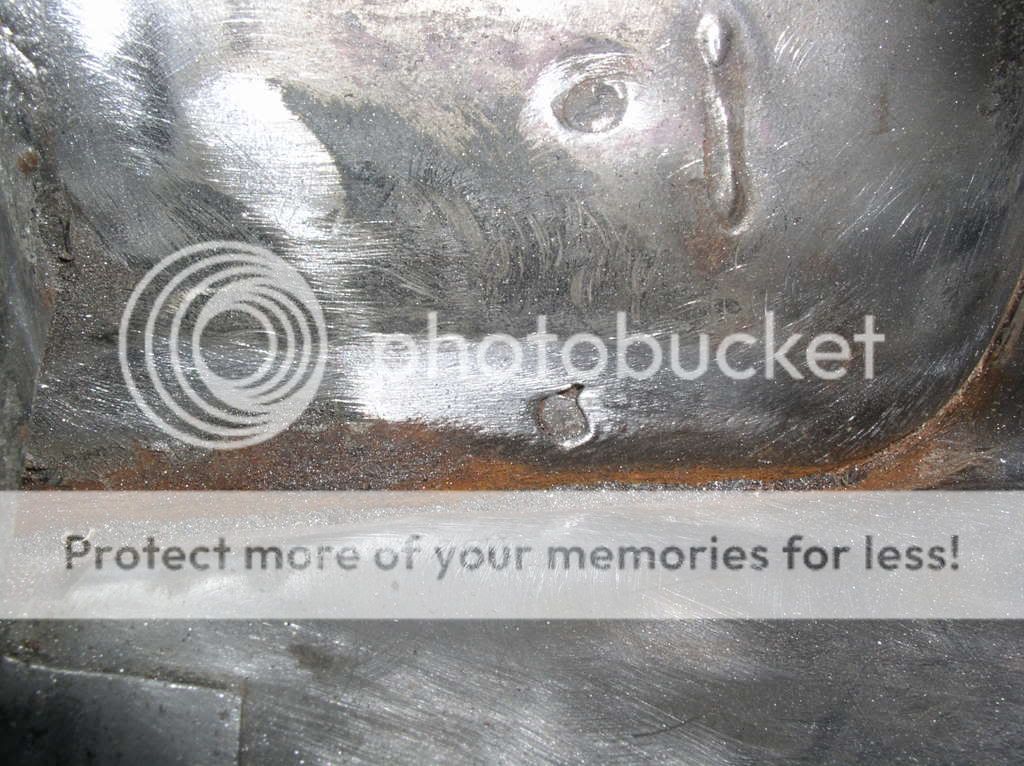
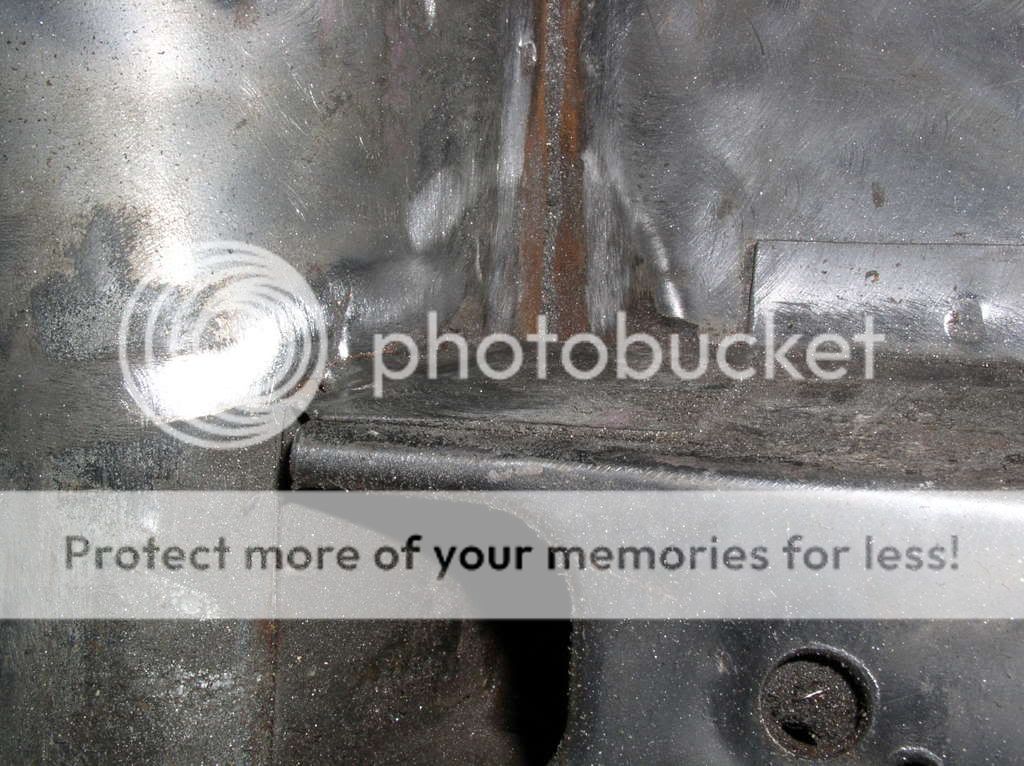
I found factory welds that looked iffy, so I got to use my MIG after all. One FYI - don't assume that your metal is happy under the factory seam sealer....

This one in the center bottom was pulling out;

TR8passengersidefloorpor15prep9--1.jpg


Weld was cracking, top left;

TR8passengersidefloorpor15prep9--3.jpg


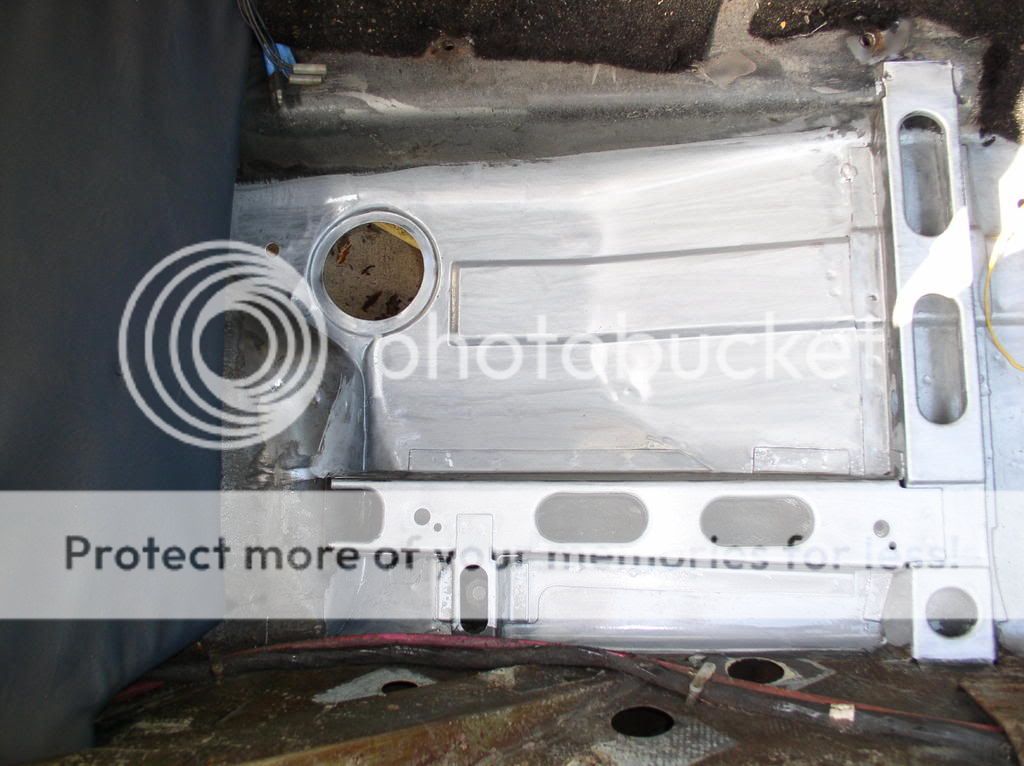
First coat of POR15;

TR8passengersidefloorpor15prep9--2.jpg
 
Back
Top