Hi TH,
I don't think mixing the engine oils will hurt anything as long as they are the same brand.
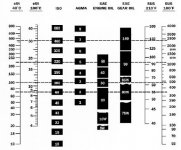
Attached is a chart for oil viscosities. Use the right hand temp. scales. Viscosities are given for 100 degrees F & 210 degrees. In this case you would use the data for 10 wt. oil & 40 wt. 10 when the engine is cold & 210 when it is hot. Or compare to 20 wt. It also compares various gear oils which are rated at 100F.
Since once the engine is warmed up the hot radiator air is warming the carbs, they will likely stay at a fairly constant temperature. A cold engine requires more carb damping than a warm engine so a single viscosity oil does just the right thing by thinning as it warms up.
SAE 20 is normally used in the dampers year around. I've also had good luck with ATF. Folks don't usually use multi vis oils in the dampers or seasonally change it. Interesting concept though.
D


 Hey Guest!

 Hey - did you know if you click on the title of a thread it will take you to the first unread post since you last visited that thread?
 but were afraid to ask:
  STOP!! Never post your email address in open forums. Bots can "harvest" your email! If you must share your email use a Private Message or use the
  smilie in place of the real @
 Pretty Please - add it to our Events forum(s) and add to the calendar! >>