• Hey Guest!
    British Car Forum has been supporting enthusiasts for over 25 years by providing a great place to share our love for British cars. You can support our efforts by upgrading your membership for less than the dues of most car clubs. There are some perks with a member upgrade!

    **Upgrade Now**
    (PS: Upgraded members don't see this banner, nor will you see the Google ads that appear on the site.)
Tips
Tips

GT6 Mk1 Pulley weighting marks

Richter12x2

Jedi Hopeful
Offline
Finally swapping in the numbers-correct engine on our GT6 Mk 1, and was trying to pull the crank pulley off the one that was in the car, and I noticed that I can move the balancer back and forth on the rubber section, like the rubber has let go. I'm thinking that's probably not normal and we should be looking at a replacement.

The pulley is stamped R21121-B, and I found one on Ebay marked the same, but mine has 1 drillmark on the back, and this one has 4, so I thought I'd better check and see if it makes a difference.

Also considering the fancy shiny new one from BPNorthwest, if I'm looking at $100 + shipping for a used one that can fail at any time, $210 for a brand new may not be too bad of a deal, but they're indicated for the Mk 3 GT6 - would it be the same down into the Mk1's?
 
The drill marks are almost certainly from balancing the rotating components. Since no two pulleys or assemblies are exactly the same, the number and location of the drill spots won't be the same. If you have a front pulley in good condition (i.e. The rubber has not perished or cracked.) then use it. You do not want to use one where the rubber bond has failed as the outer ring will be dangerous when loose and it won't be doing its job of dampening vibrations.

As you found, new ones are expensive but $210 isn't that bad compared to what they can cost for other British cars.

I'm glad you will be putting the original engine in. I wish I had been able to do that with our car.
 
The drill marks are almost certainly from balancing the rotating components. Since no two pulleys or assemblies are exactly the same, the number and location of the drill spots won't be the same. If you have a front pulley in good condition (i.e. The rubber has not perished or cracked.) then use it. You do not want to use one where the rubber bond has failed as the outer ring will be dangerous when loose and it won't be doing its job of dampening vibrations.

As you found, new ones are expensive but $210 isn't that bad compared to what they can cost for other British cars.

I'm glad you will be putting the original engine in. I wish I had been able to do that with our car.

Thank ya sir! I figured it was probably just from balancing the individual pulley, but I wanted to be sure.
 
Yeah, unfortunately they look that way until you hit them with a propane torch and a screwdriver trying to get them to slide off the crank snout. :(

There's apparently like, almost a rubber band sized strip of rubber that holds the bigger part to the center. But the one from you're picture is the exact one I'm replacing. Now REALLY the rubber is still so tight that it doesn't fall off or anything, it'd probably last years before it managed to spin off or wobble, but my bigger concern is that means I can't trust the timing marks anymore.
 
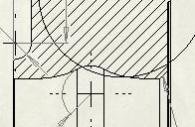
The rubber would have to be nearly completely gone for the pulley to separate. This drawing shows the geometry of the outer pulley on a TR6 and the inner pulley matches it with about a 1/8" space. In other words there is little clearance for them to be separated.
Even if the rubber is loose they will not come apart. But the outer pulley can rotate and the timing marks could become useless.
If the rubber becomes hard and/or cracked the damper will not function properly. The rubber is designed to act as a spring to dampen the vibrations of the crank. The engine will run much smoother and efficiently if the damper is in good condition.

attachment.php
 

Attachments

  • damper.jpg
    damper.jpg
    7.5 KB · Views: 192
Back
Top