• Hi Guest!
    If you appreciate British Car Forum and our 25 years of supporting British car enthusiasts with technical and anicdotal information, collected from our thousands of great members, please support us with a low-cost subscription. You can become a supporting member for less than the dues of most car clubs.

    There are some perks with a member upgrade!
    **Upgrade Now**
    (PS: Subscribers don't see this gawd-aweful banner
Tips
Tips

Making a wire wheel tubeless?

Hello Darrell,

As no one has mentioned this solution, I will tell you what my running mate did last year, on his TR3B. First, he was told, in no uncertain terms, that wire wheels MUST have tubes. This was unanimous, both within his Triumph Club and various forums that he uses.

However, when it came to sealing, he received various recommendations, but most said to cover the spokes with PVC TAPE, two layers. He did this a year ago, and put a little over 5,000 miles on the tires. THE FOUR WHEELS HAVE HELD TIRE PRESSURE PERFECTLY. Last month, he checked their pressure after a long trip, as he couldn't remember whether he had put 24 or 26 pounds in them. All four of them read 24 lbs. He has increased them to 26 to see how they do, as he is still experimenting with tire pressure.

He contacted Vredestein after buying the tires, to ask their recommendations for tire pressures. Needless to say, they "dropped him like a bad habit" as soon as he said that he is using tubes. So, he is on his own to determine the most effective pressure.

He has photos of his tape job on the [Dayton] wires, and would be happy to forward them, and/or answer any questions about them. He is not an expert, but he can tell you of his experience. He is George, at tr3agab[delete]@gmail.com.

Good luck with whatever you decide to do. IMHO, wire wheels are a PITA, but God, they are beautiful.

Phil(thy)
 
Ed -- If your wires from TRF are the Dunlops from Asia (Pakistan?) they probably do not have a safety bead irrespective of year of manufacture. That is what I drive on -- not unknown to exceed 80 mph on them. Each has to decide for themself but I don't think the absence of a safety bead is a big deal. Only difference I have noticed is that it is a lot harder to break the bead on a modern rim when changing a tire.

Phil -- Using PVC tape on the spokes is what I (and others do) -- a practical alternative to the big rubber bands designed for that. The purpose as I understand it is to protect the tube from chafing on the ends of the spokes.

As for tire pressure -- I run mine (165/15s on wires) at around 32F 34R, lots of opinions on that subject.
 
George,

I don't know if the wires are Dunlops from Asia as the sales receipt, from former owner, doesn't specify other than that they purchased at TRF. The wires are now 12 years old, and when I hit 20 years -- if I am still driving this car -- I will replace them with better wires.

I've gotten conflicting advice on bands over tape. Some advise using duct tape (!) Some say that any tape will tear and cause a problem. Others say that the bands will shift around... The guys at the shop where I have my work done left the bands in my wheels when I upgraded to Vredestein tires. They were relatively new and in good shape.

Phil,

My shop guys (a British car restoration shop), and folks at a specialty tire shop north of me where I had the wires balanced and the tires trued, recommend 32 psi. front and back. I've also been told to experiment a bit with pressures. Try 32 in front adn 35 in rear and see if you can tell if it rides better or worse. And also: "Some go as high as 40 when they autocross with Vredesteins." But MAX is 44 psi seems to be the consensus.

One of the problems with tubes in tubeless tires, as I have been told, is the build-up of heat at high speeds. The tubes will burst if they get too hot. Not good at sustained 80... but OK and lower speeds (45-55-60).

According to Uniform Tire Quality Grade (UTQC) Standards, "Every tire sold in the United States must be capable of earning a "C" rating, which indicates the ability to withstand 85 mph speeds." The grade indicates the extent to which heat is generated/ or dissipated by a tire. Grade "C" is good for speeds between 85 and 100 mph. Grade "B" is between 100 to 115, and Grade "A" is over 115.

Stick to 50-55 mph, and I would think that you should be good with tubes in radial tires.

Car weight also is a factor. And these cars (2000 lbs?) are not that heavy. So, again, I would think that you should be good with tubes in radial tires.


The Triumph book (describing tires back in the 1950s) calls for 20 psi for the front tires and 24 psi for the rear tires. But I have been told that the old book may have been talking about bias ply tires and not the radials of today.
 
LexTR3 said:
I've gotten conflicting advice on bands over tape. Some advise using duct tape (!)

I once had a long telephone conversation with the tech guy at British Wire Wheel (I hear they are out of business now?) and he strongly warned against using duct tape. I think this may be bacause duct tape hardens with heat and age so it chafes the tube; the very thing it was supposed to prevent!

He said to use PVC tape, two layers, and to not stretch it when wrapping it on the wheel.

By the way, I like the Blue Ridge Parkway, too. I once did the whole length of it and Skyline Drive and back in The Blue TR3. Took nine days, stopping a lot. There is nothing I like more than blasting along back roads way too fast in a TR3, but 45 mph (the limit) is fast enough for many turns on the Parkway. Especially when you exit a blind turn only to see a deer in the road. Or a motor home stopped in the road to photograph a deer on the shoulder!
 
Hey Ed (Lex), thanks for the info! When George bought the car, it had 35 lbs in all 4 tires, and we immediately dropped it down to 24 or 26. We will put them back to 32 and see how they feel. "Performance" is not as much an issue as keeping them cool (he lives in Dallas, TX). Higher tire pressure = better head dissipation. Again, thanks for the poop; no tire people want to address this issue.

I forgot to mention in my original email that the PVC tape is not to be stretched when applying it. Somebody was good enough to include this detail in a very informative post not too far back.

Peace,

Phil
 
Dr. John,

I agree. Duck tape is something you don't want to use. Not only does it harden, but heat can make it a gooey mess. I just mention it because it was one of the "solutions" once suggested to me.

Skyline Drive and the Blue Ridge Parkway are perfect for a Triumph ride. Although I've lived here for about 40 years, I've never done the entire Drive/Parkway, but I hope to attempt it in the TR3.

And you are absolutely right. You never know what you will encounter around the bend: deer, bear, tourists taking photos, bicyclers, bikers, hikers.... but that's the charm of the road. And here and there there are good places to rest and eat.

The Drive/Parkway driving "season" for us begins around 1 April.
 

Attachments

  • 24783.jpg
    24783.jpg
    47.4 KB · Views: 234
Using tubes with tubeless tires makes me nervous, now. Although I'm not sure we have many other options. I'm about to put in the order for my Vredestein's but I'm having slight hesitation now.

Also should I be purchasing liners for these things?
 
rlich8

All these discussions have also made me nervous about tubes with tubeless tires, but if you are using wire wheels -- and they are not the special "tubeless" type -- then you have to use tubes.

The jury is still out over bands vs tape. All I can say is that I have bands on my wheels (the wheels are 12 year old wires wheels) and new Vredestein tires. I have had no problems (yet) after 5,000 miles. All that I read indicates that you should have either bands or tape in order to protect the tubes from the ends of the spokes in the wheel. Seems that the tubes will shift around and, without bands or tape, will rub against the spokes. Too much rubbing eventually will damage the tubes. Some say that the bands tend to shift around also, so they recommend tape.

Admittedly, I drive pretty conservatively -- usually at 45-50 mph and never over 55 mph. So I feel pretty safe. My friends who know a lot about these things, say the problem with tubes in tubeless tires is heat build-up, but since I don't drive 80 mph, and the car weighs only 1950 lbs., they assure me that I have little to worry about.

I'm no expert on this, but these are my experiences.

I do plan to get new tubes and bands, however, since the others are probably around 6 or 7 years old. Just to upgrade to the highest quality tubes.

PS: I spoke too soon about driving season approaching in Virginia. It is snowing today!
 
Lex,I smiled when I read your April first date.I went on a Motorcycle tour to Skyline drive last early May and hit low thirties temps at elevtion.
IMO duct tape is crap for any long term repair.Not even sure how it got its name,as duct work is the last thing you want to use it on.I am most familiar with spoke and tube Mc wheels,and cant imagine how a rubber strip would move with 30psi of pressure on it over an irregular surface.

Have Fun
Tom
 
Tom,

Yes... late March and early May are ALWAYS "iffy" here in western Virginia -- or in all of Virginia. I've seen snow in mid-May.

I mentioned "Duck tape" (made for ducts, indeed) only because it is one of the odd recommendations I have received over the past year. I certainly wouldn't use it on my wheels. Also, I heard the "shifting rubber strip" explanation from one friend, but -- like you -- can't imagine how a band would move with 30+ psi of pressure. I have bands and, as far as I know, have had no problems with them.

For even stranger suggestions, I've even read that some people put water (WATER) in their dashpots. !!??

My solution to all this is simple: drive a little slower.

We can bite the bullet in may ways. I've been driving for nearly 55 years and have never had an accident or been hit. Flown in some very unsafe planes. Wandered around some unsafe Eastern European streets. Two days ago I was almost run over in a crosswalk by an inattentive driver. Putting around in a TR3 seems pretty tame to me.
 
LexTR3 said:
All these discussions have also made me nervous about tubes with tubeless tires, but if you are using wire wheels -- and they are not the special "tubeless" type -- then you have to use tubes.

Admittedly, I drive pretty conservatively -- usually at 45-50 mph and never over 55 mph. So I feel pretty safe. My friends who know a lot about these things, say the problem with tubes in tubeless tires is heat build-up, but since I don't drive 80 mph, and the car weighs only 1950 lbs., they assure me that I have little to worry about.

Lex,

My wife and I put a lot of miles on a TR4A and a Spitfire MkIII both with wire wheels in the 1980's as our daily drivers (85,000+ for me and 50,000+ for my wife). The last couple of years with my car on the road were spent doing about 60 minutes a day of Interstate driving at 65-70 (yes the speed limit was 55 then :wink: ). At the time we were using Avon or Pirelli tires (tubeless) and did use the original rubber bands around the spoke area of the rim. So for what it's worth my personal experience was that this is not a problem.

Triumph was selling TR6's with wire wheels into at least the early 1970s. Does anyone know if they came with the same tubeless Michelin redlines as the cars that came with steel wheels?

Note that motorcycles have a similar requirement with spoke wheels versus alloys and I found this picture of a tubeless motorcycle tire but it specifies to use a tube if fitted to a tube-type rim.

IMG_73151-600x445.jpg


Scott
 
Thanks, Scott.

Although I have read much pro and con in reference to tubes in tubeless tires, except where high speed was involved, I haven't read of anyone having problems with them. Blowouts do happen, of course, but I don't know that they are necessarily caused by tubes in tubeless tires.

"Tu be or not tu be," that is is question. I don't have an answer, but I know that I will continue to fit tubes to my tubeless tires until something better comes along.
 
Well the TR4A mileage was after a full restoration and it was very reliable during that time. My wife's car was pretty much a never restored car, but the engine had been rebuilt before she bought it. It was pretty reliable but had its share of work that had to be done over the years (clutch, rear axles, generator, front suspension...)

Scott
 
Another gentleman suggested that the tubes subtract about 10mph from the speed rating. Which, especially with the Vredestein Sprint Classics, is still a fairly high speed rating for a car like the TR4A (120mph).

This whole thing is a bit agonizing! :frown:
 
Agonizing... yes. But if you don't drive 120 mph (or even 80+), I doubt that there will be a problem with the tires.... unless, of course, the tires are worn down, you pick up a nail, or they are otherwise damaged.

I have found that the only way you can have a trouble-free life with these cars is to put them up on blocks in a garage, leave them there, and admire and pat them sometimes. What the mice and other varmits will do, is another matter, and -- as they say -- rust never sleeps.
 
HerronScott said:
LexTR3 said:
Triumph was selling TR6's with wire wheels into at least the early 1970s. Does anyone know if they came with the same tubeless Michelin redlines as the cars that came with steel wheels?
I'm only going from memory here, but I'm pretty sure that a TR6 with wire wheels from the factory came with either a dedicated "tube type" version of either the normal Goodyear G800 or Michelin X red stripe tire.
 
Andrew Mace said:
I'm only going from memory here, but I'm pretty sure that a TR6 with wire wheels from the factory came with either a dedicated "tube type" version of either the normal Goodyear G800 or Michelin X red stripe tire.

Andrew,

Ah, so if your memory is correct, they were still supplying a tube tire at the time. So at what time did car tube tires disappear in the US? I don't recall this being a choice when I first started to buy tires in the very early 1980s?

Scott
 
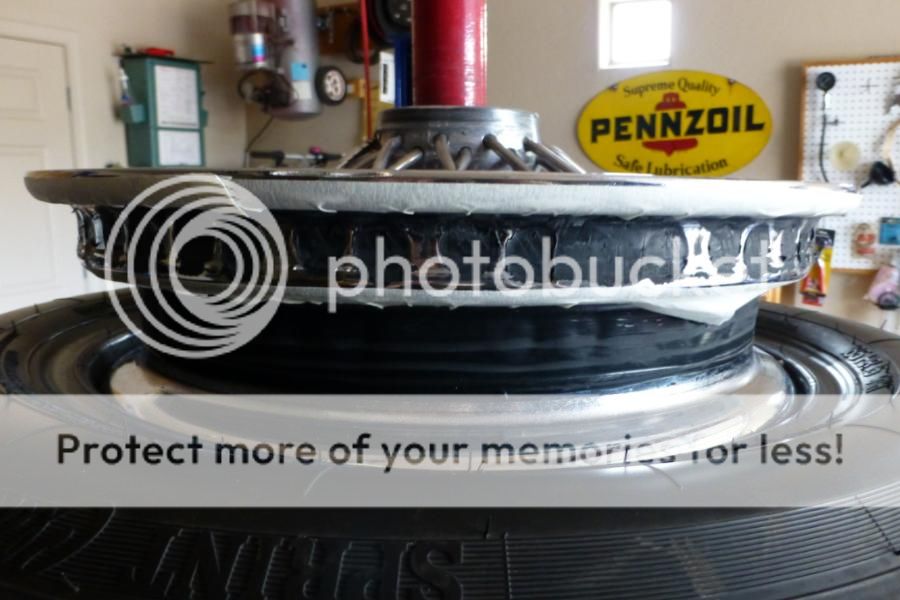
My tubeless wires from Dayton leaked from the start, to me the sealant looked skimpy in spots:

OriginalSeal_zps7b8555de.jpg


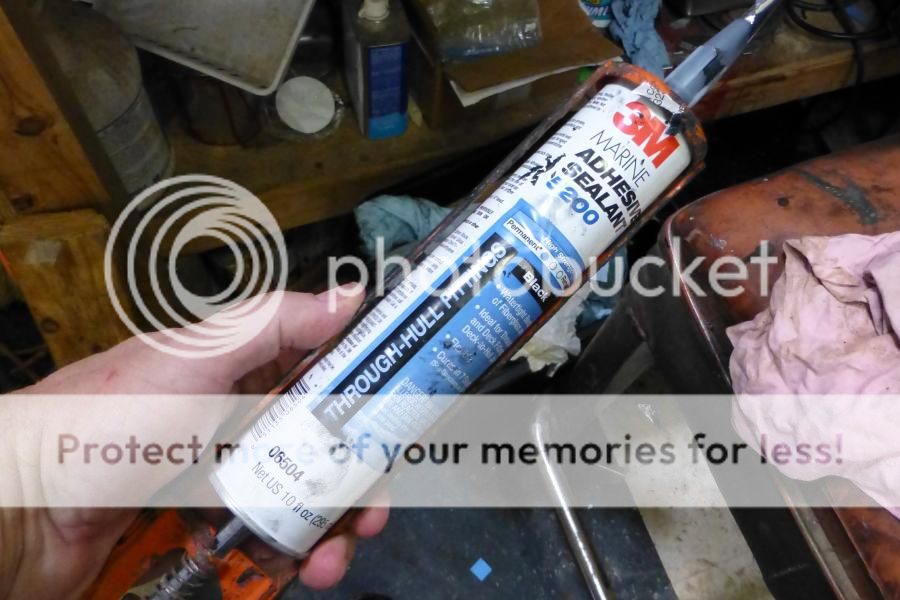
I resealed them using this:

3M5200_zps58b7a158.jpg


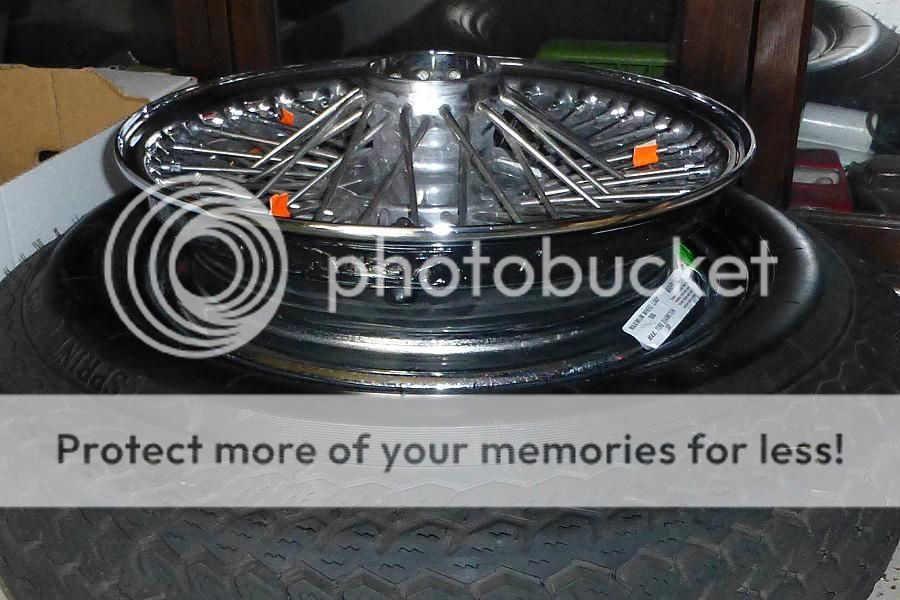
Spread it on as a single coat rather than a dab at each spoke:

RegSealed_zps7a78804f.jpg


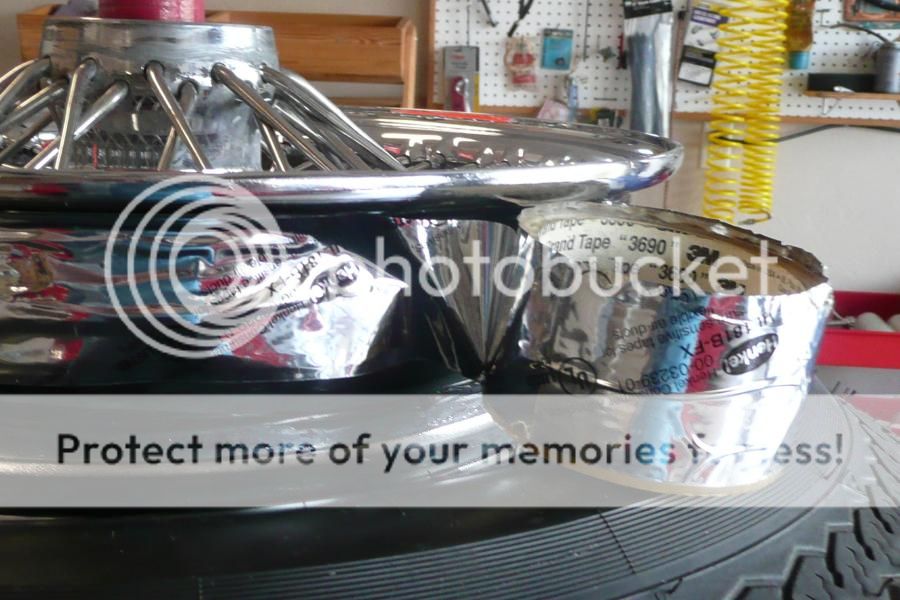
Once dry I covered the seal with metal tape (real duct tape) - this protects the seal during tire mounting:

RegMetalWrap_zps88f16756.jpg


No tire issues in the 3 years since,

Note - not my idea, taught to me by another Forum member.
 
Back
Top