• Hi Guest!
    If you appreciate British Car Forum and our 25 years of supporting British car enthusiasts with technical and anicdotal information, collected from our thousands of great members, please support us with a low-cost subscription. You can become a supporting member for less than the dues of most car clubs.

    There are some perks with a member upgrade!
    **Upgrade Now**
    (PS: Subscribers don't see this gawd-aweful banner
Tips
Tips

TR6 Japanes TR6 starter engine - good idea or bad?

TRnorwegian

Senior Member
Offline
Seems I need to replace mine, and the workshop (specialist old british cars) recommends a japanese after market type.
Would that be a good or a bad thing?

Update with regards to my other probs; after having drained the fuel tank for months of condensation, changed fuel filter, plugs, coil, grounded the chassis and checked the dizzy, ignition, point gap etc, I threw in the towel and let paid experts give it a try.

4 hours later they had changed all moving parts in the dizzy, cleaned out the carbs and changed some weak gaskets, tuned the carbs and ignition. And most important: Cut away the hose which for some reason ran from valve head cover to carbs and brake servo, messing up the vacuum in both the carbs and the servo.
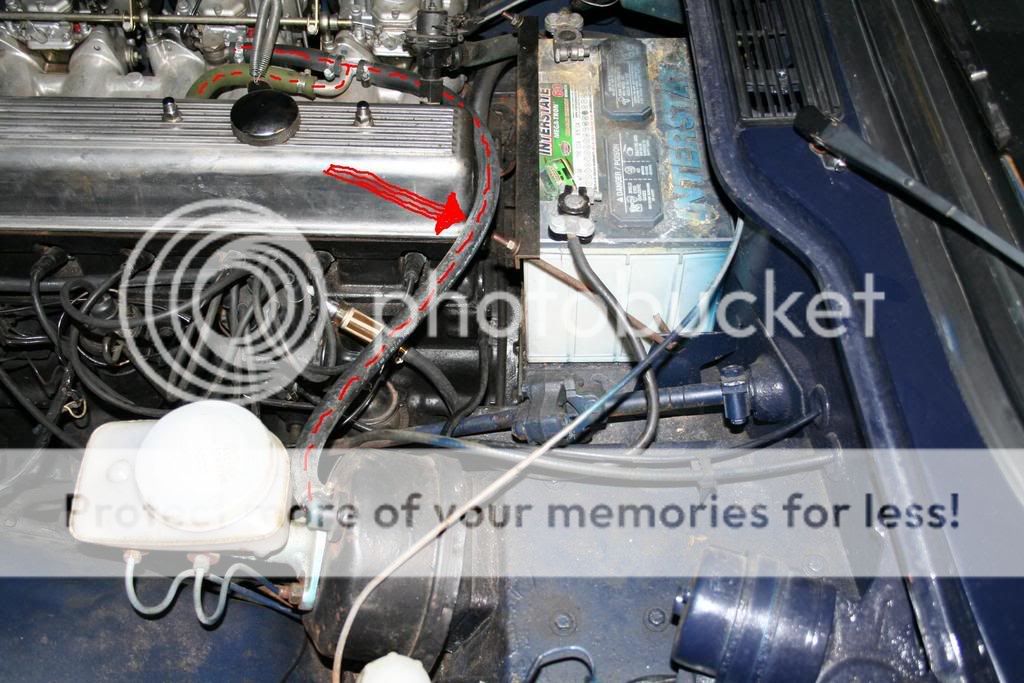
Pict004e.jpg


P.S. This picture taken before the fuel line was rerouted.
 
The OEM or stock Triumph starters often last for up to 30 year or more.

Not bad, IMO.

Save your money and buy an OEM replacement from one of the prominent vendors. It will look correct on your engine, too. :yesnod:
 
It all depends on what you're into. If you want the car to be correct, then stick with the original. If you want increased performance from the starter, go with a Japanese starter. The advantages of the Nippondenso units is that they are permanent magnet, gear reduction units. As a result, they will use much less current to spin the engine over at a faster speed. They also weigh about half the original and are very reliable. Another advantage is that they can be serviced with readily available inexpensive parts. Any local electrical rebuilder will have a ton of parts for these sitting on the shelf. The only thing different for the TR application is the drive end housing that is custom made.

I have one in my TR3 and wouldn't go back to an original. Of course, I'm not showing the car in concours events.
 
martx-5 said:
...Nippondenso units...will use much less current to spin the engine over at a faster speed. They also weigh about half the original and are very reliable. Another advantage is that they can be serviced with readily available inexpensive parts. Any local electrical rebuilder will have a ton of parts for these sitting on the shelf....
All true. On the other hand, there's really nothing seriously deficient about the original Lucas starter for a stock or even mildly massaged engine. Plus, those same local electrical rebuilders seem to have pretty good stocks of whatever your Lucas starter might need. So unless your original Lucas starter needs a new armature, bushings and case, it's probably worth rebuilding for another 30-40 years of service!
 
I've actually put two of the new units in (different cars) and they are definately lighter and spin the engine over more easily. Is that really needed? Probably not, and the guys make a <span style="font-weight: bold">very fair point about the original units being solid.</span>

That said - I'm hooked on the new ones.
 
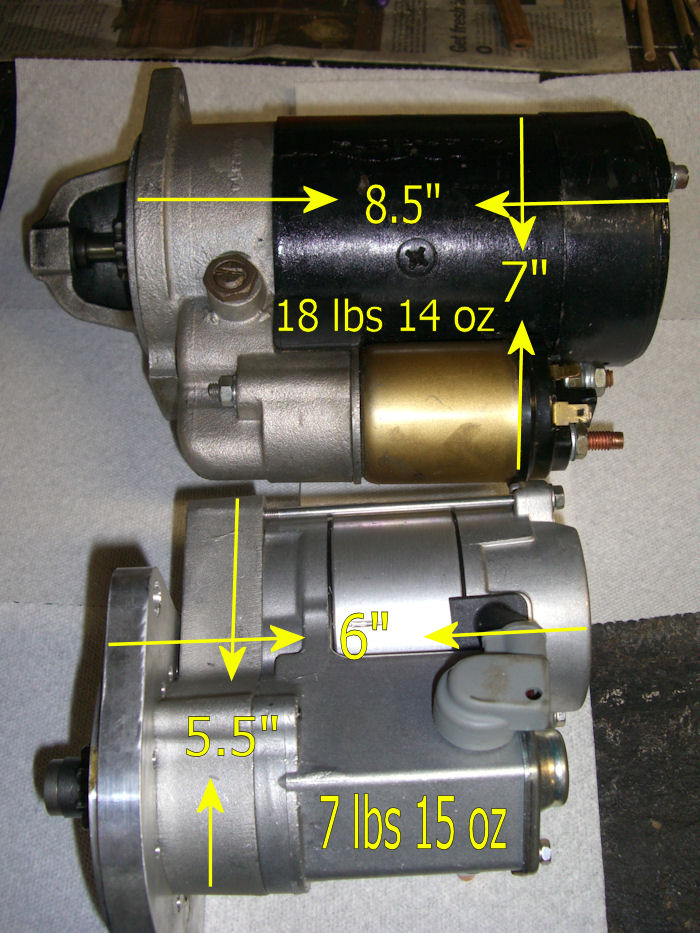
We all know that originality isn't my thing so when my Lucas starter finally gave up last year I went with a gear reduction starter from Ted Schumacher. It's a great starter that is significantly smaller and weighs a whopping 11 pounds less then the stock one.

TwoStarters.jpg
 
HUM!! Nobody has noticed the triple Webers, they can create their own problems if not set up right the first time. I have my own to go on when the weather gets a bit warmer.

Wayne
 
Well, Wayne got a point. Originalitywise, if I can live with Webers, the starter is a lot less prominent part. And I would of course keep the original starter for future regrets.
 
No one has mentioned that the original starter can be frozen in cold climates. Literally frozen. Ice will form on the brush/commutator contact and until it melts, or is knocked off with a hammer, NO START..

Being as you live in a cold climate, I too recommend the Hitachi/Isuzu design starter. Used em on my 6's for over 15 years no problem...
 
I had my starter rebuilt locally and it is just great. Really, it is as good as new. Most parts were replaced and it is good to go another 35 years!
 
The original starter on my TR6 was working just fine when I replaced it. But I had a TR4 in the 60's and a GT6 after that and had driven them about 150,000 miles altogether. During that time I had to repair the starters several times. The brush springs would get hot and loose their tension and the starter would not always turn. I would then remove the starter and replace the springs and all would be fine for a while. So when I built my engine I thought it would make good sense to repair or replace the starter and I opted for a new gear reduction starter. Now I am glad I did.
 
Hi. I went with the new gear reduction starter when the old gave problems.
Gives the engine an updated "zing" sound at startup.
 
I'll ditto all the comments above. After struggling with a series of Lucas starters on my TR3A (including one "rebuilt" from eBay that proved to be full of abrasive media), I installed one of the gear drive things. Works great.

But the project TR3 will get to keep it's orignal starter until/unless it develops problems; or I get around to installing the aluminum flywheel (that the gear drive one matches).

On the TR2-early 3A there is an additional advantage to the gear-drive starter; which is that it can fit the early flywheel and gearbox but not interfere with headers that will not fit with the original starter. Not relevant to a TR6 of course.

Truly my only "complaint" with the gear drive is that it no longer sounds like a TRactor engine being cranked. It's more like a jet engine! The starter winds up and the engine is just running, there's no noticeable chug-chug-chug.
 
I guess I can live without the chug-chug-chug, leaving me doubtful to whether it will fire up. But of course I'll hang on to the original, keeping the door open for future second thoughts.
 
Then there's the possible TR3 conundrum that I inherited: Early style transmission housing bolted to a motor with the later, bolt-on ring gear flywheel. Of all the possible solutions, buying the modern starter for the later flywheel was certainly the cheapest and easiest.
 
Back
Top