• Hi Guest!
    If you appreciate British Car Forum and our 25 years of supporting British car enthusiasts with technical and anicdotal information, collected from our thousands of great members, please support us with a low-cost subscription. You can become a supporting member for less than the dues of most car clubs.

    There are some perks with a member upgrade!
    **Upgrade Now**
    (PS: Subscribers don't see this gawd-aweful banner
Tips
Tips

TR6 Best break in oil for rebuilt TR6 motor?

zmayne

Member
Offline
Hello all,
First post here. I just finished a rebuild of my TR6's motor and am getting conflicting tips on what type of oil to use for the break-in period. Any recommendations? Can I just go with modern 20W50 or do I need to use a non-detergent oil?
This is a performance rebuild, if that matters. (Triple webers, .060 overbore, ported and polished head, big valves, h/d springs, header, fast road cam, lightened flywheel, custom freeflow exhaust.?
Thanks for any suggestions.
Zach
 
Straight 30 weight is generally the most recomended for break in, which is what Im getting ready to do. My recomendation for brand of oil (for the 30 weight) is Castrol or Valvoline, they are both suppose to have a higher zinc content which helps the break in and longevity of the motor. Asking about oil always proves to be a can of worms---you will see alot of different opinions.
 
Hi Zach. There has been much discussion on this forum about that subject. You might want to look around in the archives a bit if you choose. However, it seems that at least two oils are presently acceptable. One being Castrol GTX 20/50 and another being Valvoline VR1 50W.---Keoke
 
Nice rebuild, Zach. Triumphs love Castrol 20W50, even for a breakin. Since you will be dumping a lot of assembly lube in the oil from that cam, etc., make sure you just change it after about 500 miles. (Castrol looks good on the garage floor, too.) Have you cranked her yet? Make sure that you get that cam set up right. Using a high-torque starter or still with the Lucas? Sounds like you are on the higher limits of streetablity. Tell us more. Can't wait to see some of your pics.

How are you planning on cooling that monster?
 
Use a normal oil 10w40 or 15w50 and drive the car with lots of power (incl. some full throttle sprints) and quite high revs (<4500) for about 30mls. After that the engine is full break-in and can be used as you like.

Change oil and filter after 60mls.

Cheers
Chris
 
Probably more important than the type of oil is HOW you start it up the first time.
You can take the distributor drive gear out and using a long extension drive the oil pump with a drill. This will ensure that the oil has been properly circulated around the entire engine. Be prepared when the pressure starts rising, the drill will really want to spin away!
I would also give the entire engine a spin with the spark plugs out to make sure oil is splashed all over.
According to many top rebuilders, the main reason for early failure is inadequate lubrication at start up.
 
As others stated, the oil isn't as important as having enough anti-friction additives (zin & moly) to protect the metal. Add a full bottle of GM EOS to the break-in oil. This is important even with the proper assembly and cam lube smeared on the internals.

1st 25 minutes on a new engine is most critcal to the cam and lifters. Start the engine and keep it steady at 2500 rpm for 20 minutes' DO NOT BLIP the throttle - this will scuff the lifters and cam lobes. After this shut down the engine and let it cool.

Then for the 1st 500 or so miles follow Max Marx sugestions. Dump the oil, switch to your choice of oil and add 3 oz of zinc supplement (GM EOS) to EVERY oil change thereafter.
 
PeterK said:
As others stated, the oil isn't as important as having enough anti-friction additives (zin & moly) to protect the metal. Add a full bottle of GM EOS to the break-in oil. This is important even with the proper assembly and cam lube smeared on the internals.

Then for the 1st 500 or so miles follow Max Marx sugestions. Dump the oil, switch to your choice of oil and add 3 oz of zinc supplement (GM EOS) to EVERY oil change thereafter.

Peter,

Where is this GM EOS additive available? GM dealers or parts houses?
 
I do it this way at all my engines:

fire up....find idle speed and adjust timing and carb synchronization. Then I rise the idle speed to 2000-2500 rpm let the engine idle for 10min. Take care for the water temp.

After this I drive through town with the car and use the traffic lights for standing starts and pull away with almost 3/4 throttle and after shifting back-up the throttle get oil to the rings.
Reason for this...you need pressure on the piston rings to squeeze them against the liner wall. This has to be done early because if the honing marks are gone there is NO bedding in possible. I do this for 20 km.

After that I pull away from the traffic lights with full throttle through the gears and back-up the throttle for oil feeding the rings again. I do this for 10km.

After that I go out on country roads and highways and speed up to the rev limit and for longer distances (10-20sec).
This is done 20 km.

After I do a compression check, compression leak check (less than 5 percent) and drop oil.

Engine is ready to race and will last. My compression check readings are around 222 psi..
 
Just a quick comment on oils:

Most modern oils have reduced ZDDP (Zinc Dialkyl Dithiophosphates), an additive that reduces wear but also fouls catalytic convertors.
You can find higher amounts of ZDDP in diesel-oriented oils such as Shell Rotella 15W-40. I've had some people I respect recommend Rotella as an excellent oil for older Brit cars but I have not used it (yet).

For racing, I use Castol 20W-50 (or 10W-40 in the colder months). I'm planning on trying Rotella in my Street Midget, when it's done.

As others have said, hold your engine RPMs at +2300 (or so) for at least 20 minutes. This will assure good slash lube to the cam and lifters, which are slow to break in.
 
Great. Thanks guys. That was terrific response. I'll post some pics here shortly and tell the story about the car, like discovering a GT6 crankshaft and pistons in the motor instead of TR6 ones, making it a 2.0-liter instead of a 2.5-liter. Oh, that's why there was no torque :smile:.
 
I disagree with using full throttle for break-ins, I think taking the motor through some repeated and gradual acceleration and deceleration going up to no more than about 3800 rpms, do this for about 200 miles, change the oil and then start working your rpms up. dont give it full throttle starts or power shifts for at least 400 miles. I still believe 30wt is best for break in, switch to a multi weight at the first oil change if you want and if you are going to use synthetic put 1000 miles on your motor before you change to it.----Zach, I warned you about the can of worms on this one
 
Zach, if you dont want to go with the straight 30wt then go with the Rotella, it has more zinc and is lighter weight which would give you a little better flow for break in.
 
Rotella T now has reduced their levels of zinc because some new diesels now have catalytic converters. If the oil spec says "SL" and not also "SM." then it is the old Rotella and has the needed ZDDP, but the later spec Rotella T API SL SM has already reduced the ZDDP. Still SOL without an additive. BTDT. I add GM EOS. OK. YMMV.
 
Peter, I agree with the GM EOS--although I have never used it, you see it recomended in almost all hot rod engine type articles and almost on all car forums---I am going to use it for my break in----Peter, does the SL only apply to all motor oils and did you mean as long as there is no SM the oil will have more zinc? ---I looked at the different oils im my shop and the newest sythetic and multiwieght oils are rated with SL, the older and single weight have a SM--so which has more Zinc?
 
ALLAN said:
I disagree with using full throttle for break-ins, ......

You never saw how new Porsche engines are break-in on a dyno...mounted to the car and go on a ride before the car reaches the customer.

They do it like this on every engine and Porsche engines last.

My father was engineer at Ford...he said that the tentative break-in procedures are only invented by the companies to get the car over the first 1000 km without failure. Then warranty is partly over.
A Gremlin engine will fail at full throttle at once but will fail also after 5000km with gentle break-in.

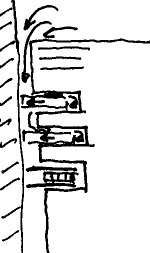
See on the sketch how the combustion press the ring against the liner...the stronger, the better...

Cheers
Chris
 

Attachments

  • 5163-break-in.jpg
    5163-break-in.jpg
    62.9 KB · Views: 172
MadMarx, I think you are right about the possibilities of failer between full throtle and gentle break in, But generaly speaking the reasons for a gentle break-in is this----iron block (non aluminum)and non race engines usually have tighter tolerances between the pistons/cylinder and bearing/crank surfaces, because of theese tight tolerances you need a gentle break in to avoid extreme friction and heat that would be generated at higher rpms untill the engine has broken in. I have built a few race engines and I know that with them and probably the Porche engine they are built with more clearance between the piston and cylinder which would allow you to go for full throttle break-ins. Unless you have built your Triumph motor with extra clearance, then I will stand behind a gentle break-in. Im no engineer --just my humble experienced opinion.
 
Back
Top