• Hey Guest!
    British Car Forum has been supporting enthusiasts for over 25 years by providing a great place to share our love for British cars. You can support our efforts by upgrading your membership for less than the dues of most car clubs. There are some perks with a member upgrade!

    **Upgrade Now**
    (PS: Upgraded members don't see this banner, nor will you see the Google ads that appear on the site.)
Tips
Tips

Atlantic crossing of the blue TR from PR

I was told about Linje, so that is what I got. Definitely rocket fuel, but after the first one you don't care.
 
Hi there,

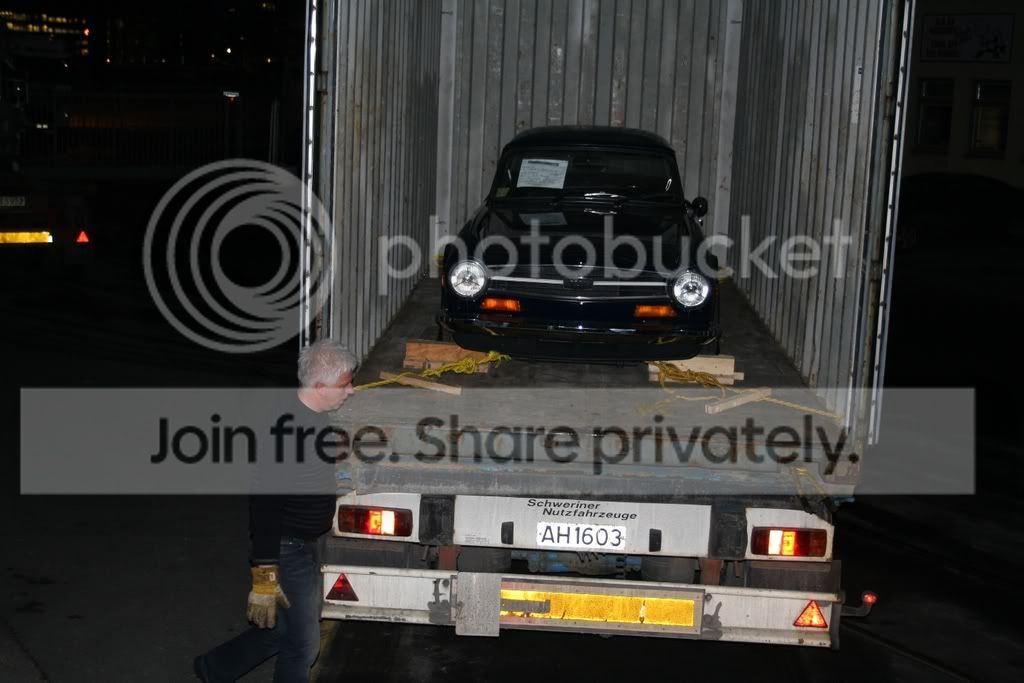
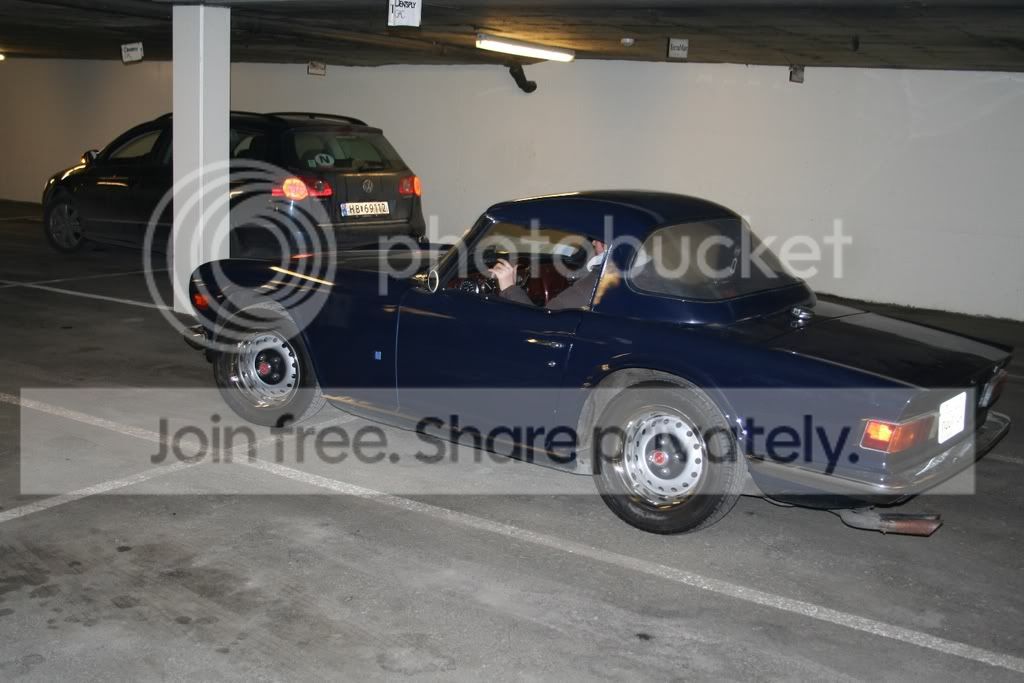
I promised you guys an update, with pictures. Because yes, I finally received my car today, safe and sound! It lives up to my expactations, no surprises yet.

Only two problems detected so far:

- Tail lights are not working.
- Engine is struggling to work properly. Spitting, puffing, not revving enough, unclean behaviour. I think the carbs have sucked in moist from months of storage under various temperatures. (even though I added condens-remover to the petrol tank, before firing, it was probably not sufficient)

Any good suggestions to how I blow the moisture out of the carbs?

Anders
Bilde150.jpg

Bilde176.jpg
 
Nice to see a "local" car taking a vacation in Norway.
I look forward to the ski slope photos.

Anders, you could try dropping the cab bowls, clean
them out, spray carb cleaner into the carbs and install
new air filters. Also check your fuel filter for crud.

The engine sounded strong the last time I listened to it.

No rear tail lights could be a popped bullet connector.

Drop a magnet on a string into your fuel tank.
See if the magnet brings up tank rust with it.

Great that your car arrived.

<span style="color: #990000">Eidt: Thinking back on it, Anders, that
triple set up did have a bit of difficulty remaining running at lower idle RPM. </span> Edit:

best wishes,

dale in Puerto Rico
 
Anders: That car has had more miles sailing than driving.
You could name it Moby Dick, Orca, Ahab ect.
Perhaps you could hold a name the TR6 sailer competition?
What a wonderful Christmas present.
You should have NEVER let Dale touch it!
Emmett

 
emmett1010 said:
Anders: That car has
You should have NEVER let Dale touch it!
Emmett

Thanks for the vote of confidence Emmett.
Funny but true- Ander's car has tons more mile at sea
than I've been able to get out of my car in three
years on land.

Maybe I need to build a small barge and drag my TR6 behind
my fishing boat?? I could wire the TR6 up into a sound system
and use it as a large music box!

I've already got the outriggers for the TR6 Tee-top !!

d

NewTeeTop.jpg
 
Anders - remember that most carb problems are actually electrical. make sure the distributor cap is moisture free, that the plug wires are all snug and tight etc... If that doesn't take care of it then make sure the cap, rotor, condenser, coil etc are all installed properly and connections tight.

If that doesn't do it - then start thinking about the carbs.

Chances are if it was running fine in Puerto Rico it might just be moisture related electrical.

Let us know how it goes.
 
Anders, happy to know you recived your present in time!! enjoy it!!! in your garage!! happy holydays!! or as we said "FELIZ NAVIDAD"

hey, I have another car to sell you, that you can used it in winter!! a Crosley jeep.
 
Thank you all for useful advice.

I'll try to find a carb cleaning product to use, drain the tank, change the fuel filter and check the distributor cap for moisture.
What do you mean by "dropping the cab bowls"?

Is there a draining plug in the petrol tank, or must I rely on disconnecting by the filter?

I notice only two circuit breakers are installed (the two in the middle). Can this explain the lacking tail lights (as well as lacking instrument lights)?

Should I expect anti-freeze has been added to the coolant liquid?
 
An auto parts store will have a hydrometer for checking your antifreeze protection level.
I'm not aware of any circuit breakers unless that is what you are calling the fuses. I suppose they could be considered a circuit breaker, though
The fuse to the instruments are on the red wires at the fuse box as are the tail lights.
Keep in mind that if the fuses were missing, that may have been the way the PO dealt with a "short".
BTW although there are 4 fuses in the fuse box, normally only 3 have circuits. The forth being a "spare".
 
Yes, I believe fuse is the right word. I have also guessed the lacking fuse could derive from dealing with a short. The bottom fuse slot seems a spare, while the top (also missing) are "connected".

I'm now doing all necessary to ensure the stream of fresh fuel. Too bad I have already sucked in old, conterminated juice. Will I have to dismantle the all carburettors entirely I wonder?
 
Andrew Mace said:
...or, if you haven't already, just get rid of whatever fuel is still in the tank and start over with fresh fuel!

I think the freighters emptied the fuel tank from security reasons. So the petrol is fresh, but there has been perfect conditions for condensation.
 
This is how the car has behaved so far:
- Wouldn't start when moving out of the container. A few tiny coughs although.
- Towed a mile or two, then fired up occasionally when towed, with small explotions in the muffler and misfiring all over the place. Wouldn't run on it's own.
- Towed another few miles, then shaping up a notch. Able to keep the motor alive for a couple of minutes, then died.
- Towed another few miles, shaping up again, seemingly possible to drive unaided, but power decreased steadily and failed after a few hundred meters.
- Towed ten miles and yet again hope. Possible to drive half heartedly around the block once, then power decreasing and it finally died.
- Since then no towing, only jumper cables/charging, while trying to detect the source of the problem. No luck firing it up again yet. A tiny cough now and then, that's all.

I checked the plugs, which were oily/wet. Seems quite new. Removed the distributor cap and noticed it looked ok, even though somewhat original.

A little history: The fuel pump is said having been replaced 2006/2007, at the same time the engine were fitted with a Weber conversion. It seems the car has only been driven 1000 miles since then.

It's a 73 model, which went into storage in 1983. Recovered from a horse barn near Niagara Falls in 2005. Restored during 2006/2007 (near Ft. Lauderdale I think), and driven only 150 miles before sold to Puerto Rico late 2007. Then driven 800 miles during six months before I bought it this summer.
 
poolboy said:
You at least need to identify them. One of these ?
https://www.webernorthamerica.com/weber_carburetor_schematics.html

I've looked through the different types. Broken into pieces they don't necessarily look their best, but as far as I could tell they look very simular to the type 50DCO. (which seem to have a bottom cover).
 
Look closely at the carbs. I'd be surprised if they didn't have the model # on them somewhere.
 
Back
Top