• Hey Guest!
    British Car Forum has been supporting enthusiasts for over 25 years by providing a great place to share our love for British cars. You can support our efforts by upgrading your membership for less than the dues of most car clubs. There are some perks with a member upgrade!

    **Upgrade Now**
    (PS: Upgraded members don't see this banner, nor will you see the Google ads that appear on the site.)
  • When posting a classified ad, you MUST select a prefix from the drop-down next to the subject line. If you don't you will get an error and your ad will not be posted!
Tips
Tips

Any experience with resealing a gas tank?

If you're planning on soldering the holes, don't focus on solder alone to cover bigger holes. Like Randall mentioned, bridge the larger openings with bits of metal. You could use shim stock or bits of old tin cans as he mentioned. Very doable as long as you have acid flux to work with and can get the area clean. If you can't find acid flux you can buy tinning butter from Eastwood which should achieve the same thing. Do not even think of using resin core solder or resin flux.
 
Solder has less strength than braze. But if you lay a patch over the hole and the patch is formed to lay against the tank it will be much stronger. Not sure about solder but braze will have very high strength if the space between the joined pieces is about .002" and less as it approaches about .010". After that it soon becomes only the strength of the braze itself. If there is no space between and only relies on that around the edges it will have little strength.
 
TexasKnucklehead said:
So how big a hole would you patch with solder/tin -or was the repairs limited to the seams only?
In my case, the leaks were all pinholes (lots of them). But a pencil-sized hole doesn't seem like a problem, provided you have plenty of overlap for the patch and a good solder joint in the overlap.

Seams are harder to solder, though, because it's difficult to get the metal clean inside the crack and solder will only stick to clean metal. I might be tempted to use JB Weld & fiberglass instead of solder, on a seam.
 
tomshobby said:
Obviously I never had a tank explode but did have one, very very quickly, increase its capacity once. I had rendered the tank safe to weld on and after some welding I paused the welding too long before continuing. The reason that happened (and I knew better) is that fuel actually permeates the metal and once fuel has been stored in a tank it can never again be trusted to be safe. In other words an empty tank should always be regarded as a potential bomb.

Same thing happeded to me while welding a motorcycle tank with a torch. All went well until I paused slightly and got a burn through. A perfectly good Triumph tank turned into a basket ball and the report brought people from the showroom, parking lot, and the street. Hearing returned in about a hour. Knot on forehead took a little longer.
 
Which is exactly why I suggested letting the tank dry in the sun (gasoline evaporates more rapidly than water, even when it's hiding in the pores/rust) and checking for odor. Your nose is (or should be) easily able to detect fumes far below what will burn ... if it doesn't smell like gas then it won't burn.

For exactly the reasons mentioned, I still feel this is far better than the "fill it with inert gas" approach. But YMMV and all that. Obviously the safest thing to do is take it to someone else and let them take the risk !
https://www.gastankrenu.com/
 
I don't want to step on any toes, but gasoline does not permeate metal (steel). It may be caught under and be a constituent of rust particles or crud on the sides or in a seam, but it's not in the metal.
 
SkinnedKnuckles said:
I don't want to step on any toes, but gasoline does not permeate metal (steel). It may be caught under and be a constituent of rust particles or crud on the sides or in a seam, but it's not in the metal.
Uhm, so when you have a leak, it just teleports from inside to outside? :laugh:

Perhaps we are arguing semantics here, but a rust pit, for example, even a microscopic one, is quite capable of holding liquid gasoline. And poor quality steel can easily have 'veins' of rust or voids that go on for some distance within the metal. I've not seen that with a TR gas tank, but the rear deck of my GM car had quite a bit of it. The rust was literally running up the middle of the sheet, over half an inch away from the edge. (Easier to throw it away than fix it, so I did.)
 
So, John. You have a wealth of ideas and coaching here. Where are you at with this? Hmmmm?

And don't lay some story on us about how kids, girlfriend, house, work is slowing you down. ;-)
 
Maybe so on the semantics, but none has to do with permeability in metal. Sure, if there are folding cracks in the sheet metal (geeze that would be a leaky mess) there will be wicking between layers. And that would be hard to clean up.

The teleportation leaks are not through metal, but through pits in the about to fail mode. Through oxide. What I was getting at was hydrocarbons don't permeate steel and create explosive metal. That's not the real source. And yes, always be very careful applying flame to a gas tank!
 
Brent, doesn't make any difference if you believe it or not. The plain fact is that the surface of metal is not a closed molecular material but has openings where molecules are in fact missing from the structural matrix. This is plainly visible when looking at samples of steel using an electron microscope. We had such a microscope in the lab where I taught metallurgy and the images were such that individual molecules were visible. By setting the resolution of the microscope it is also possible to see past the surface layers of molecules and further into the sample. Before the first time I saw this I always thought of the surface of a piece of steel as a smooth, solid layer. Not so.
In fact it is these flaws that allow moisture into the metal to form rust. No missing molecules would mean no rust could form.
The point is, please be careful using heat on gas tanks.
 
[quote

I might be tempted to use JB Weld & fiberglass instead of solder, on a seam.
[/quote]

JB Weld and ethanol don't get along. The ethanol.
will eat right thru it.

Sam
 
SamL said:
JB Weld and ethanol don't get along. The ethanol.
will eat right thru it.
Interesting! I was not aware of that, but some quick research seems to agree entirely with you. Apparently some fuel will even attack "ethanol resistant" epoxies, not so much from the ethanol but from other additives found only in some brands of fuel.
 
Tom, I've no doubt that the structure of atoms on the skin of metals can hold hydrocarbons. That's the basis of modern catalysis. Permeability was the subject, I thought. Let's give this a rest.
 
OK, this is what I did...way off the wall but very effective.
Sealed the holes with duck tape. Threw in some resin type abrasive material, like you would use in a vibrator tumbler, strapped it to my portable cement mixer and let it mix (tumble)for a day or so.
came out clean as a whistle, then used the Eastwood kit.

Worked very well!!

Mikey
 
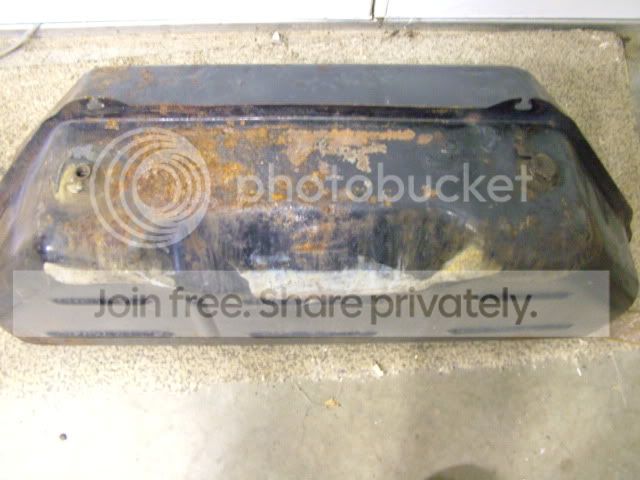
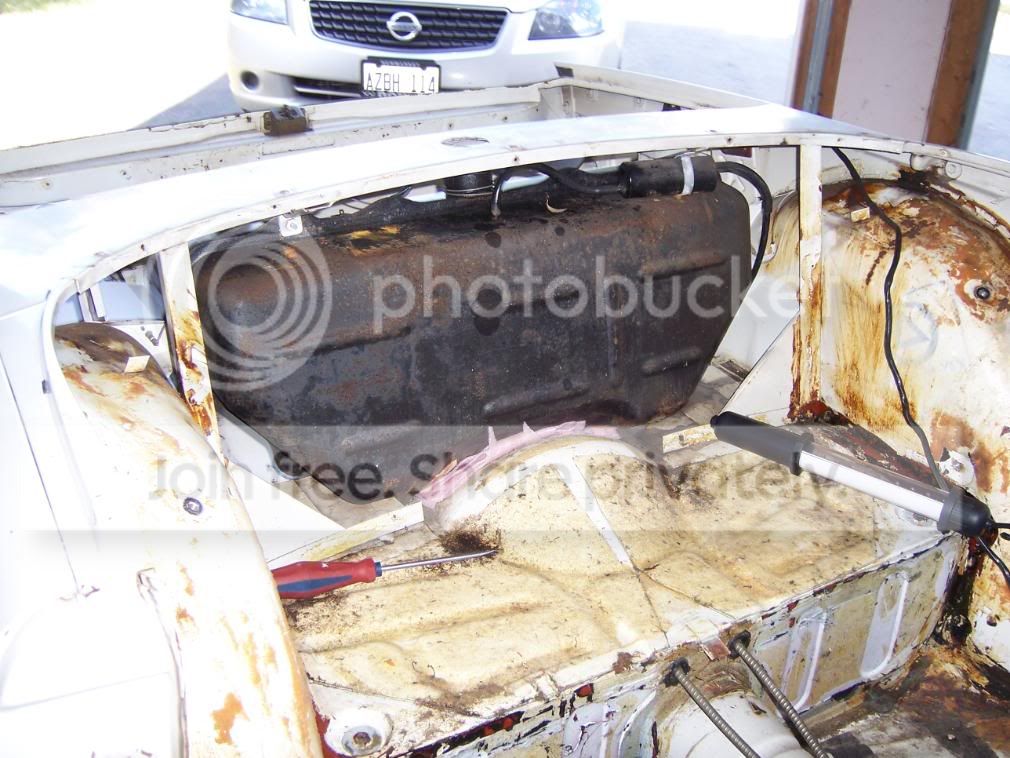
Here's my tank. Sending it off to be done
DSCF6143.jpg
 
Don,

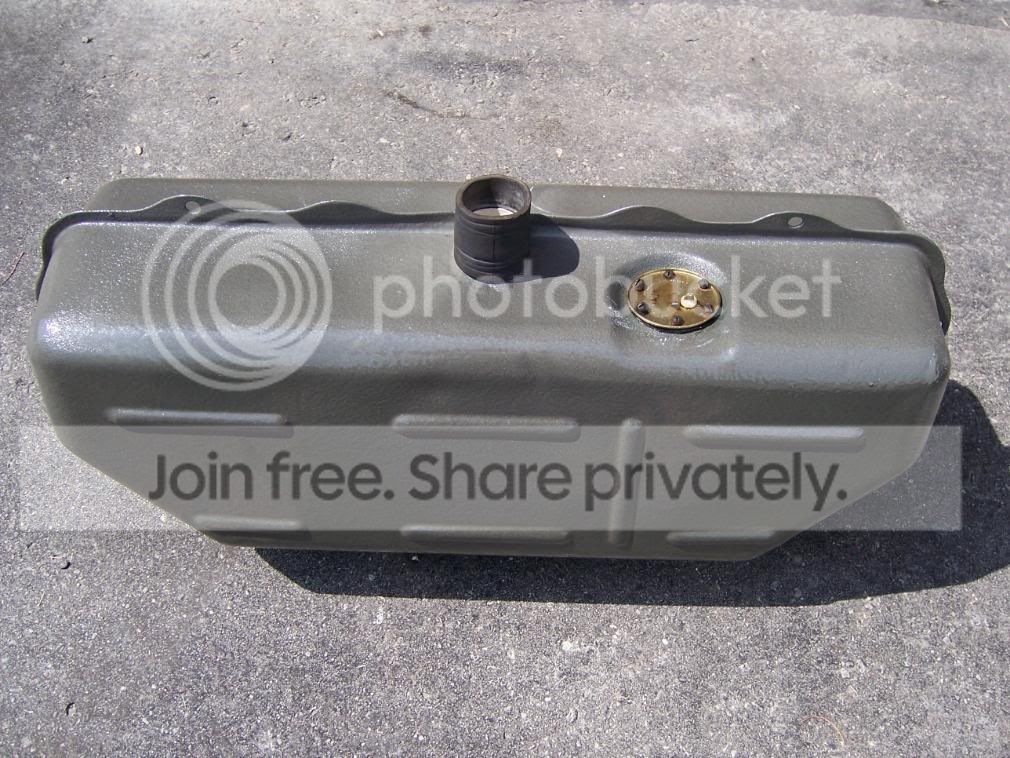
Gas tank RENU

100_1118.jpg


100_1731.jpg


100_1730.jpg


Sealed, inside and out.

Cheers,
M. Pied Lourd
 
Dave- Yours is like a 69 isn't it.

The RENU in your sentence. Did they do it?
 
Back
Top