• Hey Guest!
    British Car Forum has been supporting enthusiasts for over 25 years by providing a great place to share our love for British cars. You can support our efforts by upgrading your membership for less than the dues of most car clubs. There are some perks with a member upgrade!

    **Upgrade Now**
    (PS: Upgraded members don't see this banner, nor will you see the Google ads that appear on the site.)
Tips
Tips

1500 top-end rebuild

70herald said:
Nial
Is there something on the frame of the MG which makes it impossible to get the oil pan off? As long as the pan comes off, the mains can be replaced, without pulling the crank. Easier with the engine out, but doable.

The oil pan comes off a 1500 in the Midget chassis easily.

And I'll grant that the main bearing inserts can be "finagled" out this way.
But for the effort, it would seem so much easier and correct to just pull the engine out of the car. I guess that's a matter of opinion.

As I said, the mains are likely to be OK. It's the rod bearings that wear much quicker (but you could pull a main bearing cap and have a look, just to sure, if you like).

<span style="font-weight: bold">Duncan</span>--I would do as you have it listed. If the bores look OK, you can clean them up with a "dingleberry" hone (clean bores well afterwards and make sure any stuff on the crank is cleaned off too).

To be entirely honest, if the cylinder bores are decent, you could probably even skip the honing. Just before re-installing the pistons, clean the bores up nicely with a Scotch-Brite pad and some kerosene, wipe them clean and oil them with motor oil.
If there is a noticable "ridge" at the top of the bore, you may have to remove it. It may be just carbon (so you can scrape it off with a razor blade). If the ridge is due to excess cylinder wear, you'll have to decide if you need to re-bore the engine (big job). If the ridge is not too bad (say about 0.003"), you can use a "ridge reamer" tool to remove it (you may be able to rent/borrow one locally).

Install one piston and rod bearing at a time. But just "snug up" the rod bolts (about 20 ft lbs). As you reassemble each piston and attach each rod to the crank, make sure the crank still spins OK. When all done, go back and torque each rod cap to correct value. Some folks add some Lock-Tite to the threads at this point (I do).
 
Excellent info, thank you all!

So here's today's progress...

- got the head back from the machine shop, -0.100"

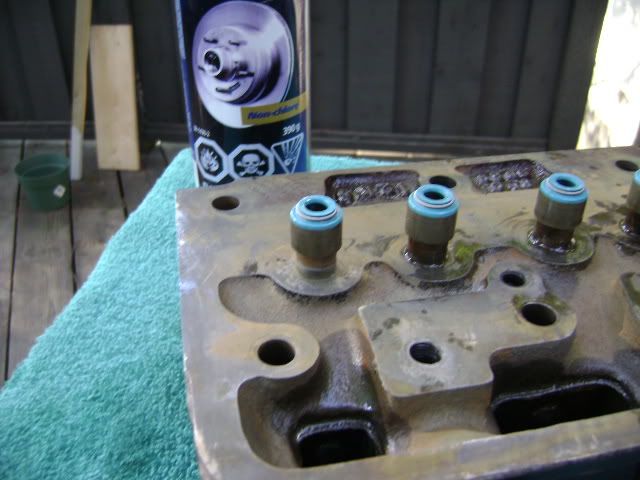
- Found the viton valve stem seals that have been banging around in my change jar for a year

- Turned on the bench grinder, and used a brass brush to clean up the valve faces

- Finished smoothing the intake runners, and thoroughly washed out all the passages in the head.

Time to rebuild!

headrebuild002.jpg


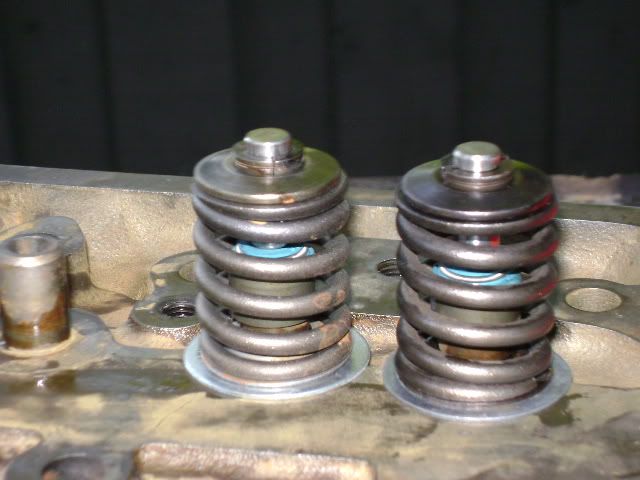
Excellent fit, nice-looking product... Of course, I fitted them all, and the realized that I'd have to put the shim and lower spring seat on first... :p

headrebuild004.jpg


headrebuild005.jpg


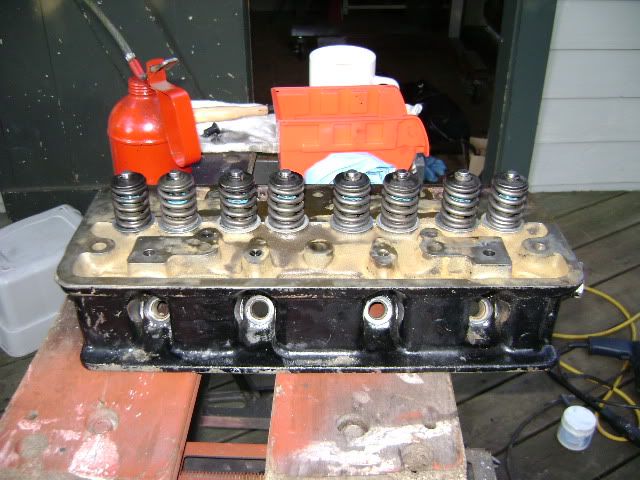
Broke down and bought a nice little spring compressor, which made this all very easy.

headrebuild007.jpg


headrebuild010.jpg


As mentioned, I will *not* be putting the fan clutch back on, but rather going with an electric fan.

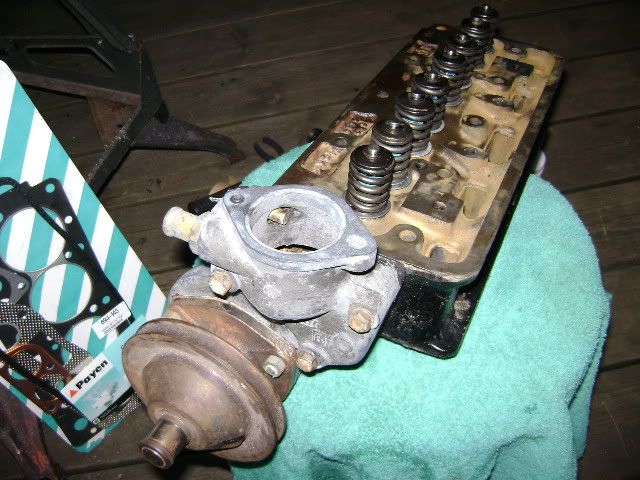
Hit my first snag, tho. The water pump housing casting (grey in picture) has been sitting in rust-disolving solution (phosphoric acid) for a couple of days. Worked great... except that the p/side (left in photo) threaded hole for the thermostat housing has lost so much metal, it won't bite. So I'm going to have to drill and tap it to the next size up.

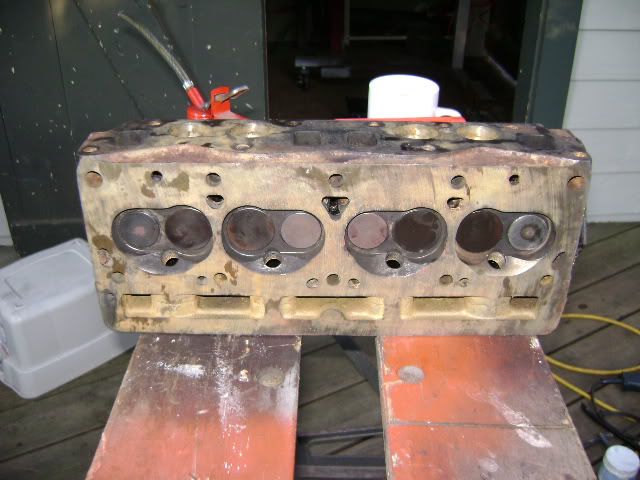
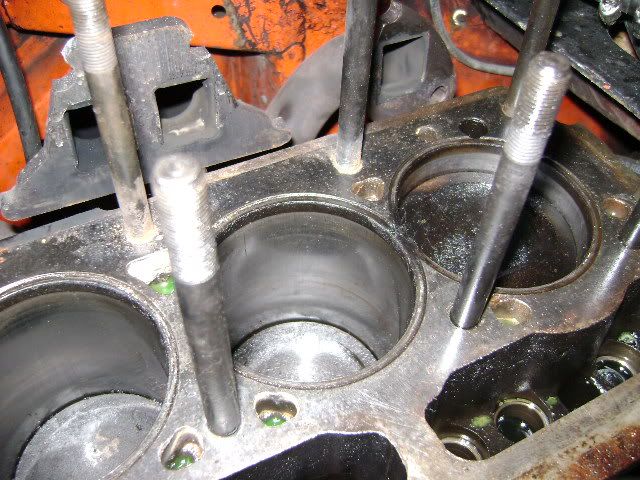
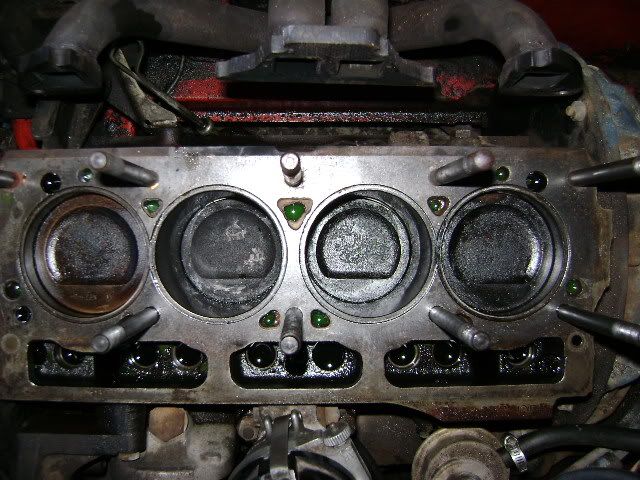
And just to round it off... a couple of pictures of the bores.

headrebuild009.jpg


headrebuild008.jpg
 
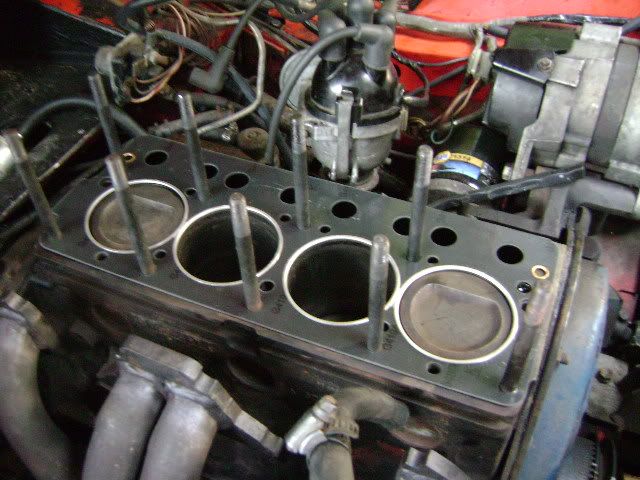
Well, after boring the waterpump housing bolt hole oversize, managed to get the head back together. Cleaned up the pistons a little more, and started to put everything back together.

headrebuild012.jpg


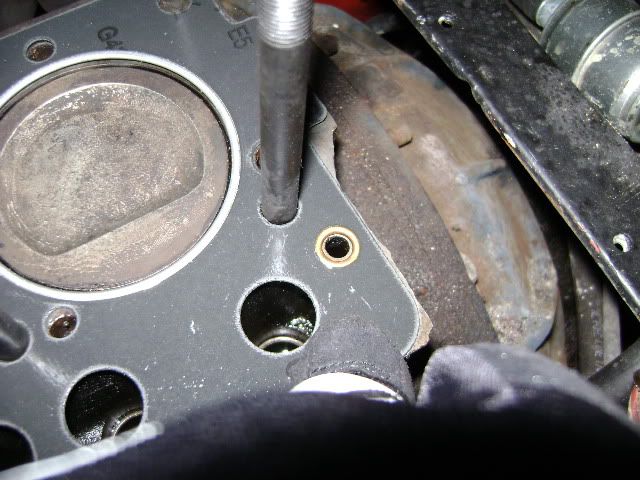
The Payen HG is MUCH nicer than the generic sandwich gasket that came out. the rings that fit into the grooves around each cylinder are much more solid, and there are nice little crush rings around the water passages. I decided to put it on dry, per the manufacturer's recommendation.

headrebuild013.jpg


Got the head torqued down, although not without a little drama. Got to bolt #10, and I got to 30 lbs, 40... and it went loose. AAAGH! Stripped it. Undid the nut, and realized the head bolt was intact, and only the inner thread in the nut had sheared. Found another nut, and it torqued down fine. 46 lb/ft of torque for the head bolts, 32 lb/ft for the rocker-to-head.

Hopefully tomorrow I can get the rad in, and the electric fan hooked up. Woodie (BCFer) loaned me a Colourtune, so hopefully when it's all back together I can dial in the carb a little better. I suspect I've been running a lean mix.
 
Back
Top