
Don't want to open up this can of worms again but I missed the upshot of the past discussions. So for our flat tapper cars, do we need the ZDDP for just the break in or does it need to be added to every oil change( provided were not using an oil like Rotella diesel that already has it in it)? In regard to the lack of lead in modern gas, if I haven't done the valve seat conversion: do I need to add a lead substitute to the tank at every fill?


-
 Hey Guest!
British Car Forum has been supporting enthusiasts for over 25 years by providing a great place to share our love for British cars. You can support our efforts by upgrading your membership for less than the dues of most car clubs. There are some perks with a member upgrade!**Upgrade Now**
(PS: Upgraded members don't see this banner, nor will you see the Google ads that appear on the site.)
You are using an out of date browser. It may not display this or other websites correctly.
You should upgrade or use an alternative browser.
You should upgrade or use an alternative browser.
Zinc and Lead Again?
- Thread starter karls59tr
- Start date

Offline
I've yet to be convinced or even swayed either way about ZDDP, but from personal experience I am comfortable in saying that you do NOT need a lead substitute at every refill, or ever. Worst case scenario is that, at some point, you MIGHT experience enough valve seat recession to warrant an overhaul of the cylinder head to add hardened seats and whatever else it might need. In over 50k miles on my Herald engine since I bought it in 2002, I've yet to see any evidence of recession.

TR3driver
Great Pumpkin - R.I.P
Offline
I'm with Andy on both subjects.
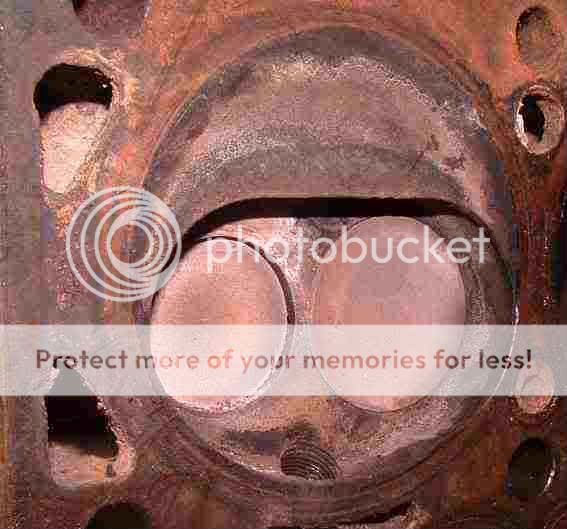
I have seen valve seat recession, but ironically enough, it was on a head that already had the hardened inserts installed!
Several studies have shown that being run previously on leaded fuel seems to provide lasting protection in all but the most extreme cases.
There is also considerable doubt that most of the "lead substitutes" on the market are actually effective. There was a group in the UK (BMIHT as I recall) that did a test some years ago, and found that none of the products was 100% effective, and only 3 (out of perhaps 15 tested) actually made much improvement at all.
So my suggestion is to save the money you would have spent on additives, and use it to rebuild the engine when the time comes, if ever.
PS, in case it's not obvious, you'll know if the valve seats are receding because the valve lash will be too small every time you run the valves. On the engine that had problems with VSR, the exhaust valves would get so tight that it wouldn't idle, in just 5000 miles or so.
I have seen valve seat recession, but ironically enough, it was on a head that already had the hardened inserts installed!
Several studies have shown that being run previously on leaded fuel seems to provide lasting protection in all but the most extreme cases.
There is also considerable doubt that most of the "lead substitutes" on the market are actually effective. There was a group in the UK (BMIHT as I recall) that did a test some years ago, and found that none of the products was 100% effective, and only 3 (out of perhaps 15 tested) actually made much improvement at all.
So my suggestion is to save the money you would have spent on additives, and use it to rebuild the engine when the time comes, if ever.
PS, in case it's not obvious, you'll know if the valve seats are receding because the valve lash will be too small every time you run the valves. On the engine that had problems with VSR, the exhaust valves would get so tight that it wouldn't idle, in just 5000 miles or so.
Offline
Regarding the ZDDP issue, here's one interesting bit of information on the subject. FYI, NFI, YMMV, member FDIC, etc., etc.
TR3driver
Great Pumpkin - R.I.P
Offline
The problem with that article is that it quotes a (laboratory) test as "proof" that old engines don't need high ZDDP. Their lab engine simulator might well not need high ZDDP, but that doesn't mean that there are no engines that do.Andrew Mace said:Regarding the ZDDP issue, here's one interesting bit of information on the subject. FYI, NFI, YMMV, member FDIC, etc., etc.
My belief is that there are indeed, some engines that need higher levels of ZDDP all the time. These would be highly developed, high output engines; where the developers kept saying "Let's turn up every parameter until the engine falls apart, then back off just enough so it will last through a race". Then generally someone else came along and said "Ok, turn them down just enough so it will last through the warranty period".
But unless you've done that to your Triumph engine (eg very aggressive camshaft profile, higher tension valve springs, higher than stock redline, etc) it's unlikely that it falls into that category.
IMHO and all that. Offer void within or without the USA.
BRSLimited
Jedi Trainee
Offline
I'm with the group saying that the additives probably are not needed. For the most part our cars anymore don't get that many miles put on them in a season and they arn't really hard miles. Most of us change the oil regularly and keep up the periodic maintainance.
Offline
TR3driver said:The problem with that article is that it quotes a (laboratory) test as "proof" that old engines don't need high ZDDP. Their lab engine simulator might well not need high ZDDP, but that doesn't mean that there are no engines that do.Andrew Mace said:Regarding the ZDDP issue, here's one interesting bit of information on the subject. FYI, NFI, YMMV, member FDIC, etc., etc.

Exactly! But then, hopefully anyone who spends the effort and $$$ on such an engine isn't going to just grab the quart cans of Wolf's Head that've been sitting in granddad's barn since he stopped driving the Henry J....TR3driver said:My belief that there are indeed, some engines that need higher levels of ZDDP all the time. These would be highly developed, high output engines...


trrdster2000
Luke Skywalker
Offline
I still put Marvel Mystery oil in the gas (4 oz per fill up) and 4 oz in the oil at it's change. We were doing this in England 50 years ago. It also helps with the ethanol problem in the gas these days.
Wayne
Wayne
G
Guest
Guest
Guest
Offline
trrdster2000 said:I still put Marvel Mystery oil in the gas (4 oz per fill up) and 4 oz in the oil at it's change. We were doing this in England 50 years ago. It also helps with the ethanol problem in the gas these days.
Wayne
I put a little 2 stroke oil in the fuel for the race car. ( my race car, not the boss'.)
On the ZDDP subject. I did notice some of the lifters in the Midget galling from what I would suspect would be lack of zinc. Some quit turning too. I started running the break in additive w/ the same lifters and haven't noticed any more wear. That was 11K ago. I will be using ZDDP at every oil change from now on.
Oh, my rod journals are .002 out of round too and still going strong. :thumbsup:
<span style="font-size: 12pt">DISCLAIMER</span>: Kids, don't try this at home.....go to a friend's house. :laugh:

hondo402000
Darth Vader
Offline
they make a gas sta-bil for boats thats made for gas with ethanol also talking to my engine guy he says too much ZDDP is bad for your engine seems its a rough molecule and can be agressive. he says certain diesel engine oils have plenty of ZDDP in them
Hondo
Hondo
Monkeywrench
Jedi Trainee
Offline
VR1 with camshield in the race car. This is a 7000+rpm TR4 engine.

Scott_Hower
Luke Skywalker
Offline
Bought some oil this weekend. Noticed the Castrol Syntec 5W-50 has a blurb on the back; says it's additives are formulated for flat tappet engines in classic cars and it's safe to use.
TR3driver
Great Pumpkin - R.I.P
Offline
But that's exactly the problem. The oil makers pretty much all started out claiming that lower ZDDP was not a problem for any engine.Scott_Hower said:Noticed the Castrol Syntec 5W-50 has a blurb on the back; says it's additives are formulated for flat tappet engines in classic cars and it's safe to use.
All I could find on Castrol's website were adjectives like "increased", "high zinc" and the "formulated" statement above which are legally meaningless. If it really has high zinc content, why aren't they telling us how much?
Disclaimer : I have not liked Castrol ever since I found (many decades ago) that it caused huge amounts of sludge in both my Chevy and TR3. I literally had to scrape it out of the pan with a putty knife! My opinion was later reinforced by their arguing (successfully) that any oil that comes out of a modern refinery can be called "synthetic".
Whenever I see a TR engine with a blocked rocker shaft, I ask what kind of oil they use. So far, the answer (when I got one) has always been "Castrol".
YMMV of course. Some people think that sludge is a good thing...
G
Guest
Guest
Guest
Offline
Never had a problem w/ Castol. Pennzoil and QS are parafin based and sludge up bad.

swift6
Yoda
Offline
TR3driver said:Whenever I see a TR engine with a blocked rocker shaft, I ask what kind of oil they use. So far, the answer (when I got one) has always been "Castrol"
Since Castrol has been the default oil for most British cars for quite some time, since the brand name appears so prominitely in most shop manuals (try finding Duckhams easily outside of the UK) the percentage would be pretty great that Castrol was used in it. I grew up hearing, and still hear them, horror stories about Pennzoil.