• Hey Guest!
    British Car Forum has been supporting enthusiasts for over 25 years by providing a great place to share our love for British cars. You can support our efforts by upgrading your membership for less than the dues of most car clubs. There are some perks with a member upgrade!

    **Upgrade Now**
    (PS: Upgraded members don't see this banner, nor will you see the Google ads that appear on the site.)
Tips
Tips

WWII Spitfire to be unearthed

If the plane went nose in, I imagine it's mostly going to be fragments and pieces, although I'd expect the Merlin engine block to be relatively intact.
 
In one of the photos, the Merlin, and the *metal* prop, are clearly visible in the aircraft as it lay on the beach just after being shot down.
 
Last edited by a moderator:
If all their looking for is buried pieces, their all over the country side. Without serial numbers it's a lost cause and just a pile of junk bringing back to life bad memories. Complete aircraft, well, that's a different story. Paying homage to past heroes is commendable, Placing a marker where they died protecting their country, to me, is more correct than digging up pieces of junk. Sorry but that's how I feel. PJ
 
images

here is a similar experience over here in SC.
My sons boy scout troop were lucky enough to get to work on the cleanup.
The Dolittle raiders trained for their Tokyo bombing run over Lake Murray, in early '42.
five B-25's went down in the lake on training flights. I think there is still one down there.
But they pulled this one out of the drink 10 years ago (9/2005).

Here's a link I found interesting.

https://www.lakemurray-sc.com/lakemurrayb25.html
 
I enjoyed all three of those articles. I enjoyed seeing just how intact the B-25 was when they pulled it from the lake. It is also good to know that the Spitfire rescued from Calais is airworthy once again; I'm curious as to how much that restoration cost.
 
I've flown a 25 a few times, which was converted for testing radio equipment for RCA in the early 60s. Quite a machine, with no sound deadening insolation it was noisy as all get out. We had to wear noise cancelling head gear to hear the radio transmissions. I have the deepest respect for the guys that flew them under tremendous stressful conditions. Quite a humbling experience for me. The 25 took a lot of concentration, no time for day dreaming when in the seat, as the one we had was easy to over control. I wouldn't want to fly one on one engine. PJ
 
Quite a humbling experience for me. The 25 took a lot of concentration, no time for day dreaming when in the seat, as the one we had was easy to over control. I wouldn't want to fly one on one engine. PJ

can you imagine flying one of those planes off a carrier in 1942? They weren't even designed as carrier based planes ; No catapult, over loaded with ordinance, only two engines, throttles to the firewall........creeping toward the business end of the carrier, rotate or die...no second chance.
 
I've excavated (with permission) a handful of crash sites, but I also do extensive research on the people involved, as the stories of the people are more important than the metal. For example, one of pilots killed in a DC-3 crash in Clarksburg, Maryland in June 1957 originally enlisted in the RCAF prior to America's entry into the war. I was able to obtain his RCAF records, which I promptly turned around and passed along to the family, which contained information that his son, daughter and grandchildren never knew about him. I also obtained photos the family had never seen before.

The metal pieces are important for one reason: In Maryland, finding evidence of these pieces can lead to the site being designated a Historic Archaeological Site, which can prevent development of the site. No one wants a Burger King on the spot where the loved ones perished.

In my experience, this line of research tends to bring closure rather than open old wounds. Again, in the Clarksburg incident, one of the families had been searching for years to find out more information and to find the specific location. When I found them, they were very enthusiastic to finally learn "the full story". In the same instance of the ex-RCAF pilot, his 93 year old widow found her closure when her grandson visited the site and relayed to her how peaceful the location was, and would be preserved as such for perpetuity. I also think the families, once they fully understand what you're doing are grateful that someone else wants to remember their loved ones.
 
"I also think the families, once they fully understand what you're doing are grateful that someone else wants to remember their loved ones."

Amen to that!

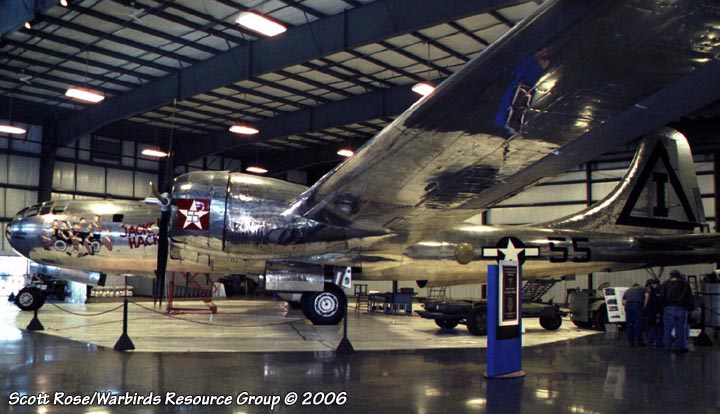
Several years ago a gentleman in his 80s came to our research library (New England Air Museum). Asked if we had any info on B-29s in the WW2 Pacific Theater. His brother was a crew member of a 29 which was shot down near Japan, summer of 1945. Crew bailed out, was found by the Japanese, and taken to POW camp in Japan. Unfortunately the brother died before the war ended.

I found the records of that specific 29 and its crew, traced the POW camp and logs, and showed a map of the camp area to the inquirer.

We then walked over to our restored 29 ("Jack's Hack"). I took him up inside and showed him the various compartments and locations, including the station his brother would have occupied. I let him sit in that seat.

He sat there in silence, looking at the machinery and instruments his brother would have been using, summer of '45. After about 20 minutes, he climbed back down, thanked me, and walked outside.

b29-4461975-main.jpg


That was a commendable gesture Tom, a very nice thing to do. It probably gave him some closure to the event of many years ago. PJ
 
Back
Top