

-
 Hey Guest!
British Car Forum has been supporting enthusiasts for over 25 years by providing a great place to share our love for British cars. You can support our efforts by upgrading your membership for less than the dues of most car clubs. There are some perks with a member upgrade!**Upgrade Now**
(PS: Upgraded members don't see this banner, nor will you see the Google ads that appear on the site.)

Tips
- We have a special forum called "Member Articles" where you can submit actual articles for consideration for publication. Learn More
- Don't have an Avatar? If not, your avatar will default to the 1st character in your username. Go into "Account Details" to change your Avatar.
- Some basic forum navigation info: click
 Hey - did you know if you click on the title of a thread it will take you to the first unread post since you last visited that thread?
- Hey Guest - Is your British Car Club in our Clubs database? If not, send me a PM - Basil

- Looking for a local club? Click the "Clubs" tab above and browse hundreds of clubs world-wide.
- Add Android or iPhone APP: click
- Did you know - any picture or video you add in your posts in any marque-specific forum will also get added to the Media Gallery automatically.
- A few more tips about posting and replying: click
- Hey there Guest - be sure to keep your profile page up to date with interesting info about yourself: learn more
- More tips and tricks on Posting and Replying: click
 but were afraid to ask:
  STOP!! Never post your email address in open forums. Bots can "harvest" your email! If you must share your email use a Private Message or use the
  smilie in place of the real @
- Want to mention another member in a post & get their attention? WATCH THIS

- So, you created a "Group" here at BCF and would like to invite other members to join? Watch this!
- Hey Guest - A post a day keeps Basil from visiting you in the small hours and putting a bat up your nightdress!
- Hey Guest - do you know of an upcoming British car event?
 Pretty Please - add it to our Events forum(s) and add to the calendar! >> Here's How <<
- Hey Guest - you be stylin' Change the look and feel of the forum to fit your taste. Check it out
- If you run across an inappropriate post, for example a post that breaks our rules or looks like it might be spam, you can report the post to the moderators: Learn More
- If you would like to try some different "looks" or styles for the site, scroll to the very bottom, on the left and click the Style Selector.
You are using an out of date browser. It may not display this or other websites correctly.
You should upgrade or use an alternative browser.
You should upgrade or use an alternative browser.
Worst TR job that turned out not to be a big deal
- Thread starter tdskip
- Start date

TR6oldtimer
Darth Vader

Offline
Everything, because it means commitment.

Don Elliott
Obi Wan
Offline
It's not the worst. That one hasn't happeded yet !
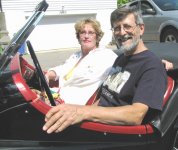
But two days ago, my overdrive just stopped. I would flip the switch and there was no click and the O/D would not work. It had been working a few minutes earlier. I was about 5 miles from home after a 120 miles trip in the sunshine for a picnic with Louise.
When I got home, I lifted the floor carpet on my side, re-connected the wire which comes down behind the brake and gas pedals and - as we say here in French Canada - "voila".
How did I know what to check first ? Well it's happened before - it's called experience. The more you drive these cars and work on them, they become more reliable and if something does occur, it's not the end of the road - or your life. Just make good your brakes are good and you will never have a really SERIOUS problem. And make sure your handbrake works. There is always a second "back-up" for you to get home again.
But two days ago, my overdrive just stopped. I would flip the switch and there was no click and the O/D would not work. It had been working a few minutes earlier. I was about 5 miles from home after a 120 miles trip in the sunshine for a picnic with Louise.
When I got home, I lifted the floor carpet on my side, re-connected the wire which comes down behind the brake and gas pedals and - as we say here in French Canada - "voila".
How did I know what to check first ? Well it's happened before - it's called experience. The more you drive these cars and work on them, they become more reliable and if something does occur, it's not the end of the road - or your life. Just make good your brakes are good and you will never have a really SERIOUS problem. And make sure your handbrake works. There is always a second "back-up" for you to get home again.
Attachments

TR3driver
Great Pumpkin - R.I.P
Offline
I solved that problem long ago, by re-routing those wires through the engine compartment.Don Elliott said:When I got home, I lifted the floor carpet on my side, re-connected the wire which comes down behind the brake and gas pedals and - as we say here in French Canada - "voila".
Forgot all about it, until I moved the OD to the 'project' TR3 a few weeks ago. Now the wires run through a grommet in the firewall, and there is a plain plug in the hole in the tunnel.
TR3driver
Great Pumpkin - R.I.P
Offline
That would be the steering box rebuild on TS39781LO. I put that off for many years because I thought it would be such a bear; but it turned out easy. And the benefits (of that and the steering/suspension rebuild at the same time) were huge!tdskip said:So what was your biggest mental block that had you dragging your feet on a "big/nasty/ugly" sort of repair issue that turned out to be no big deal once you actually started doing it?
Oh yeah, changing the fan bushings on TS13571L turned out easier than I expected, too. Except for knocking over the recently painted front apron, and putting some big gouges in the paint!
G
Guest
Guest
Guest
Offline
Here is where I will have you all beaten! You do NOT want to get into any "Gordon Badwrench" contests with ME!
My horns have not worked since I got my car last month. Just a quiet "purr" out of the right one. The previous-previous owner had done all the work on the car. Since it involved rack and pinion steering, new wiring had to be installed for the horns.
The PO said that I needed to straighten out the ground.
You could hear my car groan, "Oh $hit, here he comes and he's got his TOOLS."
Anyway, I know that the system has been changed to negative ground. I cannot tell which wire off the horn is ground or live, as one goes up the steering column and one disappears into the harness. So, I got out my jumper cables to see if the horns work if wired straight to the battery. I cut out a solder splice on two wires, stripped them, and twisted them together. I GUESSED that they were the ground. I hooked up the positive jumper cable to the other solder splice (three wires), then lightly tapped the ground cable against my new splice. No sparks, so I hooked on the cable and hit the horn button. Voila! So, the horns work. I took the ground cable off the battery and touched it to a screw on the dash and the horns worked.
Now it gets interesting. I attached a new ground wire to the screw on the firewall, twisted it around my twist splice, and put a twister cap over the splice. Then removed the jumper cables. I hit the horn button. THERE HAS NOT BEEN SMOKE LIKE THIS SINCE THE CHICAGO FIRE!
I figured "no way" did I attach my ground wire to the wrong splice. So, I removed it, and just TOUCHED it to the other splice and the horns sounded! Without the horn button being pressed!
So, Gordon has struck again. WITH ONLY TWO WIRES, he has the option of an engine fire or a permanent horn blaring. At this stage, the fire seemed the preferable of the two, as it would not disturb the neighbors.
So, I said the heck with it, and unhooked my new ground wire from the splice, and put the screw cap back on the splice. Remember, I have not touched the other splice. After all is said and done, I get in and try the horn button. The horns are loud and clear.
I have no @#$%^&*&^%$#@#$%^&* idea why they work. The only change has been that I replaced a solder with a screw cap.
And, of course, the Zen question of the day, is WHY WHEN I HOOK ANOTHER GROUND WIRE TO THE GROUND SPLICE DOES A FIRE BEGIN?
Now, who here wants to contest me? Warning, I will next hit you with my breaking the heater core out of my 2-week old new Miata while installing a $2 Prestone Radiator Flush Kit: $550 - would you like my ex-wife's phone number?
My horns have not worked since I got my car last month. Just a quiet "purr" out of the right one. The previous-previous owner had done all the work on the car. Since it involved rack and pinion steering, new wiring had to be installed for the horns.
The PO said that I needed to straighten out the ground.
You could hear my car groan, "Oh $hit, here he comes and he's got his TOOLS."
Anyway, I know that the system has been changed to negative ground. I cannot tell which wire off the horn is ground or live, as one goes up the steering column and one disappears into the harness. So, I got out my jumper cables to see if the horns work if wired straight to the battery. I cut out a solder splice on two wires, stripped them, and twisted them together. I GUESSED that they were the ground. I hooked up the positive jumper cable to the other solder splice (three wires), then lightly tapped the ground cable against my new splice. No sparks, so I hooked on the cable and hit the horn button. Voila! So, the horns work. I took the ground cable off the battery and touched it to a screw on the dash and the horns worked.
Now it gets interesting. I attached a new ground wire to the screw on the firewall, twisted it around my twist splice, and put a twister cap over the splice. Then removed the jumper cables. I hit the horn button. THERE HAS NOT BEEN SMOKE LIKE THIS SINCE THE CHICAGO FIRE!
I figured "no way" did I attach my ground wire to the wrong splice. So, I removed it, and just TOUCHED it to the other splice and the horns sounded! Without the horn button being pressed!
So, Gordon has struck again. WITH ONLY TWO WIRES, he has the option of an engine fire or a permanent horn blaring. At this stage, the fire seemed the preferable of the two, as it would not disturb the neighbors.
So, I said the heck with it, and unhooked my new ground wire from the splice, and put the screw cap back on the splice. Remember, I have not touched the other splice. After all is said and done, I get in and try the horn button. The horns are loud and clear.
I have no @#$%^&*&^%$#@#$%^&* idea why they work. The only change has been that I replaced a solder with a screw cap.
And, of course, the Zen question of the day, is WHY WHEN I HOOK ANOTHER GROUND WIRE TO THE GROUND SPLICE DOES A FIRE BEGIN?
Now, who here wants to contest me? Warning, I will next hit you with my breaking the heater core out of my 2-week old new Miata while installing a $2 Prestone Radiator Flush Kit: $550 - would you like my ex-wife's phone number?
TR3driver
Great Pumpkin - R.I.P
Offline
George, TR3 horns are not "grounded". Of the two wires, one always gets power from the battery (supposedly through a fuse, but I'll bet someone has installed an American fuse instead of a Lucas fuse); and the other goes to the horn button.
The horns also do NOT care about polarity. Maybe somewhere there is a horn that does care, but I have never seen one on any car, Triumph or not.
But if it's any consolation, I also learned the hard way that heater cores won't take full garden hose pressure. Totally ruined a TR3 heater that way, at a time when new ones were simply NLA (and good used ones were unheard-of).
The horns also do NOT care about polarity. Maybe somewhere there is a horn that does care, but I have never seen one on any car, Triumph or not.
But if it's any consolation, I also learned the hard way that heater cores won't take full garden hose pressure. Totally ruined a TR3 heater that way, at a time when new ones were simply NLA (and good used ones were unheard-of).


JodyFKerr
Jedi Knight
Offline

martx-5
Yoda
Offline
gubba said:I'll bet someone has installed an American fuse instead of a Lucas fuse.
What does that mean please? whats the differance?
The rating system on the fuses is different. A Lucas fuse is rated at the amperage at which it will blow, whereas the American fuse is rated at constant ampacity. What it amounts to is that to get an equivalent Lucas fuse, you need to cut the amperage rating about in half if using an American fuse. In other words, replace a 50 amp Lucas fuse with a 25 amp American fuse.
Don Elliott
Obi Wan
Offline
George - After 47 years since you sold your black/red TR3A you are really getting back into the spirit of TR ownership super fast with the TRials and TRibulations of your "new" red TR3B. All it takes is experience and you get that by trying something. That's the way all problems in life are solved - not just TR problems.
TR3driver
Great Pumpkin - R.I.P
Offline
Precisely.martx-5 said:In other words, replace a 50 amp Lucas fuse with a 25 amp American fuse.
But also note that "50 amp" fuses were only on early cars. Somewhere around 1958 or so, the horn fuse changed to a "35 amp" Lucas (which can be substituted with an AGC 20).
TR3driver
Great Pumpkin - R.I.P
Offline
One other difference; less important but worth considering; is that the British Standard fuses are slightly smaller than the American standard ones. The TR2-4 main fuse holder will take either size, but some of the holders are more picky.
Proper size fuses can be sourced from TRF, Moss, VB, etc.
Proper size fuses can be sourced from TRF, Moss, VB, etc.

cmacmillan
Senior Member
Offline
None of my signal lights worked...had visions of someone finding me strangled in a mass of wires. I'd heard that sometimes the connectors just need to be cleaned but since they didn't look that dirty, I figured I had a much more serious issue, but I thought - start easy and then ramp up. 4 minutes with a wire brush and behold: signal lights. Hoping the braek lights are similarly easy!

TR3BGeorge said:You could hear my car groan, "Oh $hit, here he comes and he's got his TOOLS."
:lol:
That's hilarious!
Great story.


TR_JOE250
Senior Member
Offline
The day before yesterday I was driving my 73 Spitfire and after stomping on the gas I expierienced a sudden drop in power and the engine ran as if it was being robbed of air or fuel or both. At low throttle and RPM it was ok but once I gave it a bit more it would run poorly. My first check was the fuel filter, which I found to be quite dirty. Yeah, I thought to myself, I've found the problem. After a quick change I was off to test out my handiwork. Much to my diapointment this did not solve the problem. So with the bonnet raised I stared at the fuel pump and carbs (euro setup, twin SU's) wondering where to start I noticed that something didn't look right with one of the ait filters. After removing the cover I found that one of the mounting bolts had backed out and the air cleaner had sliped down and was cutting off airflow to the rear carb. A quick retightening of ALL related bolts and I was running fine. You have got to love it when what you thought cuold be a major problem turns out to be a quick and easy fix, and the fuel filter was way over due for a change.
G
Guest
Guest
Guest
Offline
So, did you put the dirty filter back on?
Just kidding.
Just kidding.

John_Mc
Jedi Knight
Offline
As a first timer, I thought suspension refurbishment was going to be hard. It really wasn't. There was a lot I DID as far as cleaning and painting while I was in there, but if I did it over again just to replace worn bushings, it would be a breeze. Although with any job, there will always be one stuck bolt that will make me crazy.