• Hey Guest!
    British Car Forum has been supporting enthusiasts for over 25 years by providing a great place to share our love for British cars. You can support our efforts by upgrading your membership for less than the dues of most car clubs. There are some perks with a member upgrade!

    **Upgrade Now**
    (PS: Upgraded members don't see this banner, nor will you see the Google ads that appear on the site.)
Tips
Tips

TR2/3/3A TR3 Brakelight Switch and Silicone Fluid

CJD

Yoda
Country flag
Online
Well, I can't find it in a search, but I know I have read that a lot of you think the silicone fluid destroys the brakelight switch. Guess this adds to the mistique:

My car has a switch that dates back to at least 1970, and may very well be the original switch. With this rebuild I switched to silicone brake fluid. All worked great, at first, but the switch is dead after 200 miles with the new fluid.

Coincidence?

Also, I have ordered a couple replacements, but has anyone discovered a "wet" switch that holds up under the silicone fluid? Once I get the new, I'll swap it out and let you know what the inside of the bad switch looks like.

John
 
Don't know about "a lot", but I have slowly come to the belief that it is true, at least some times. I went through much the same experience, except my original switch lasted over a year after switching to DOT 5; and the replacements each lasted about that long as well. I tried both an early and late reproduction switch, plus one from FLAPS (that ISTR fit a Ford truck).

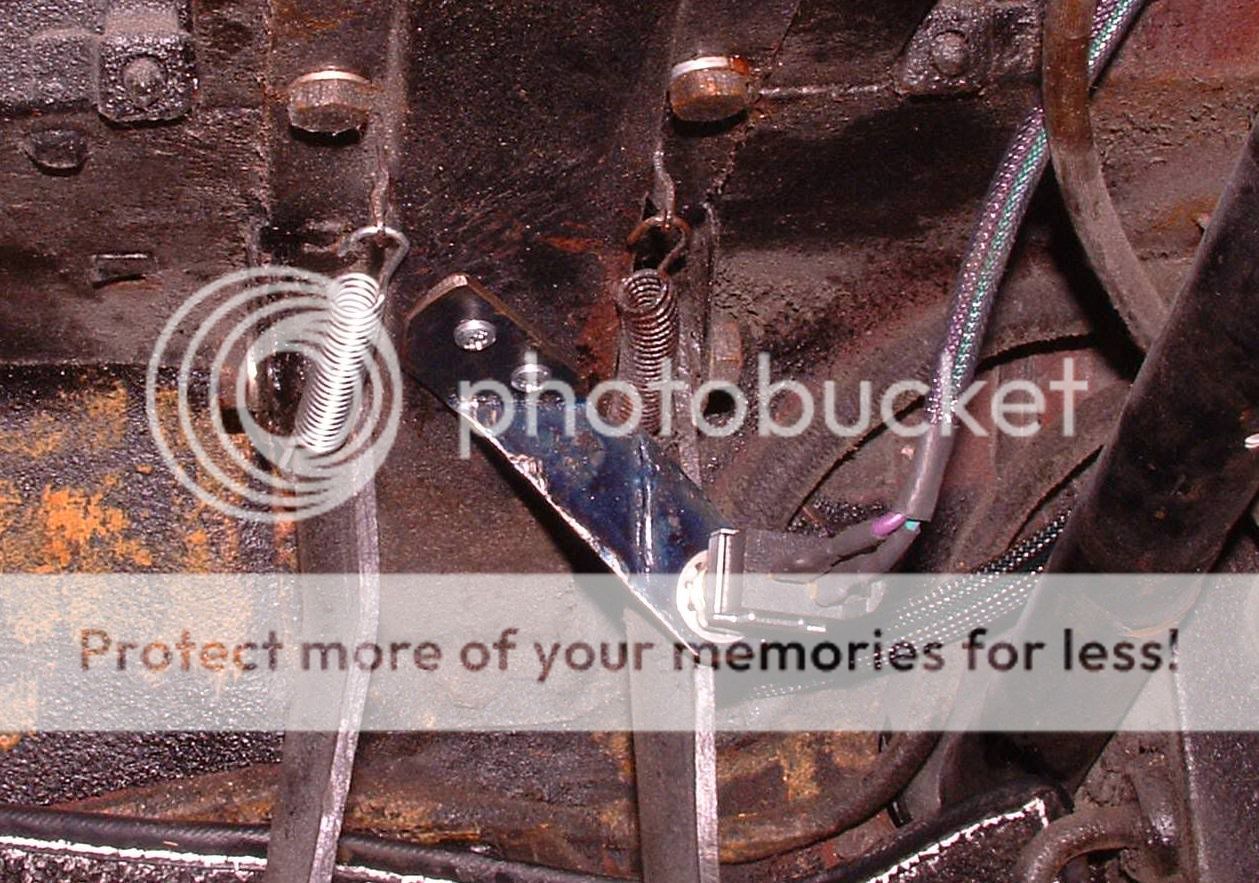
Then I gave up and went to a mechanical switch.

DSCF0029_crop.jpg


Not very elegant, but it's so far up under the dash that I doubt even a concours judge would notice it. (And my car isn't a show car anyway, so it doesn't have to please anyone but me.)
 
Thanks Randall. After I soak through these replacements I'll try the "dry" option. Just thought it odd...wondering what would be in the switches that gets broken down by the fluid?

John
 
The one I cut apart used a metal diaphragm to sense the pressure and operate switch contacts. It seemed like the silicone had managed to creep past the diaphragm and get into the cavity with the contacts, leaving a hard black coating that didn't conduct very well. The failure was gradual, it just kept taking more and more pedal pressure to actuate the switch, which I think probably represented the slow buildup of gunk on the points.

One of my mechanical switches actually failed in a similar fashion; apparently from a tiny leak in the MC that was able to travel down the pedal and into the switch. Seems almost like science fiction (A new hit, The Blob that ate New Switch), but I have no other explanation for the black stuff on the switch contacts.
 
LOL! I'll post what I find in my switch...I'm sure it will be similar. Brake fluid is truly nasty stuff the way it attacks most materials...

Thanks again,

John
 
I have a 1929 automobile with hydralic brakes - I have had the same silicon, dot 5, fluid in use for 20+ years - no problem - Midnight
 
Maybe we should be using the brake light switch from that! What is it, and what kind of switch does it use?
 
There are an equal number of switch failure reports involving BMC cars. I don't think there can be so many reports without there being a real issue. I am sure there will be exceptions though.

Like Randall I fit a pedal actuated switch instead.
 
I picked up the NAPA switch yesterday and talked with the parts guy for a while. He has an interesting idea. He thinks the diaphram in the switch is silicone based, so a silicone fluid acts as a solvent, slowly softening it until it leaks. Of course, once the fluid reaches the contacts it doesn't take long to insulated them.

Don't know if it's right, but it is something to think about...

John
 
Here's one of those exceptions. It's a NAPA sourced switch for a '55 Ford F100.
IMGP1700.jpg
 
3798j said:
It's a NAPA sourced switch for a '55 Ford F100.
That sounds like the one I tried (although not from NAPA).

How long has it been working with DOT 5? Are you sure it still works?
 
It looks just like the NAPA part I just installed...bet they are all generic by now.

John
 
TR3driver said:
How long has it been working with DOT 5? Are you sure it still works?
I think I did the installation (DOT5, front discs, dual master, new lines and the switch) in 2002. Just went out and checked (yes fear and doubt had struck). It still works.
 
Hi all, I did the '49 Roadster in about 2002 also with the NAPA switch and have had no trouble, but I don't put a lot of miles each year on her and it could relate to the amount of times pressure is put on the switch.

A small note of interest for those not working on a Roadster, the master cylinder shaft is the brake pedal and the fluid is dissipated down the tubes by the shaft mass, the rubbers just hold the fluid in a container. The emergency brake is a engineering delight.

Wayne
 
Harley Davidson has been using Dot 5 for a number of years.
The switch that they supposedly designed to be compatible
is part # 72023-51D It doesn't look exactly like the Lucas one but
apparently it fits in the same spot.
Like Randall, I went with a mechanical switch at the pedal
long ago so all this info is hearsay but at $15.00 or so worth a
try.
 
trrdster2000 said:
it could relate to the amount of times pressure is put on the switch.
:iagree:

Plus how much and for how long. I commute in Los Angeles area traffic every day, so panic stops are common for me.
 
Geo Hahn on 10/07/11 said:
... I'll be in the test group on this one as I have DOT5 and the switch sold by Moss -- Intermotor brand p/n 51620, made in England.

Switch installed 9/9/2009, 87,853 miles. Now at 92,997. So far, so good.

Now at 94,135 and works fine. Proves nothing either way but since this is a recurring thread I will continue the 'test'.
 
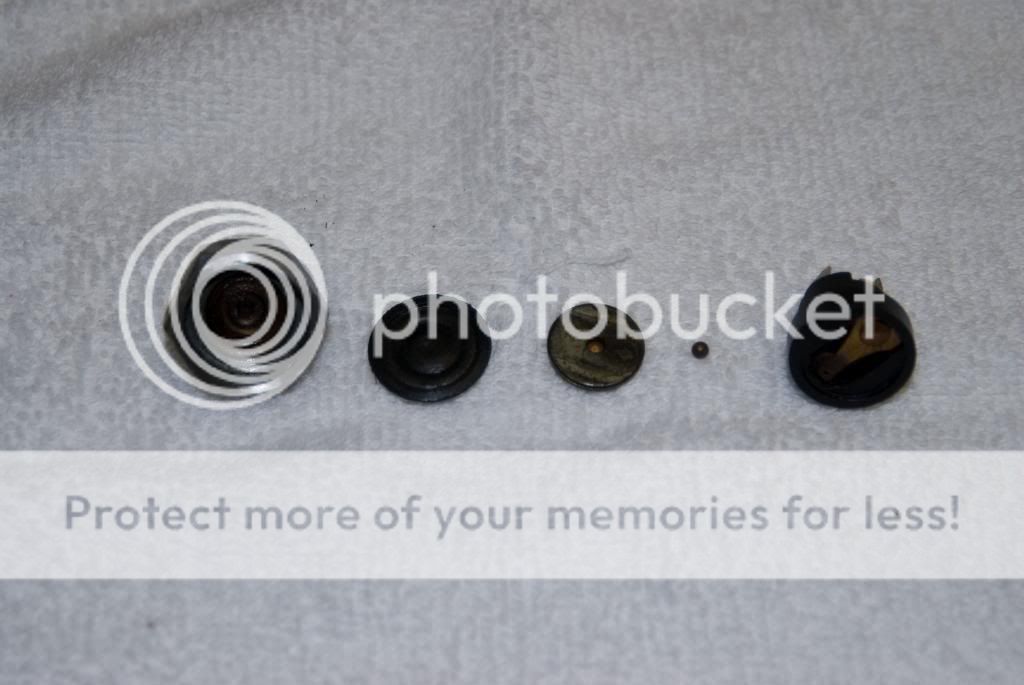
Finally got around to taking the switch apart. Here is a photo of all the parts. From left to right they are:
metal housing - rubber diaphram/seal - metal plug - ball bearing - cover/switch

_DSC7818.jpg


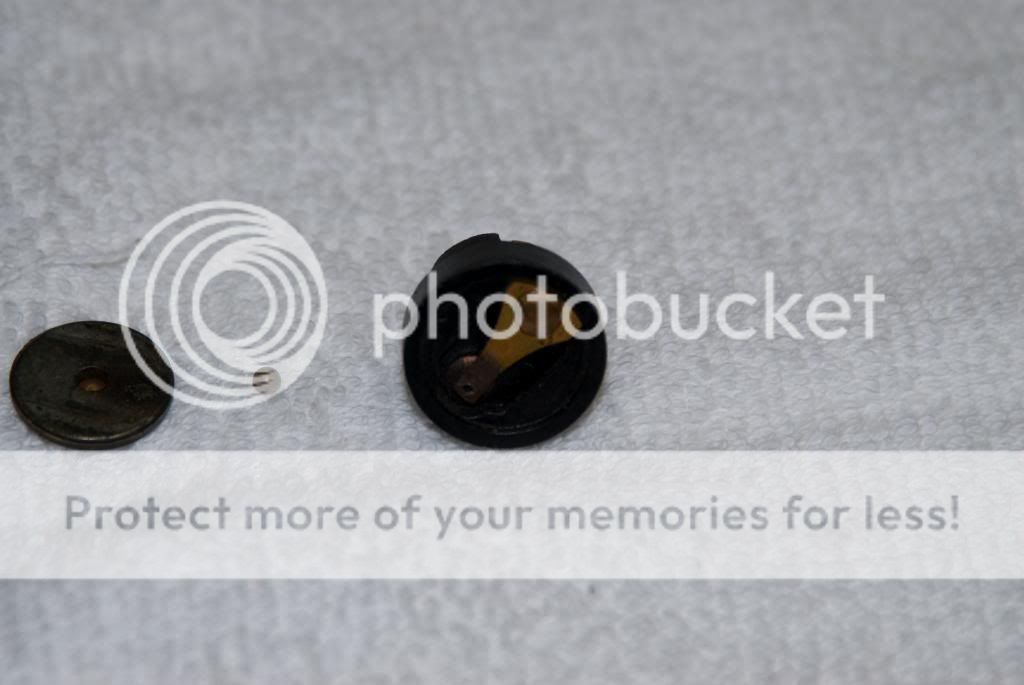
Of note, the diaphram was not soft or in any way questionable, but there was a small amount of fluid that got past it and inside the switch area. That means the fluid must have leaked around the outside of the diaphram. As Randall pointed out, the fluid then burned the switch contacts.

_DSC7819.jpg


The switch assembles in the order in the picture. So the diaphram goes into the housing first, followed by the steel plug. The plug has the function of taking all the load from the brake fluid, without distending the diaphram. As pressure is applied, the steel plug is pushed about .010" and hits the outer cover to stop it from squashing the switch. The ball bearing is pushed by the movement of the plug and itself pushes the switch closed. The switch also acts as a spring to push the ball and plug back when the pressure is off.

Long winded...but here is my deduction of the failure mode. I think, over time, the plastic cover and rubber diaphram either shrink or take a set, which loosens the seal. This allows a very small amount of fluid to leak around the outside of the diaphram. Personally, I don't see any way the silicone fluid had anything to do with it, since the diaphram is neither soft nor torn. I would bet that the act of changing the old fluid, whether DOT 3, 4, or 5 to fresh fluid probably is the factor that hurries the failure of an old switch. The new fluid makes it around the seal easier than older, thicker fluid can.

Anyway...we'll see how my new switch holds up!

John
 
Back
Top