• Hey Guest!
    British Car Forum has been supporting enthusiasts for over 25 years by providing a great place to share our love for British cars. You can support our efforts by upgrading your membership for less than the dues of most car clubs. There are some perks with a member upgrade!

    **Upgrade Now**
    (PS: Upgraded members don't see this banner, nor will you see the Google ads that appear on the site.)
Tips
Tips

TR2/3/3A TR-3, 3A, 3B Master Cylinder Options

angelfj1

Yoda
Country flag
Offline
<span style="font-weight: bold">This is related to the ongoing discussion regarding Classic Gold MC's.
</span>
<span style="text-decoration: underline"><span style="font-weight: bold">There is NO direct reference made to a particular vendor in this post.</span></span>

We received two after market master cylinders from a major US supplier. These happen to be manufactured in India.

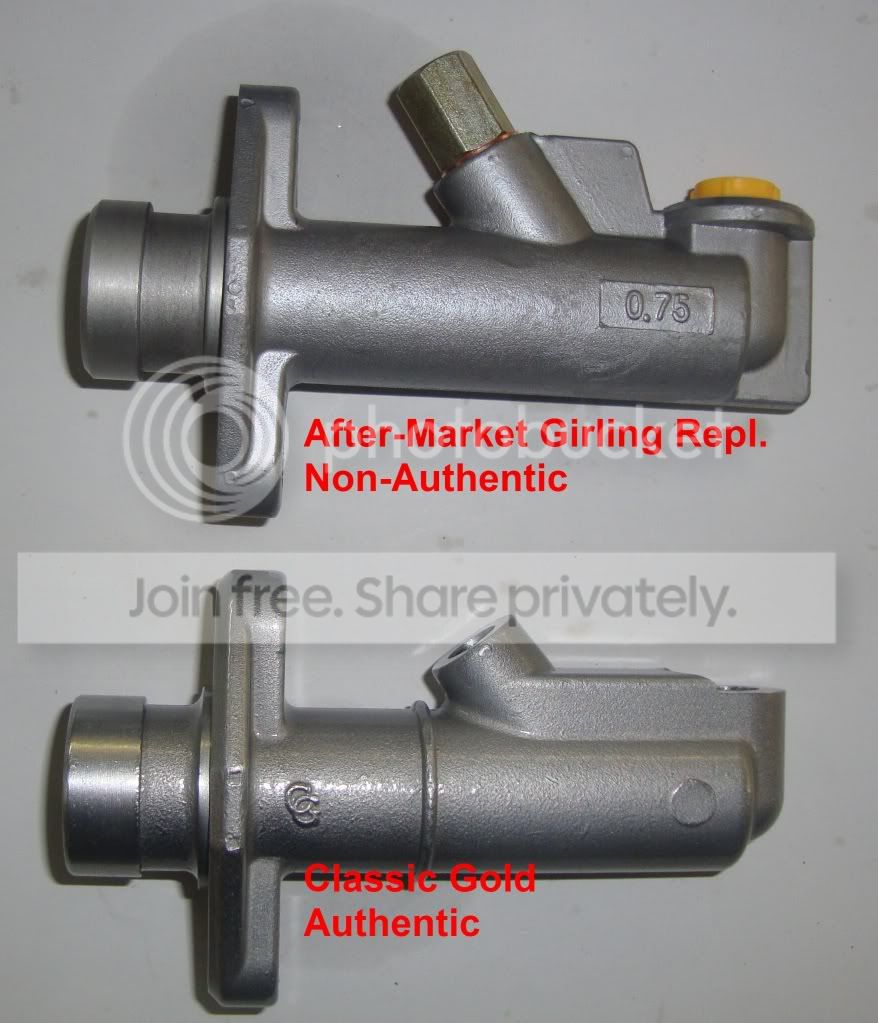
The purpose was to disassemble the MC and compare the internal parts to both original and CG cylinders. Also, we wanted to post a few accurate photos which indicate the excellent authenticity of the CG MC compared to the original Girling.

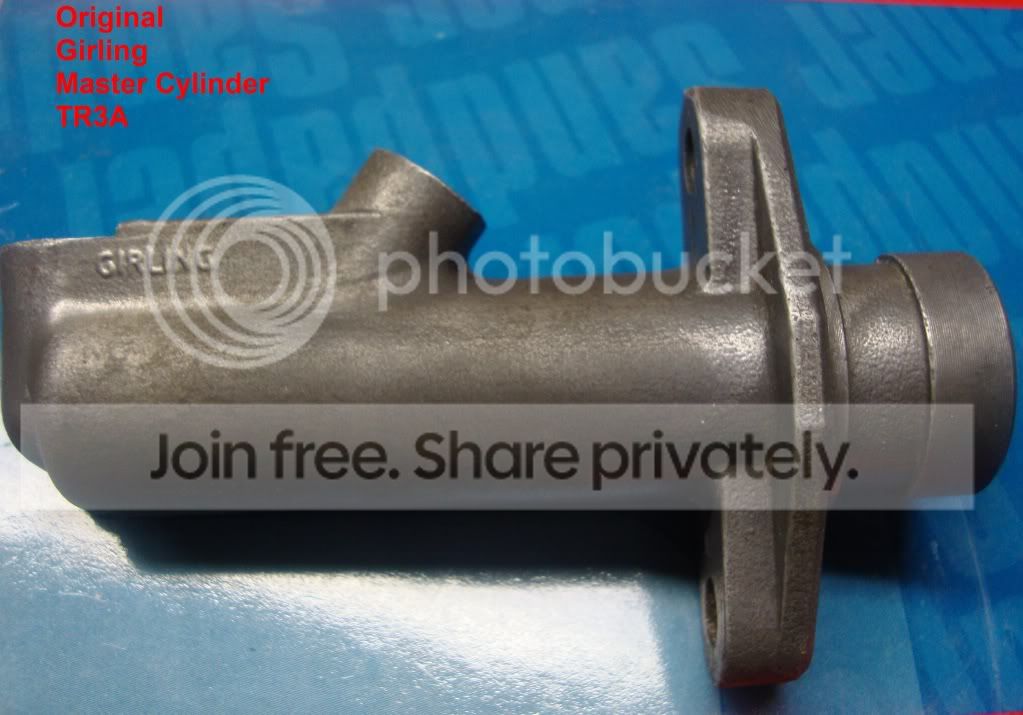
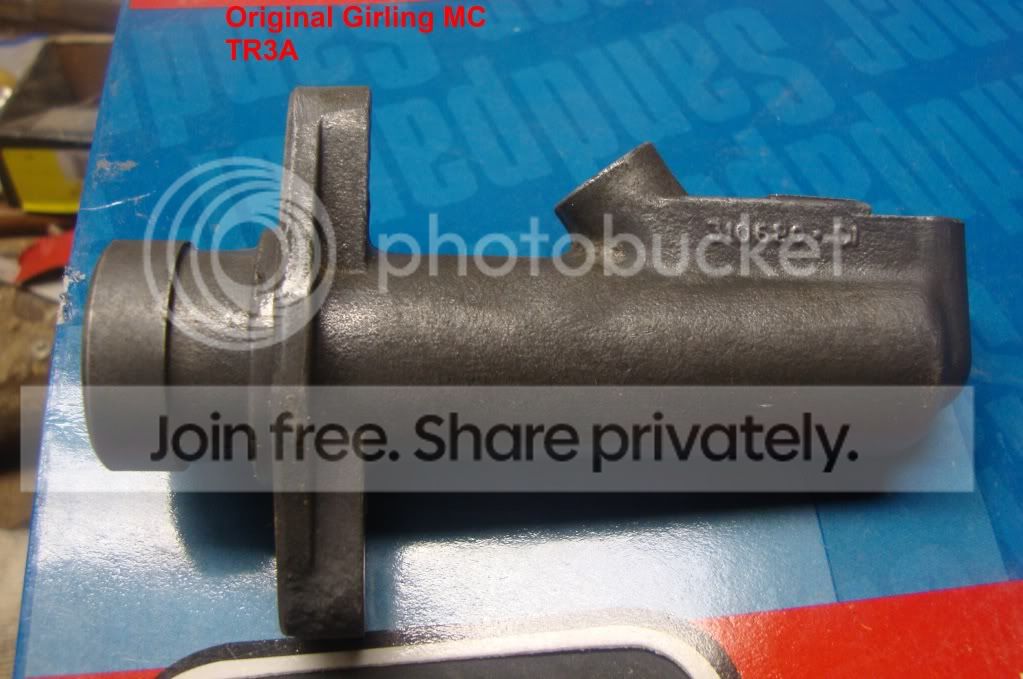
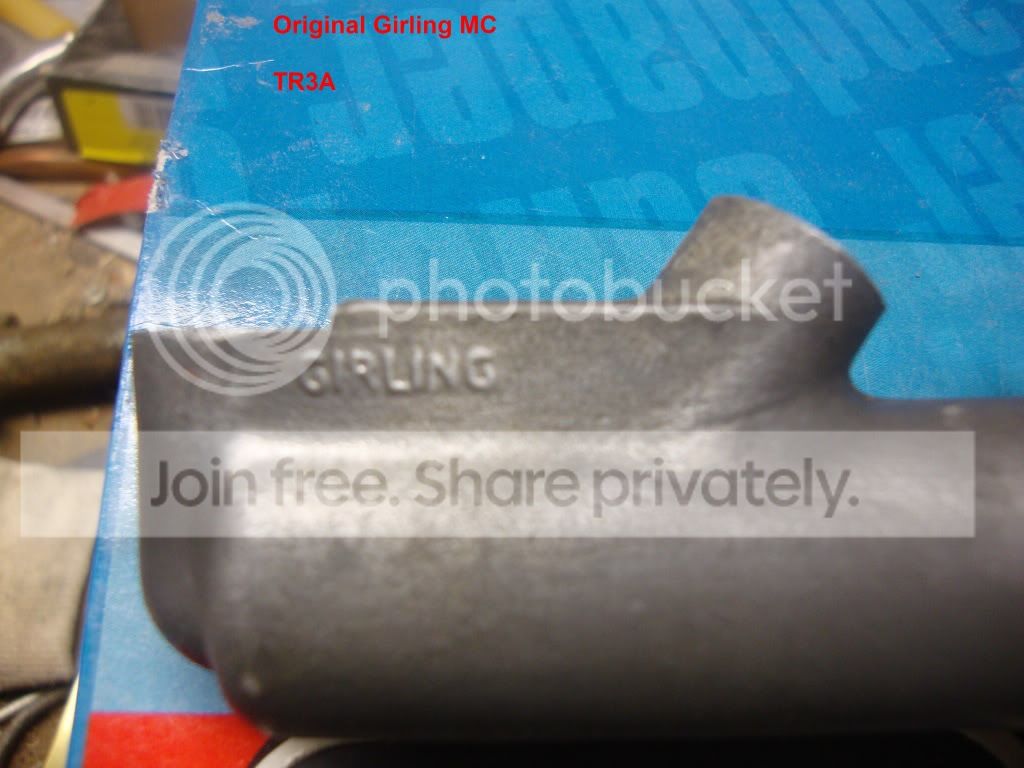
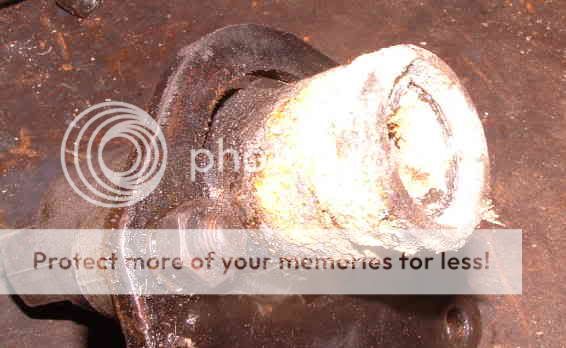
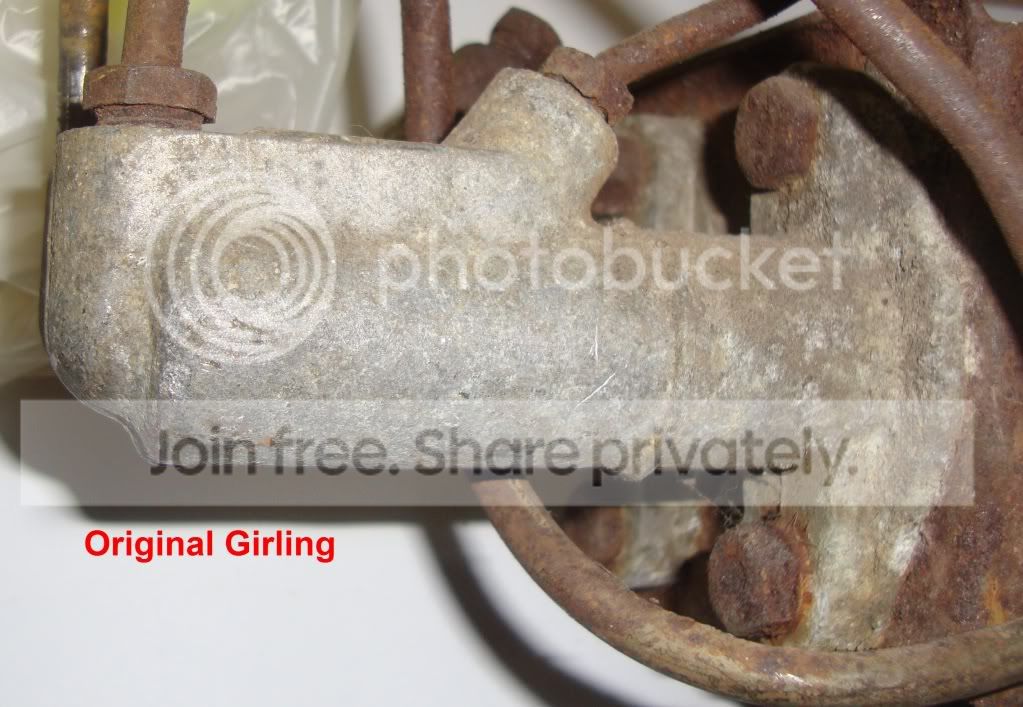
The first series of photos are the original Girling MC taken off TS58476 LO.
TRF_MC_DSC05553.jpg

Girling_MC_DSC05556.jpg
GIRLING_MC_DSC05558.jpg
GIRLING_MC_DSC05559.jpg


The next series of photos show the after-market MC's. Note the obvious differences in the casting.
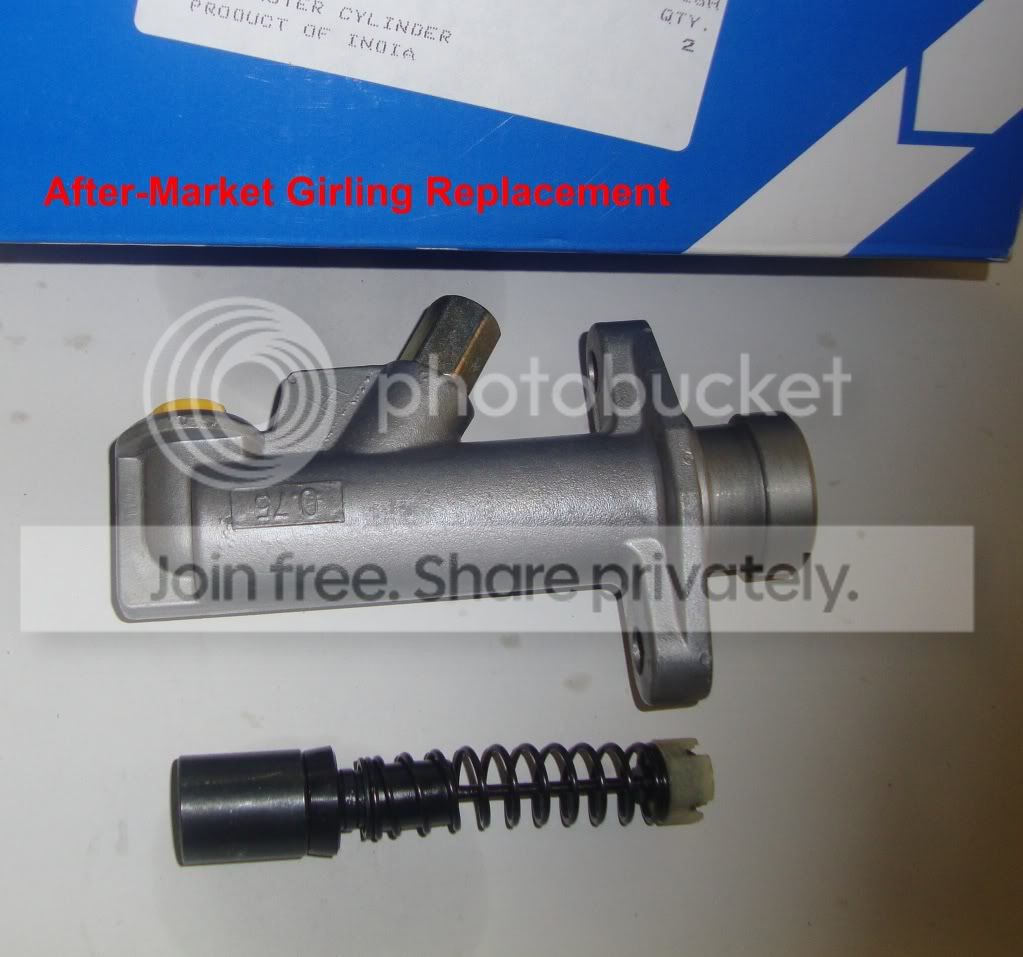
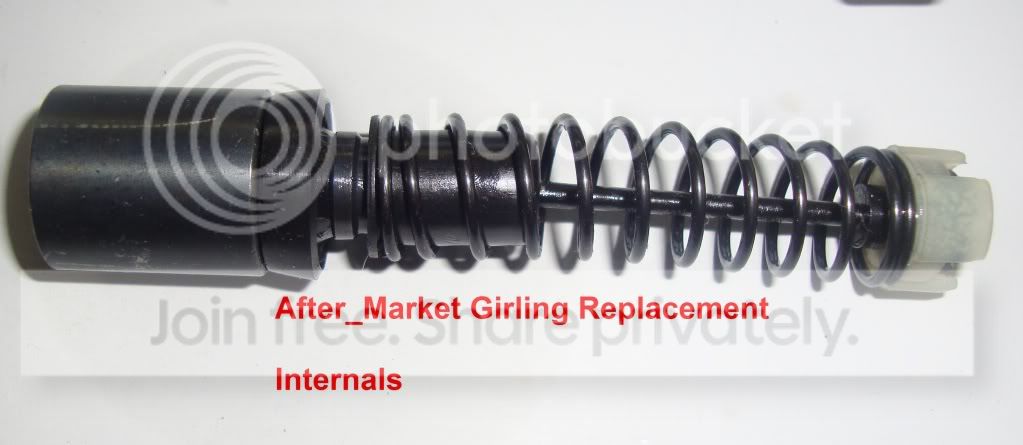
TRF_MC_DSC05537.jpg

TRF_MC_DSC05539.jpg

TRF_MC_DSC05541.jpg


Finally we have comparison photos showing the external difference between the after-market Girling replacement and the CG MC's.
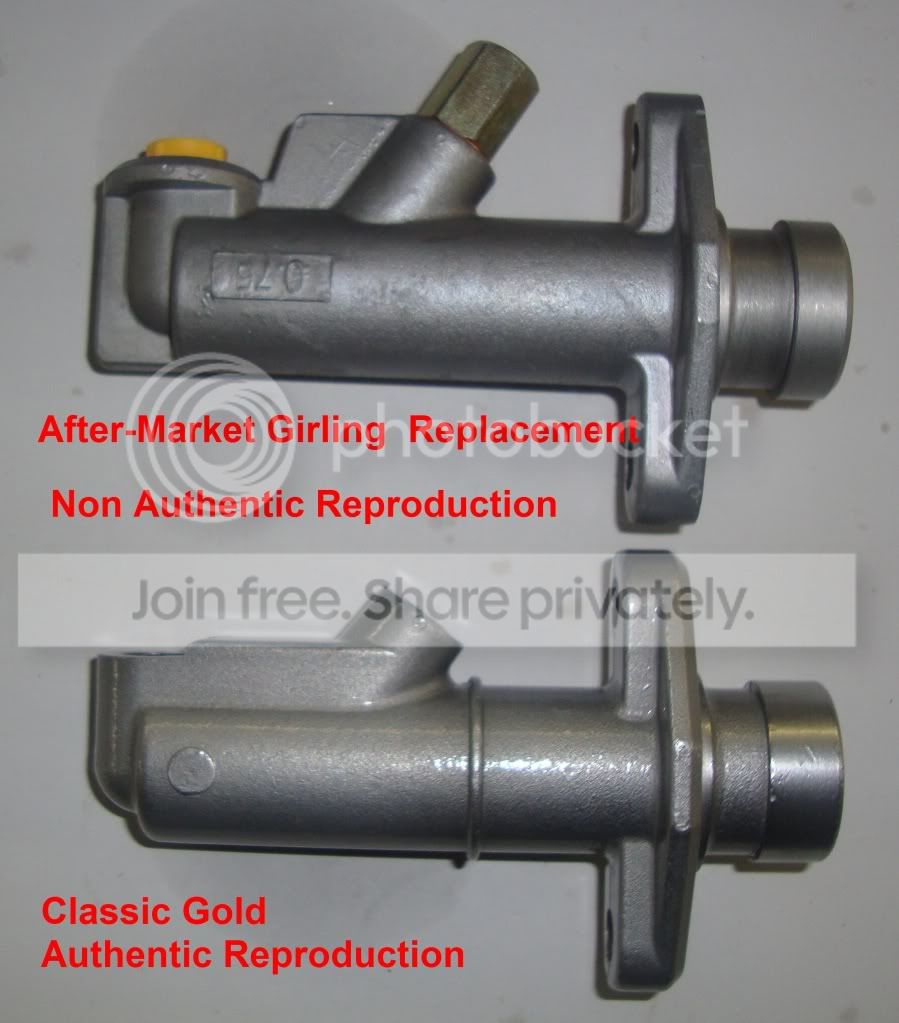
TRF_MC_DSC05551.jpg

TRF_MC_DSC05552.jpg


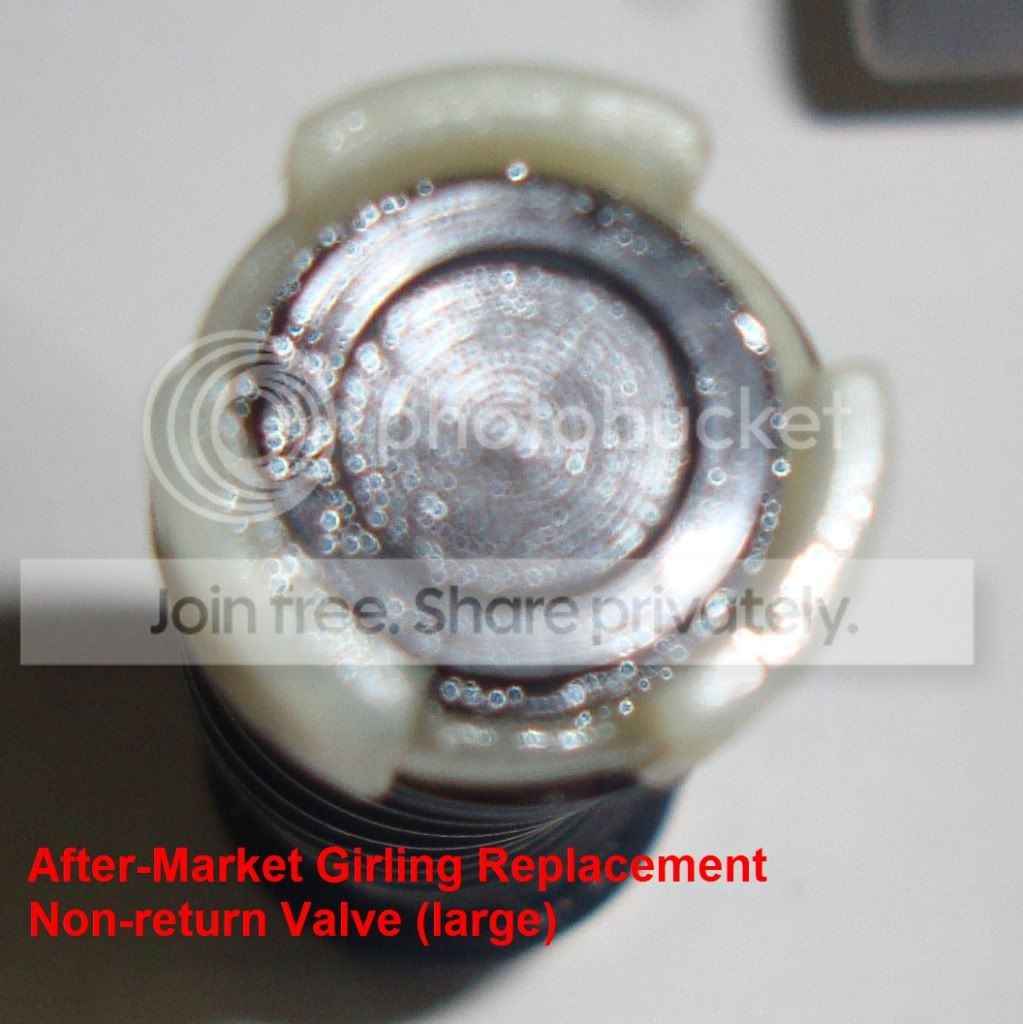
If you look at the internal parts from the after-market Girling replacement, you will see that they look identical to the original Girling units. One exception that can not be seen in the photograph - the non-return valve spring is the coil type and not the wave type.

The next step will be to carefully measure the internal parts and compare them to the original Girling and CG M/C's. Further, we plan to install the after-market Girling parts into a CG M/C and test it (probably clutch).

Please stay tuned for additional reports.

Cheers.
 
I must be missing something, Frank. Why not just send your original off to be bead-blasted and sleeved?

Also, you mention that the reproduction uses a coil spring instead of the wavy washer. Will it take a wavy washer instead of the coil? And are the seals the same size? Or do you have to buy rebuild kits only from the maker? Not much of a "reproduction" if it doesn't accept the same rebuild parts.
 
I trust that the general audience is not finding all of this too boring or appearing like an academic exercise!

Randall: No, your not missing anything. Some months ago, when this all started, we could not find a firm (including White Post and Apple Hydraulic) who would re-sleeve with SS and provide their standard lifetime warranty. And, I have not had good luck with brass sleeved aluminum cylinders. Now that we know that both of these companies do SS , we may go that route. Incidentally, neither company advertise stainless steel as an option.

Regards
 
Frank,FYI,I took my second new CG apart for inspection and everything looks ok,no bent rod.My original castings have both straight fittings,but maybe earlier than yours,although internals had second o-ring,like CG's.
As far as resleeving,my reason to not go that route was cost.The CGs(made in China) are available for$53 and the casting and bore appear to be well worth the money alone,much nicer to my eye than the Indian casting.No predujice to country of origin,sometimes I even buy English stuff.
I am not installing these until vendor response,and I see they have now listed thenm as N/A in the online catalog.I think the ones I got will be fine,but admit it would be nice if the original Girling internals were interchangeable,but not a big a issue for me ,although I would have rebuilt the Girlings if the bores where not pitted. The aftermarket Girling internals you pictured with no secondary o-ring,do not look as nice as the CGS,to me.
Have Fun
Tom
 
Yeah, why not just re-sleeve, if you don't care for the replicas? (or if you care about originality)
I haven't seen brass to be a real problem, but if stainless steel sleeves are available, that's a great choice.

For what it's worth, lots of replacement automotive parts look somewhat different from originals. Even at dealers. Suppliers change designs, etc. Pretty much par for the course in the auto industy.....and not just Brit parts.

And, semi-off topic------but for folks who don't care about original master cylinders, there are quite a few choices using VW stuff. I make no personal guarantee about TR3s, but I've bolted some of these VW parts straight into other Brit Stuff.

~Here's Some~
 
angelfj said:
And, I have not had good luck with brass sleeved aluminum cylinders.
Would you expand on that a bit, please? My plan is to learn to sleeve these things myself someday, and brass is a LOT easier to work with than SS.
 
I have an early TR3 with the 1 piece combined master cylinder (brake and clutch) so my experience may be different than the examples you are showing above, but some thoughts on the subject in general:

I wanted to keep my original master cylinder as the only new ones available are actually the type that was used in the MGA. I had heard good things about Apple Hydraulics and was familiar with them from a long time ago so I went that route. I spoke with them at length about my options and they offered both brass and stainless sleeves. When I asked which was better from their point of view he said the stainless would wear the internals faster than the brass and summed it up as if you plan to have the car parked for extended periods of time and mainly use it for shows and whatnot then go with stainless. If it's more of a regular driver then the brass would be better.

I went with brass and have been very happy. It's been ~1 1/2 years so not a overly long period of time, but I don't have fluid leaks and my brakes work great.

I don't work for Apple or anything. Just my experience. The Brake Place linked above looks like they are qualified as well.

Take it easy,

Eric
 
During the winter/spring of 1999, I sent a master cylinder to Apple Hydraulics for resleeving with brass. The only issue I had was when I got it back, they had not honed the bore to the right diameter - but that was my fault - I had not sent them the piston. Luckily, my neighbour has a set of hones and we easily got the bore right for the new sleeve and the piston.

I suggest that you always send the piston and specify that you want the ID of the new sleeve to match the OD of the piston. It was not a big problem for me.

As for sleeving, you may ask why. It's because my TR3A is a very early TR3A (TS 27489 LO) and the master cylinders are the same as those used on the TR3 with all four inlets/outlets standing straight up, not like later TR3A etc. as shown in Frank's photos.

Since I had the sleeve done, I have driven from 117252 miles (since I bought the TR new) up to 185422 miles which means that the brass slevve has worked just fine for 68,170 miles.

I don't see why there should be any problems in the near future. Frank, maybe you won't drive "Grey Lady" that far because of the nice TR 250 you have.
 

Attachments

  • 24161.jpg
    24161.jpg
    58.9 KB · Views: 286
TR3driver said:
angelfj said:
And, I have not had good luck with brass sleeved aluminum cylinders.
Would you expand on that a bit, please? My plan is to learn to sleeve these things myself someday, and brass is a LOT easier to work with than SS.

Some years ago, we did (brass sleeved) some wheel cylinders and M/C's in the shop. Yes, brass is a lot softer and easier on the boring bar. However, we found that a few years down the road these cars had leaking cylinders and needed a rebuild. When we took them apart, they were corroded and pitted. :eeek: The common denominator was hygroscopic hydraulic fluid, you know like glycol based dot 3 or 4. So, we re-sleeved using thin wall SS tubing and bearing retention compound, e.g. loktite 620. Some guys wanted to continue using glycol, but most switched to dot 5, silicone. I don't think any of those cars had a problem, and that was in '95.

If we go the "sleeve" route, I don't want to do it again in a few years. I only expect to be driving the 3A maybe 1000 miles per year and it will sit idle for extended periods. I am inclined to believe that SS sleeves would be best under these circumstances. :smile: BTW, I hope to sleeve the TR250 wheel cylinders, calipers and M/C later this year.
 
Thanks, Frank. I'm a big believer in DOT 5, so I won't sweat the corrosion issue. Even the original aluminum/steel contruction has serious issues when used with glycol.

DSCF0005_reduced.jpg
 
For 21 years I have used Dot 5 purple silicone brake fluid.

Frank - I have calculated that if you are planning to drive about 1000 miles a year in "Grey Lady", it will take you more than 68 years and you will still have no problems with a brass sleeve. By then, you will be older than I will be.
 
Back
Top