• Hi Guest!
    If you appreciate British Car Forum and our 25 years of supporting British car enthusiasts with technical and anicdotal information, collected from our thousands of great members, please support us with a low-cost subscription. You can become a supporting member for less than the dues of most car clubs.

    There are some perks with a member upgrade!
    **Upgrade Now**
    (PS: Subscribers don't see this gawd-aweful banner
Tips
Tips

Spitfire The Spit head saga continues

Basil

Administrator
Boss
Offline
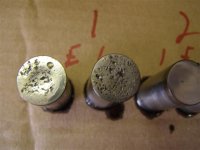
I thought I was going to have it all buttoned up when I got the head back from the machine shop with some new valves and guides. But then I realized some of my tappets were in bad shape - their bottom surfaces were pitted pretty bad, so I've ordered and new set of tappets. Hopefully my next weekend!
 
It's always something, isn't it? I can say, I am pleasantly surprised at the simplicity of these motors. Good luck!
 
frankenstang57 said:
It's always something, isn't it? I can say, I am pleasantly surprised at the simplicity of these motors. Good luck!

Yes, it fits very nicely with the simplicity of my brain!
 
Make sure you are quite liberal in applying engine assembly lube to the lifter contact areas. Also check the fit of the lifters in the bores, to verify that the bores are not worn excessively.(minimal rocking at full travel).
 
RonMacPherson said:
Make sure you are quite liberal in applying engine assembly lube to the lifter contact areas. Also check the fit of the lifters in the bores, to verify that the bores are not worn excessively.(minimal rocking at full travel).

Will do!
 
Not to make you crazy, but have a look at the cam lobes that those worn lifters were bearing on. Be sure they're not too beat up.

And just as a further explaination, I ran into the same thing with my street MGB last Summer.

Three of the lifters in it had noticable wear. When I examined the cam, the matching lobes had some wear on them as well. In my judgement, it wasn't "bad enough", so I just replaced the lifters and left the cam alone. I'm keeping an eye on it.

I've put 2000 miles on it so far, all pretty gentle (never over 4500 rpm).
It's had two oil changes and things seem OK.

Eventually, I plan to change the cam, but I've seen American cars go 20,000+ miles with much worse cams, as long as they aren't driven too hard.
 
Nial the cam is fairly new (low miles) and I did examine it - it looks great as far as I can tell.
 
One more thing to check, what is the condition of the springs? Weak springs will allow the valve, lifters etc to bounce and that is bad news.

While I had the head off, I measured the force required to just begin to open the spring by putting the head on the bathroom scale and pushing the valve open by hand. Doing this with the old head where each of the valves had been reground many times there was a huge difference and all of them were way under the values in the manual. On the new head, (the same springs) were all a bit tighter, and matched the lowest values in the manual. However that was for the old 1200 engine with a very mild cam. The cam in the 13/60, Spitfire ect needs a higher spring force.

Hal Waldrop recommended setting the springs to 85lbf when they are closed which is what I did.
I wound up putting two washers under the bottom spring retainer to compress the spring further. Note that you have to very carefully check to make sure that the springs won't bind when fully opened.

I found washers with an ID of 1/2" and OD of ~1.25" which fit perfectly. They were also very smooth, and flat. Someone else suggested that there are spring shims available for some old Datsun engines which fit and are made for the purpose. Hal said he made up shims on his own.

There was a thread on this in the racing section but it seems to have disappeared along with allot of others.


Take a look at the following:
https://www.lunaticams.com/Tech/Valvetrain/ValveSpringTech.aspx

and of course all of the cam manufactures have lots of information on this.

 
I'm really hoping that you're not talking about this kind of pitting:
 

Attachments

  • 15770.jpg
    15770.jpg
    33.8 KB · Views: 263
Yes Frank. 53,000 miles and with oil and filter changes every 3,000 miles when driven a lot or every three months when sitting a lot.

The cam was not worn much at all, but if I would have replaced these without replacing the cam, it would have been wiped out in 200 miles.

This is what prompted the major rebuild.

Oh......the engine ran absolutely great because the cam wasn't worn. Sometimes a good running engine can hide what's really going on inside until too late.
 
Paul: Would that level of wear be typical of a mid range Tr6 like yours. I have never seen this kind of wear on one of the Tractor engines. AND when we did the rebuild on the 250 we had only moderate wear on the lifters and cam lobes!
 
I don't have any photos today -- though I still have the cam and lifters and could take some -- My TR3 motor, which I rebuilt last winter, had 3 lifters that looked like that, perhaps a bit worse, and matching destruction of the cam lobes. New cam, liters and careful break-in procedures were all employed in the rebuilding of the motor.
 
Frank,

It is not typical at all. After thinking about it, I attribute that to the lack of ZDDP in oils over the past ten years. I've seen engines with far higher mileages today and not have wear like that, but they were not flat tappet engines.

But years ago, Chevy engines with solid lifters would easily go 100,000 miles, but the oil was good then.

That is why I have become skeptical about just what one will find if they remove the head for "a simple shave and compression bump". I know how well my car was taken care of. How many others can say that?

But on the other hand, they may be better of if the oil wasn't changed as often as I did. And please, let's not let this turn into another of those OIL/ZDDP threads.
 
angelfj said:
Paul: Would that level of wear be typical
I'm not Paul, but that kind of 'wear' is never normal. Depending on your point of view, it's either a sign of defective hardening on the lifters, or not enough ZDDP. Top engine builders seem to believe it's the former; for example Greg Solow at The Engine Room (a well known west-coast builder of TRactor motors) says he now has 100% of incoming lifters tested for hardness, and almost always finds a few bad ones in every set. Ken Gillanders at British Frame and Engine got so frustrated with defective new TR2-4 motor lifters that he actually sells sleeves to allow use of lifters from a GT40.

'Normal wear' is smooth, the metal doesn't fall away in chunks like has happened to those lifters.

I'm no metallurgist, but as I understand it, the original lifters were hardened as they were cast, in what is known as the "chilled iron" process. Apparently the Chinese haven't quite mastered the process yet, although it was well known in England over a century ago.
 
TR3driver said:
angelfj said:
... Ken Gillanders at British Frame and Engine got so frustrated with defective new TR2-4 motor lifters that he actually sells sleeves to allow use of lifters from a GT40.

When did you talk to Ken about that last?? I bought lifters for my TR3 rebuild about eight or ten months, and he made no mention of this. However, all the lifters I got from him had a mark on them from the Rockwell tester. I can only assume that the ones he's getting now are all tested and are of the proper hardness.
 
martx-5 said:
When did you talk to Ken about that last??
It's been some years ago, but I see they are still listed on his website.
https://www.britishframeandengine.com/parts1.html
Items 8 and 9.

But it does sound like he has since found a source of 100% tested stock lifters, or perhaps he is having them tested himself. Ken sells the same stuff he uses (so you know it's good), and the GT40 lifters won't work with all camshafts.
 
Back
Top