• Hey Guest!
    British Car Forum has been supporting enthusiasts for over 25 years by providing a great place to share our love for British cars. You can support our efforts by upgrading your membership for less than the dues of most car clubs. There are some perks with a member upgrade!

    **Upgrade Now**
    (PS: Upgraded members don't see this banner, nor will you see the Google ads that appear on the site.)
Tips
Tips

TR2/3/3A steering box sealer

sp53

Yoda
Country flag
Offline
What kind of sealer are people using now days when rebuilding their steering boxes? I saw a resent post about this, but have not dug it out. In the past I used Indian head gasket sealer, but I seem to have a leak in my tr3 driver. I am not sure where it is? I wiped the box down and I am looking to see where it is leaking, Hopefully out the top.
Anyways I am putting together a steering bow for my restoration and looking to see what others are using. I have some aviation gasket sealer and some Permatex red stuff. I like the red stuff, but not sure how it would work on a steering box because it is kinda stringie. Also I have rebuilt a few of these and noticed the end of the shim pack is usually a paper gasket. Anybody know why? I think the Indian head dries hard and that worries me, so now I am thinking aviation all over my fingers would be nice because it stays kinda flexible.
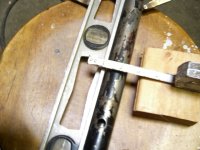
This car is 1958 and that seems to be the year the steering change to a split column towards the end. The solid column I have has a ÂĽ bend in the shaft probably from a collision and my thoughts are it should not matter, but it might put pressure on the bearings. What do others think? I am not trying to do an exact restoration and have a split column to use also. In the end the split would provide easier removal if there are problems, so that might be the way to go
steve
 

Attachments
  • CIMG2448.JPG
    CIMG2448.JPG
    173.9 KB · Views: 222
Last edited:
The shim pack is a result of adjusting end float on the end bearing. A sight preload is permitted, but end float is not allowed. Stacking layers of sealant could create end float. I found in my rebuild a dish-shaped end plate, probably the PO had a lot of unknown preload and warped the plate ( and causing leaks) when the plate was installed. I was able to flatten the plate. The Triumph service manual explains all of this.


The bent column may not be a problem and since it is near to the oil filler hole, you may be able judge if the actual shaft rubs at all.


LET
 
I've been using the Permatex 518...the red stuff. It never hardens and dissolves in oil, so it will not foul bearings. I thought like you about the gasket, and have quit using it altogether. If you are sealing an entire pack of shims that are metal on metal, then one gasket at the end is a bit absurd. I use the 518 on all the shims, cover, and case. It squeezes out so it doesn't affect end play either. So I set the play dry, and then take the cover off and apply the 518, and finally reassemble it all. (Edit..."end play" is the wrong word. I set it for zero clearance to very light preload.)

If I were not worried about originality...and even then, if I were planning to drive the car a lot, I'd toss that long column. Every time I sit in the TR2, I picture what that one piece column would do to my chest if I run into a curb or such. At least with the 2 piece you have a chance of the column buckling before it skures you. Add the bend in your case, and I would prefer the split column.

For the olive on the stator tube, I have been smearing plumbers teflon thread sealant on the olive before tightening it. I have even removed the olive several times, reapplied the thread sealant, and still have no leak...even though there was oil present before I thrightened it all back up.
 
Right John that is what I was thinking on most the stuff, but I was cutting a paper gasket. I think you got me off the hook. However, the Permatex I have says Permatex High Tack Gasket Sealent # 80062. I am going to call the store and see what they say about the difference.
 
Oh you are using the anaerobic Permatex in the little tube. That would be perfect there. Did one tube do it?
 
Here is trick I learned a while back, clean the area up good with degreaser and fog some bay powder on it and wait. The leak is in the large plug at the top. I used to think that was a fill hole, but the more I look at it the fill hole up the column would get oil on the rear bearing. I did not replace the seal on the large plug and now I am fixing a mess.
 

Attachments

  • CIMG2625.JPG
    CIMG2625.JPG
    178.2 KB · Views: 214
  • CIMG2630.JPG
    CIMG2630.JPG
    165.2 KB · Views: 219
Last edited:
I have a place that sells the 518 in large tubes, and they last years. It goes really far, so even a small tube would be plenty. I learned about it when I was rebuilding German "boxer" style engines. On those the crankcase halves join metal on metal with no gaskets...just the 518. Since then I use it on all the metal to metal joining I do. I like your leak checking!
 
I hear you LET, the first time I rebuilt one the end piece was warp, and I did not find out until it was too late.
steve
 
OK, so I'm going to stick my neck out here. When I rebuilt mine on the bench, I set it up as best I could, and packed it with Hi Temp wheel bearing grease instead of gear oil. I've seen this before in vintage steering boxes. After all, lubrication is lubrication, is lubrication..... I could see a stiffness problem in ultra cold temps, but who is driving in those temps anymore? Once I get on the road (hahaha) I'll see how this works and make the appropriate adjustments if necessary. I do not, however, anticipate any oil leaks out of the box.
 
Yeh right that was the solution when all the oil ran out of case back in the day, I guess the oil cools thing down maybe, but on the other hand the grease would probably stay longer . I have taken apart several of these and couple of things I have notice are the top of shaft is often bent !!. The harden ½ steel! perhaps from people adjusting them too lose and they pop up, another is the back bearing is often pitted perhaps from no oil getting back there because the actual fill hole is up on the shaft.

Steve
 
Back
Top