

-
 Hey Guest!
British Car Forum has been supporting enthusiasts for over 25 years by providing a great place to share our love for British cars. You can support our efforts by upgrading your membership for less than the dues of most car clubs. There are some perks with a member upgrade!**Upgrade Now**
(PS: Upgraded members don't see this banner, nor will you see the Google ads that appear on the site.)
You are using an out of date browser. It may not display this or other websites correctly.
You should upgrade or use an alternative browser.
You should upgrade or use an alternative browser.
Speaking of O2 sensors... two better than one?
- Thread starter tdskip
- Start date

LastDeadLast
Jedi Knight
Offline
I have two O2 sensors.. The key is to decide if you want to monitor two at the same time.. if so, you have two solutions; get two A/F gauges, or get something like Innovate Motorsports LM-2 Duo Kit which will log two O2 sensors at the same time, plus rpm and any other analog sensors you want to connect to it. Here is a link:
https://www.innovatemotorsports.com/products/lm2.php
I actually have the duo kit, and I think its wonderful... the great thing is that you can run two O2 sensors, plug an rpm monitor, then log to a SD memory card. When you're done, pop the SD card in any computer and analyze it. You then make the appropriate changes (change needles, adjust mixture.., whatever), then repeat the process until you have it tuned to your liking..
To be sure, you can easily do this with one O2 sensor, but it's much faster using a system that can log two, plus its really nice being able to compare the a/f curves side by side.
I think using this method is especially useful if you move to SU carbs where you have many more tuning scenarios than with the ZS carbs (unless you go with a custom ZS needle).
Cheers!
-s
https://www.innovatemotorsports.com/products/lm2.php
I actually have the duo kit, and I think its wonderful... the great thing is that you can run two O2 sensors, plug an rpm monitor, then log to a SD memory card. When you're done, pop the SD card in any computer and analyze it. You then make the appropriate changes (change needles, adjust mixture.., whatever), then repeat the process until you have it tuned to your liking..
To be sure, you can easily do this with one O2 sensor, but it's much faster using a system that can log two, plus its really nice being able to compare the a/f curves side by side.
I think using this method is especially useful if you move to SU carbs where you have many more tuning scenarios than with the ZS carbs (unless you go with a custom ZS needle).
Cheers!
-s


Offline
Why O2 sensors when you can read the plugs and exhaust pipe to know how the engine is burning the fuel? Also, a vacuum gauge will tell you how well the carbs are tuned along with the mentioned plugs and pipes. A lot cheaper and quicker, just step around car and look at pipe, should be a grey color, that's as good as you'll get. Oil is wet and black is rich.
LastDeadLast
Jedi Knight
Offline
Brosky said:Tom,
On one side, it may be overkill, on another, it may be ideal, but the location(s) could get tricky. I'll defer to a higher power on this one.
Actually with the wide band O2 sensors (which are pre-heated), the location isn't as important. I have mine welded in about 12 inches behind the header collector. I think the only thing you really need to worry about is the angle that the sensor is welded in to prevent condensation from collecting and causing rust.
-s

Brosky
Great Pumpkin
Offline
Larry,
I have triple ZS carbs on mine and could not be happier with my A/F ratio meter. It makes tuning them much simpler. Yes, I can read plugs and tailpipes and I do have a vacuum gauge and was taught exactly how to use it over 40 years ago when they were part of every mechanics tool box.
I just feel that having and using modern technology to our advantage is worth it in some cases and this is one of them. I do however, only have one O2 sensor on mine.
JMHO.........
I have triple ZS carbs on mine and could not be happier with my A/F ratio meter. It makes tuning them much simpler. Yes, I can read plugs and tailpipes and I do have a vacuum gauge and was taught exactly how to use it over 40 years ago when they were part of every mechanics tool box.
I just feel that having and using modern technology to our advantage is worth it in some cases and this is one of them. I do however, only have one O2 sensor on mine.
JMHO.........
LastDeadLast
Jedi Knight
Offline
LarryK said:Why O2 sensors when you can read the plugs and exhaust pipe to know how the engine is burning the fuel? Also, a vacuum gauge will tell you how well the carbs are tuned along with the mentioned plugs and pipes. A lot cheaper and quicker, just step around car and look at pipe, should be a grey color, that's as good as you'll get. Oil is wet and black is rich.
Well, in my case, since I'm running SU's, the car can have different A/F profiles depending on the throttle/rpm that the engine is experiencing. With the O2 sensors, I can log the A/F throughout the RPM range and make needle changes when necessary.
Thanks guys - I was thinking two so I could isolate each carb...
Larry, I'm with you on the ability for a knowledgeable person to take it a long way but in my case the TR8 is proving hard to balance CA emissions requirements and performance still and I think the extra precision could help me.
Larry, I'm with you on the ability for a knowledgeable person to take it a long way but in my case the TR8 is proving hard to balance CA emissions requirements and performance still and I think the extra precision could help me.

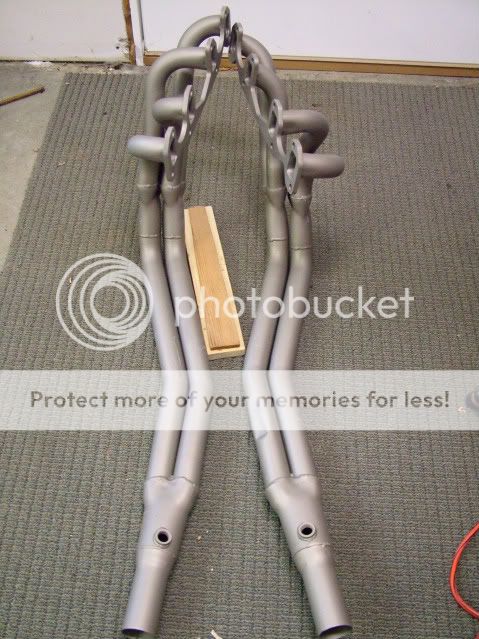
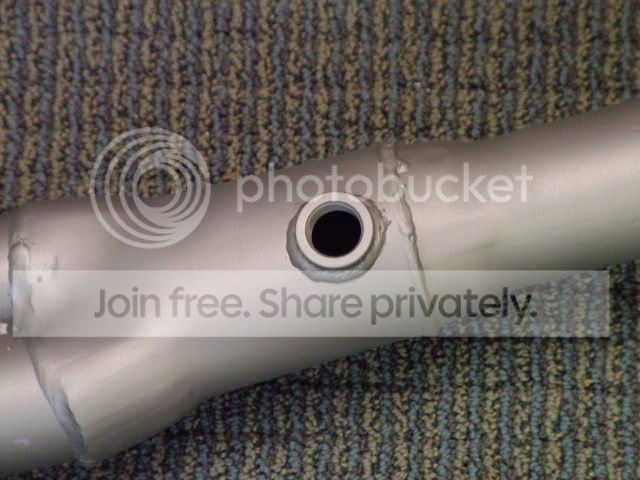
LastDeadLast
Jedi Knight
Offline
Nice...
R
RonMacPherson
Guest
Guest
Offline
Larry,
Let me try to answer from the viewpoint of an early CA state smog inspector view point.
You are right in assessing the value of elementary diagnostic tools, however time marches on.
The value of being able to determine the fuel mixture burnt is total range reading. Being as we are dealing with idle, low speed cruise, high speed cruise, acceleration and overrun there are a number of different scenarios that would take time invested in popping plugs for readings, after vacuum, etc. a lot more than reading airfuel mixture.
For example, let's say you get everything dialed in, plugs, timing advance, fuel pressure, and the plugs read good. A week later starts running poorly. It takes a lot less time as a diagnostic tool in giving you a direction to head in(diaphragm or warm up regulator) than starting the whole procedure all over.
Kinda like cylinder compression/leakdown test can pinpoint which area to focus on with a severely misfire, poor performance engine.
And if you want to get inside the carbs for mods, i.e. different needles and seats, diferent jets, etc. the fuel mixture gauge is invaluable as far as saving time.
Let me try to answer from the viewpoint of an early CA state smog inspector view point.
You are right in assessing the value of elementary diagnostic tools, however time marches on.
The value of being able to determine the fuel mixture burnt is total range reading. Being as we are dealing with idle, low speed cruise, high speed cruise, acceleration and overrun there are a number of different scenarios that would take time invested in popping plugs for readings, after vacuum, etc. a lot more than reading airfuel mixture.
For example, let's say you get everything dialed in, plugs, timing advance, fuel pressure, and the plugs read good. A week later starts running poorly. It takes a lot less time as a diagnostic tool in giving you a direction to head in(diaphragm or warm up regulator) than starting the whole procedure all over.
Kinda like cylinder compression/leakdown test can pinpoint which area to focus on with a severely misfire, poor performance engine.
And if you want to get inside the carbs for mods, i.e. different needles and seats, diferent jets, etc. the fuel mixture gauge is invaluable as far as saving time.

swift6
Yoda
Offline
It could also depend upon what type of exhaust your using. If you have headers that can truly seperate the front from rear carb then your good to go with two. If you are still using the stock exhaust manifold, then you only need one. Even the dual downpipe manifold has a sort of mixing chamber right above the exit of the manifold.