• Hey Guest!
    British Car Forum has been supporting enthusiasts for over 25 years by providing a great place to share our love for British cars. You can support our efforts by upgrading your membership for less than the dues of most car clubs. There are some perks with a member upgrade!

    **Upgrade Now**
    (PS: Upgraded members don't see this banner, nor will you see the Google ads that appear on the site.)
Tips
Tips

TR6 Should I paint the inside of the block?

Got_All_4

Luke Skywalker
Country flag
Offline
Got my block and head back Wednesday. love all that fresh bare machined metal. Heads rebuilt. Shaved, new harden valves seats and checked for cracks and leakage. Block boiled, baked and shot peened. Plan on painting Saturday with POR high temp block paint. Read articles where painting the inside of the block was beneficial for oil drainage. I'm more worried about rust building up more then anything. Any ideas?

On a sad note my parts are one of the last ones to be done in this shop. This is the last machine shop in our county to do automotive machining and is closing at the end of the year. A lot of LBCPs have been done in this shop and sent all over the world. Our local distributor Team Triumph has used them for decades rebuilding our parts. they will be missed. I think they have been around sine the 40s. No one getting this work done anymore plus the tech said they can't find anyone to do this kind of work.
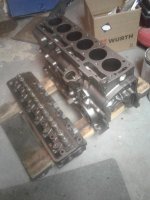
 

Attachments

  • 20181207_232701.jpg
    20181207_232701.jpg
    32.8 KB · Views: 174
I've never painted inside. I've never had any bad effects from oil and the coolant should have rust inhibitors. I'd worry more about the paint coming off inside.
The engine machine shops to seem to be going the way of the radiator shops, chrome shops and the like. My machinist is retirement age so I just hope he hangs in there until I get a couple more engines done.
Tom
 
Is that not what polishing and porting is? I would not use paint because like Tom suggested it will come loose and gum and clog everything. Unless you have a lot of faith in POR15 and that stuff does stick. When I was in high school auto shop, there was talk of chrome plating the inside of heads and blocks to make the fluids flow better, but I think fuel injection cured that on the heads.
 
To my knowledge, there are no more machine shops around SW CT. I just shake my head when I watch Wheeler dealers or those resto shops around the country. Sad.
 
We used Glyptal in the valleys under the intake manifolds in V8 race engines after polishing the block internally to let the oil drain a little easier. I see no need to use it or any coating on any of these old inline engines, it's just a waste of time and money. Sorry, others might feel differently, I don't!
Saying that, polishing the inside of the block does relieve most stress areas in high performance engines, but they don't need to be coated, oil does that job very well. PJ
 
I was trying to recall where I read that. May have been in the TR6 Performance Preparation Manual. What I read was exactly what Paul said. Didn't remember if my block was coated inside before it was stripped but do remember working on many others over the years that had a black gloss coat of something inside. Assumed it was engine paint.

As far as the POR I am not using POR15. That is for rusted metal however they make a high temp engine paint that goes to 1200 degrees and you paint over bare metal as I stated in my opening paragraph. Used it on my TR3 block. Coats nice and you should put 2 coats on but the only thing I don't like about it is that it is flat black. Kinda like a velvet black. Going to try a quick light coat of gloss engine paint over the 2nd coat just before it cures.

Those 2 You Tube videos were very informative. I guess no real benefit to doing it to our engines.
 
I agree about no internal coating. Have read about the Glyptal as well, and think I have rebuilt at least one motor that was coated with it. Apparently it has been used in many rebuilds and is an accepted practice, but it sounds to me like just another opportunity for failure if it comes off and clogs an oil line. Have no idea what the proper prep is. Get the block as clean as possible I suppose.

I would not worry about the internals of the car rusting unless you are going to let it sit without driving it for a very long time, like longer than just the winter.
 
Used mostly in race and high horsepower engines. Does not really prevent rust, oil does that. Just makes the oil drain to the pan quicker in race engines and dry sump engines.
 
Is that not what polishing and porting is?
"Porting and polishing" refers to enlarging the ports in the cylinder head (primarily intake ports but also applies to exhaust), then smoothing (polishing) the surface.

Another process which may be an advantage in a race-only engine; not so much in a street engine. Bigger isn't always better!
 
I see you said you had your engine peened. I did that once and this machinist friend told me just to be sure; pull those oil plugs out by the cam bearings and all other places that can open and hillbilly up a house hold hot water tank to the engine and let the water flush through. I did it and did fine some of those little peens kicking around. He is out of business now, and I do not know what those peens are made off---- perhaps they are harmless; I do not know. I never had any trouble with the engine.
 
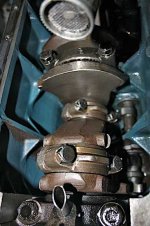
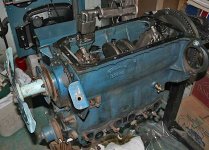
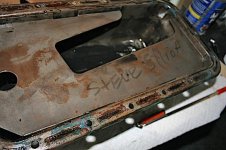
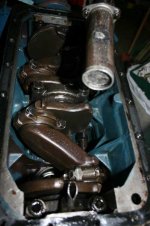
I bought my 61 TR3 as a project with not to much history...I have done a frame off/rotisserie restoration. When I was making a decision about rebuilding the motor I opened it up to check the vitals, to my surprise the inside of the block was painted, the car is just about finished now and the motor runs perfectly. The baffle plate in the motor was signed by I presume the engine builder, Steve Elliot.The car came from the North West, anybody know the builder?
Some photos attached.
Cheers,
Colin
 

Attachments

  • IMG_4632-01.jpg
    IMG_4632-01.jpg
    38.7 KB · Views: 164
  • IMG_4634-01.jpg
    IMG_4634-01.jpg
    51.1 KB · Views: 157
  • IMG_4637.jpg
    IMG_4637.jpg
    42 KB · Views: 171
  • IMG_4636-01 copy.jpg
    IMG_4636-01 copy.jpg
    37 KB · Views: 157
  • IMG_8851.jpg
    IMG_8851.jpg
    131 KB · Views: 159
Not just painted...you have a windage tray too. Very neat!

The idea behind painting the inside of the block is to both aid oil drainage and to lock in any scale or casting sand that may break loose later. I would rate it as...once you have hot rodded everything else you can think of, you might as well paint the block.
 
Yeh I know him kinda; we have talked a few times. He owns a British shop in Seattle plus he has this 62B with about 40k original miles his uncle give him many years ago.
 
I have done Flathead Fords professionally and personally for well over 50 years.
ALL of mine get red oxide at least inside. Old lifters in the bores, have some blocks I fit into the mains and cam bearings, and bores.

You haven't lived until you have a guy who drives his old Ford only on occasion and wipes out an engine with 1000 miles on it because of the condensate and RUST inside...that falls into the sump...and is run through the bearings (basically powdered metal).

Inside of transmission cases.
Inside of diffs.

NEVER had any rust (and it also tends to keep oil, sludge or crystallized oil from sticking).
Even did that to the Jag, but did not do the aluminium sump.
 
Yeh I know him kinda; we have talked a few times. He owns a British shop in Seattle plus he has this 62B with about 40k original miles his uncle give him many years ago.
Thanks for the information on Elliot, by any chance do you know the location of his shop?Would like to find out more about my motor. He actually signed the back of the speedometer, I guess when the motor was done.
Colin
 
Back
Top