

-
 Hey Guest!
British Car Forum has been supporting enthusiasts for over 25 years by providing a great place to share our love for British cars. You can support our efforts by upgrading your membership for less than the dues of most car clubs. There are some perks with a member upgrade!**Upgrade Now**
(PS: Upgraded members don't see this banner, nor will you see the Google ads that appear on the site.)
You are using an out of date browser. It may not display this or other websites correctly.
You should upgrade or use an alternative browser.
You should upgrade or use an alternative browser.
Separating the piston from the connecting rod.
- Thread starter DavidApp
- Start date


Trevor Jessie
Yoda
Offline
Best to just let your machinist do it. they do it all the time. I think my guy charged $25 to do a set.
I am planning on letting them set the pistons on the con rods.
My concern was having both the piston and con rod being tight. Will that not cause a problem? My old pistons slide on the pin. Pressed fit on the con rod.
I can see 2 small openings at 3 and 9.00 clock which I presume is intended to allow oil into the piston/gudgeon pin joint.
David
My concern was having both the piston and con rod being tight. Will that not cause a problem? My old pistons slide on the pin. Pressed fit on the con rod.
I can see 2 small openings at 3 and 9.00 clock which I presume is intended to allow oil into the piston/gudgeon pin joint.
David
Trevor Jessie
Yoda
Offline
Your machinist will hone those pistons if needed.
Thank you. Just spoke to them and they said "No problem with that" Moss said they seem to see the tight pin issue in batches??
Regarding the pistons I presume they are symmetrical? Can be mounted either way around.
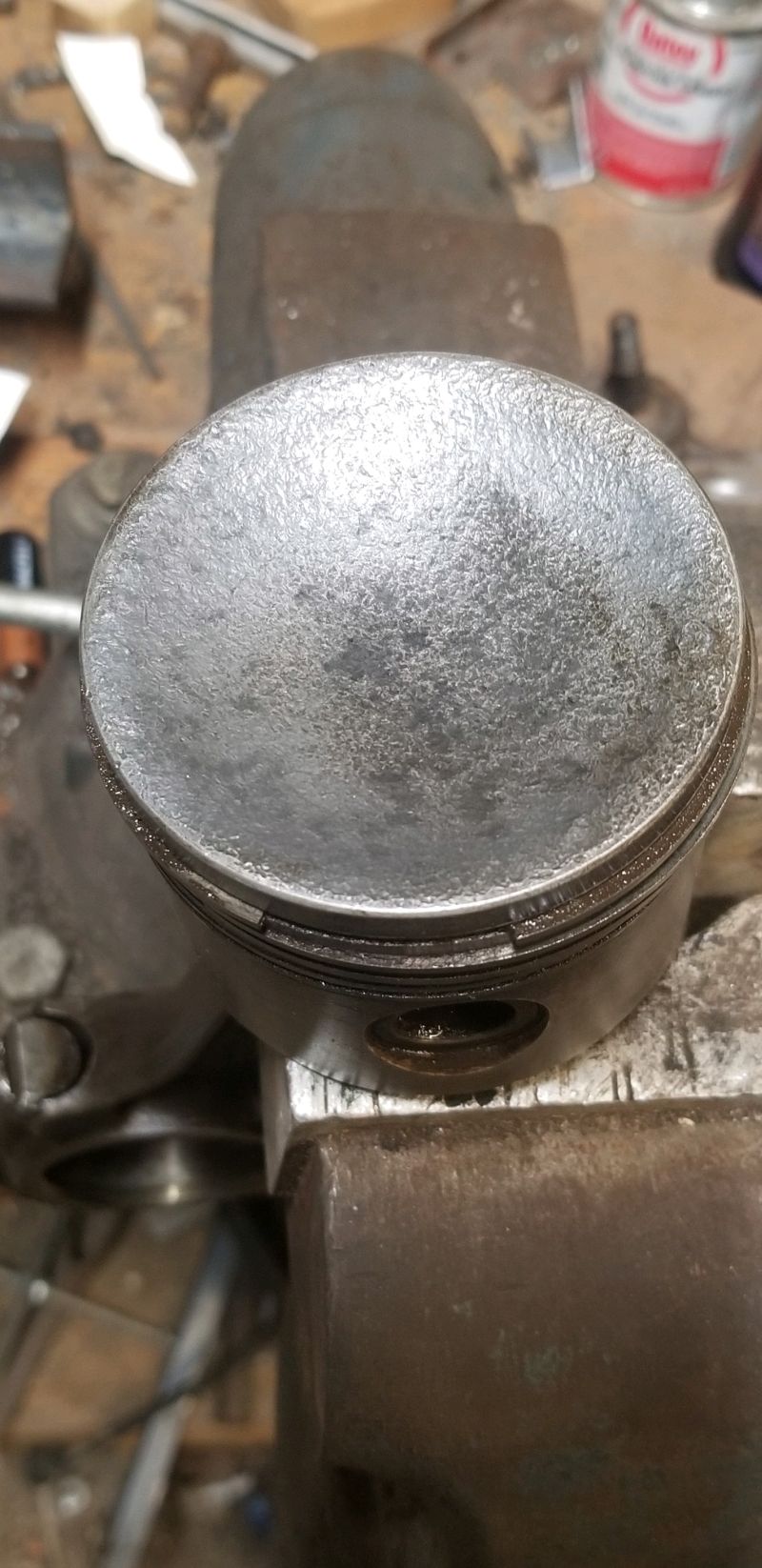
The old pistons look like they were not machined on top?? Note the huge gap in the top piston ring. Looks to be about 3/4". It may have been broken and I dropped the piece. One of the other top rings was in 2 halves.
David
Regarding the pistons I presume they are symmetrical? Can be mounted either way around.
The old pistons look like they were not machined on top?? Note the huge gap in the top piston ring. Looks to be about 3/4". It may have been broken and I dropped the piece. One of the other top rings was in 2 halves.
David
I have my engine parts back from the machine shop and am ready to start rebuilding it. A couple of questions.
What is the beat way to get the brass oil gallery plugs out of the block? Replacing them sealant and drive them in? Could a threaded plug be used in place of the brass plug?
Looking at the cam bearings it appears that only one bearing has an oil hole? Do the Moss cam bearings need to be reamed if they are replaced?
David
What is the beat way to get the brass oil gallery plugs out of the block? Replacing them sealant and drive them in? Could a threaded plug be used in place of the brass plug?
Looking at the cam bearings it appears that only one bearing has an oil hole? Do the Moss cam bearings need to be reamed if they are replaced?
David
Drilled and threaded one of the plugs and pulled it out. I notice the plug was almost solid unlike the replacement supplied by Moss which is more like a freeze plug.
Got the valves lapped in and valve assembled. The shop said they would do a vacuum test on the valves when I was done doing my head assembly. I checked the head first using my brake bleeding vacuum pump and found 2 valves that leaked. Using a sharpie to mark the valve seat face I could tell where they were not sealing. Some more lapping got them to seal.
I had never heard of doing the vacuum test before but it makes good sense to do the test before the head is torqued down on the block.
David
Got the valves lapped in and valve assembled. The shop said they would do a vacuum test on the valves when I was done doing my head assembly. I checked the head first using my brake bleeding vacuum pump and found 2 valves that leaked. Using a sharpie to mark the valve seat face I could tell where they were not sealing. Some more lapping got them to seal.
I had never heard of doing the vacuum test before but it makes good sense to do the test before the head is torqued down on the block.
David