• Hi Guest!
    If you appreciate British Car Forum and our 25 years of supporting British car enthusiasts with technical and anicdotal information, collected from our thousands of great members, please support us with a low-cost subscription. You can become a supporting member for less than the dues of most car clubs.

    There are some perks with a member upgrade!
    **Upgrade Now**
    (PS: Subscribers don't see this gawd-aweful banner
Tips
Tips

Sealer between fenders and shrouds

Patrick67BJ8

Obi Wan
Silver
Country flag
Offline
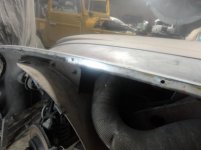
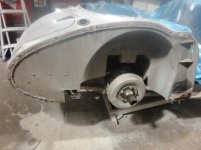
I saw an unmolested 1960 Healey(in storage for about 20 years), at the same paint shop my Healey is at that had the fenders, doors, etc. removed and the sealer between the rear shroud and the rear fender is continuous from one end to the other. However, the front fender to shroud only has the sealer halfway the length of the fender from the front/headlight position to just after the 4th bolt hole. This is the same for both front fenders.

Is this normal for the front fenders/shroud area? (I will post photos later). Also there's a bright shiny area on the edge of the aluminum shroud on one side and it must be original to the shrouds finish at the factory. I assume that the aluminum was treated/sanded, etc. before it was primed and painted but maybe not the edges.
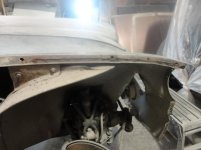
 
Photos attached of both sides of the front should and one side of the rear shroud.
 

Attachments

  • DSC01223.jpg
    DSC01223.jpg
    32 KB · Views: 189
  • DSC01220.jpg
    DSC01220.jpg
    31.9 KB · Views: 211
  • DSC01225.jpg
    DSC01225.jpg
    34.8 KB · Views: 207
Hmmmm ... first I've seen of any factory sealer between shroud and fenders. I don't recall it being mentioned in the Moment/Anderson resto book either, but I'll check tomorrow. Doesn't look like the sealer was squashed enough to be effective anyway. My guess is the sealer is 'aftermarket.'

I suspect the shiny aluminium was either a sloppy paint job at the factory, or was added later.
 
Hmmmm ... first I've seen of any factory sealer between shroud and fenders. I don't recall it being mentioned in the Moment/Anderson resto book either, but I'll check tomorrow. Doesn't look like the sealer was squashed enough to be effective anyway. My guess is the sealer is 'aftermarket.'

I suspect the shiny aluminium was either a sloppy paint job at the factory, or was added later.
The car has never been apart. The shiny aluminum is between one fender and the shroud. It appears to be the original new finish that wasn't prepped for painitng. I appreciate your checking into the sealer.
 
Just a thought about sealing the joint. What about water that gets in below the stainless beading? Shouldn't there be a way for it to drain out? Bob
 
Hi Patrick,
It "seams" like my car had the sealer all the way back to the door.
View attachment 25916
I believe my BJ8 had sealer all the way back to the door too. The car shown is a 1960. The body shop is due to put all my panels back on this upcoming week for the "final fit" before spraying so I'm trying to find out what was really done and if it was done what was used as a sealer. I believe the sealer would have been the same as used on the shroud.
 
My Bj7 was sealed the entire length of the front fenders (original car). Can't say what they did with the car that was pictured, but there's plenty of stories about "shortcuts" that were taken at the factory when supplies were low, like mixing some white or black paint into the engine paint when they started to run low. At any rate, the sealer keeps the steel fenders away from the aluminum shroud to prevent electrolytic corrosion, so even if it wasn't original, I'd run the seal the whole length of the fender if I was doing the resto.
 
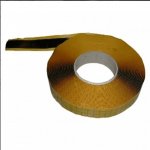
I checked the Moment/Anderson book and there was no mention of a sealant between panels (although I didn't do a thorough reading). The only mention was of undercoating and, according to the book, no coating of any kind was ever applied at the factory. I do know that a sealant--of the 'dumdum' variety--was applied where the front shroud laid on the scuttle/cowl. A while back Randy F mentioned some plumber's putty or similar that looks similar to the original stuff; I've got some 3M strip caulk I might use to seal up our shroud.
 
Honestly, nowadays with epoxy-chromate primers and acrylic urethane paints that a lot of us use, and the fact that the panels are often coating inside and out, I wouldn't put much weight on the required effectiveness of using a putty-type seam sealer. It's not like it was when the cars left the factory with bare aluminum touching bare steel, immediately followed by a boat ride and sitting at the docks on both sides of the Atlantic Ocean.

I have to agree with what British Recovery says, the water's going to get in, give it a way to get out. To me, it's far better for the water to be able to pass through than to be trapped in the joint.
 
Hi Bob
here the sealant stripAsealer1.jpgfor fenders-
use can prejudiced the electrolytic process from different wing metals as Randy opinion
-or avoid dirty water caning from road ????!!!
I buy it, but never apply to my car,
only for the front fenders zone I are hesitant
 
Honestly, nowadays with epoxy-chromate primers and acrylic urethane paints that a lot of us use, and the fact that the panels are often coating inside and out, I wouldn't put much weight on the required effectiveness of using a putty-type seam sealer. It's not like it was when the cars left the factory with bare aluminum touching bare steel, immediately followed by a boat ride and sitting at the docks on both sides of the Atlantic Ocean.

I have to agree with what British Recovery says, the water's going to get in, give it a way to get out. To me, it's far better for the water to be able to pass through than to be trapped in the joint.
I agree with you, if waters going to get in, give it a way to get out. I just talked to Martin Jansen of Jule Frames(my frame is a Jule), and he said not to use the caulking between the fenders and shrouds for the same reason you have said above and I agree with him. When you wash your car you can easily direct the hose nozzle to between the fenders to clear out any dirt that holds the moisture. The original cars flexed and they squeaked when they flexed particulary the older cars and the sealer was probably used for that reason. A good primer and good coat of paint is more than sufficient to protect from corrossion between the two surfaces. I notified my body shop this morning not to use any sealer between the shroud edges and fenders. I also am using special fender bolts supplied by Jule to hold my fenders tighter together than the original hardware.
 
Back
Top