
• Hey Guest!
    British Car Forum has been supporting enthusiasts for over 25 years by providing a great place to share our love for British cars. You can support our efforts by upgrading your membership for less than the dues of most car clubs. There are some perks with a member upgrade!

    **Upgrade Now**
    (PS: Upgraded members don't see this banner, nor will you see the Google ads that appear on the site.)
Tips
Tips

Prime Time to learn a new skill

Darwin

Jedi Knight
Bronze
Country flag
Offline
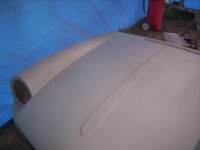
Finally got all my sandblasting done. Well, all I am going to do at the moment. Now have the exterior of the body, boot lid, and bonnet in epoxy primer.

1st time doing either job. Sandblasting is dirty messy work!!! Sand gets EVERYWHERE. Leaves a nice "tooth" for the primer to adheare to.

I have never used a paint gun in my life so I was worried about my results. So far I have managed to cover 95% of the parts I am working on with a good coat of epoxy primer and only have a very few runs to show my inexperience.

Now that the rust work has been put on temporary hold I can begin to learn to beat out dents. Here again I have no experience. I don't even know if you pound on the high side of the dent and have the dolly on the low side or visa versa. I guess I'll be learning real quick.

Included an attachment of the bonnet.
 

Attachments

  • 249776-000_0435.jpg
    249776-000_0435.jpg
    162.5 KB · Views: 183
Hey, Darwin - Been following your progress, and the latest pic looks great! Glad things are moving along for you.

Mickey
 
looks good for someone with no experience.

you may want to consult a pro prior to ("pounding anything!")
 
Years ago, an excellent body man once told me that you should never strike a piece of metal without knowing exactly what the outcome will be. As much as I admire your zeal and tenacity, I feel compelled to advise you to seek some professional help with the dents and any panel replacement or welding prior to applying any unfamiliar techniques to the sheet metal. This is only to avoid unwittingly causing any damage that may become very costly or impossible to repair.

Remember that the final finish will only look as good as what it sits on.
 
I am in a similar boat as you, all I can say is go slow and use light taps with the hammer and read as much as you psossibly can. As the other guys said practice a lot on other metal. Try and recreate the problem you face on junk metal, then fix it and then do the real thing. This has saved me many times. Also think about the strength and structural issues that result from each of your actions and if you can't account for them, stop till you can.

Lastly, if you are willing to take your time and redo it a couple time if needed, you can do as good a job as any regular body shop guy.
 
I was confronted with the same situation when I started the body work on my TR3. There wasn't money in the budget to send the work out, so I decided to do it all myself. I had a lot of sheet metal to straighten out, and a lot of patch panels to weld in where I cut out the rust. I did a lot of reading on the techniques involved, and it helped out considerably. Find a good good book on metal bumping and/or restoration techniques and devour everything you can. You might find some stuff on the internet. You'll learn about hammering "on dolly", and "off dolly", and when which technique is used when. Since the metal used in most of the Triumphs is a softer and thicker gauge then what's used now, it's much easier to bump the metal into shape.

Get yourself some GOOD hammers and a couple of dollies. The difference between a good hammer and a cheap one is very evident once you start working. The good hammers have excellent balance and become an extention of you arm and mind. Don't be lured into a set of hammers and dollies for $34.95!

Start off with some small, easy dents to get a feel on how it all works. Nothing will replace experience in this area, but it is a skill that most people can acquire.

And don't forget to read all you can about the techniques, and then go apply them. You might be quite surprised at the results. I know I was.

/ubbthreads/images/graemlins/driving.gif /ubbthreads/images/graemlins/cheers.gif
 
Hi Darwin,

I am in the same boat as you, learning how to remove dents (but I am working dents before priming). I posted a similar question before, and got some fantastic feedback:

https://www.britishcarforum.com/ubbthread...true#Post242579

I bought the books by Thaddeus, but found them a bit difficult to understand (British English). I will likely buy some material on Eastwood.com, but they have a minimum shipping charge of $7 (?-approx.). Makes it a little tough to justify buying a $12 book...

Good luck!
Mike
 
Everything I have learned worth knowing I have done myself. Learned a few things the hard way, but learned them just the same. GOOD LUCK /ubbthreads/images/graemlins/grin.gif
 
Make sure you wear a good respirator with epoxy paints, as they will cure in your lungs and can not be removed. Isocynatic based paints require a positive pressure air system as they are cynanide based. Phil
 
Thanks for all the help guys. I had a long chat with a retired auto body teacher the other day and he has volunteered to be my guide through this.

Phil, thanks for the warning on paints. I have a complete pressure system including coveralls. I have been using the breathing system during the media blasting phase as well as that stuff is really nasty to breathe too.
 
Back
Top