• Hey Guest!
    British Car Forum has been supporting enthusiasts for over 25 years by providing a great place to share our love for British cars. You can support our efforts by upgrading your membership for less than the dues of most car clubs. There are some perks with a member upgrade!

    **Upgrade Now**
    (PS: Upgraded members don't see this banner, nor will you see the Google ads that appear on the site.)
Tips
Tips

Wedge Power Brake Booster/Master Cylinder for TR7

Delmon

Freshman Member
Offline
Has anyone ever used some other type of power brake booster/master cylinder on a Triumph other than British. I need to replace mine and to keep cost down am thinking GM or Ford. Any suggestions.
 
On the cars with big brake kits front and rear, it is common to go to masters with a larger bore. The last one I did was a 1" bore crome hot rod unit derived from a Caprice. It was a heavy cast unit, and I had to enlarge the holes in the firewall slightly to bolt up the booster. I didn't want to install it, but it wasn't my call or my car. I prefer to use a Willwood aluminum unit bolted to the stock booster. The bolt spread pattern is a common one, but there will ineviteably be some fabrication involved. I wouldn't change unless you need to use a larger bore master to push more fluid into larger bore calipers. It just isn't worth the work. New TR7/8 masters are available again, and the boosters can be sent off to be rebuilt. The TR7 and TR8 use the same masters, but TR8 boosters are larger than the TR7 ones. If you do decide to change, make sure you get a master with a dual resevoir. If you are keeping stock brakes, you should maintain the same bore size in the new unit. You will also have to order brake line adapter fittings, and more than likely, you will have to fabricate a push rod. One more thought- used ones are easy to come by. I must have at least a dozen of them rusting away in the back of the garage.

 
Thanks for the info. My problem may not be completely in the booster part, part of it could be in the proportioning valves. I can not get my rear brakes adjusted completely, With my brakes on, when I put car in gear the rear wheels spin, the front brakes are the only thing holding it.
 
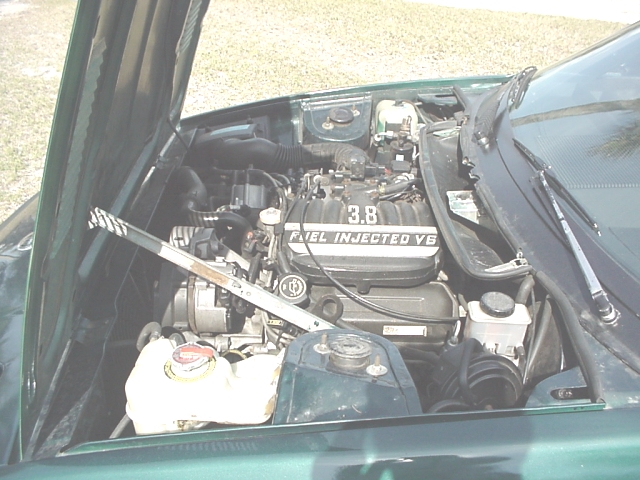
Notr Ford unit from Thunderbird:

engbay4.jpg
 
Sounds like par for the course. Wedge rear brakes don't do much at all. The car has a very short wheelbase. The braking system is designed so that the rear brakes won't lock up. Could be very dangerous if an inexperienced driver has a panic stop while turning a corner. Ted sells revalved proportioning valves that will give you a little more rear brake. To put just how little the rears actually work into perspective, I offer this up. I have a TR8 SCCA race car. I am required to use basically stock brakes. I can install different pads and a different proportioning valve. When I installed an aftermarket proportioning valve, I removed the stock unit, repiped the lines, and installed it on the rear circuit. That is how you are suppose to do it. I started with max front brakes and gradually adjusted it to get more rear braking. I eventually adjusted it all the way so that the braking pressure was 50/50 front and rear(essentially the same as no valve at all). Still couldn't get the rears to lock up, but it was better. I moved the valve to the front circuit, and started to diminish the front braking pressure. Finally got the rears to lock up- then I turned it back a little. So to sum it all up, TR8 rear brakes don't work. That is why they never wear out the shoes. You should check that the wheel cylinders haven't frozen up. Very common. If that happens, instead of very little rear brakes, you will have no rear brakes. Or you could just throw in a Ford posi 8.8 rear with massive rear discs, and a matching set of Willwoods up front.
 

Attachments

  • 15218.jpg
    15218.jpg
    65.4 KB · Views: 170
Back
Top