

-
 Hey Guest!
British Car Forum has been supporting enthusiasts for over 25 years by providing a great place to share our love for British cars. You can support our efforts by upgrading your membership for less than the dues of most car clubs. There are some perks with a member upgrade!**Upgrade Now**
(PS: Upgraded members don't see this banner, nor will you see the Google ads that appear on the site.)
You are using an out of date browser. It may not display this or other websites correctly.
You should upgrade or use an alternative browser.
You should upgrade or use an alternative browser.
Played around with Black and White
- Thread starter Basil
- Start date


OP

Online
Any filters used on the original photo?
Spectacular!
Thanks. Yes, the original photo was shot with a ND400 Neutral Density filter with a 6 second exposure.
OP
Online
It's amazing. 6 seconds? Was it a reasonably limited light sunset?
Wel, it was the golden period with the sun low on the horizon (as you can tell from the long shadows on the rocks). Shot with a Canon 7D Mark II with 24-105mm Canon L lens on a tripod (lens set at 24mm which is about 38mm equivalent since it's a crop sensor camera.


martx-5
Yoda
Offline
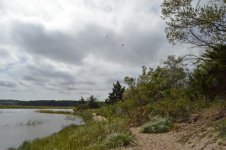
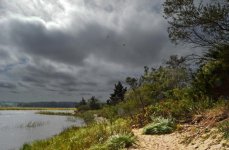
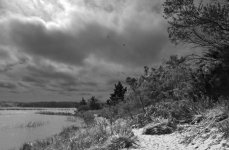
That's a wonderful photo Basil. I used to do a ton of B&W work using a 4x5 view camera. I also have an 8x10 view camera, but those days are over. I miss going out with the 4x5 and shooting, but I don't miss the darkroom work. Today I just use a Nikon DSLR (also not full format) and love to do post processing with Photoshop. I'll convert color to B&W using photoshop rather doing it in camera, as it leaves my options open. Below is a photo I took last year that I turned into a B&W after processing the original color photograph.
OP
Online
That's a wonderful photo Basil. I used to do a ton of B&W work using a 4x5 view camera. I also have an 8x10 view camera, but those days are over. I miss going out with the 4x5 and shooting, but I don't miss the darkroom work. Today I just use a Nikon DSLR (also not full format) and love to do post processing with Photoshop. I'll convert color to B&W using photoshop rather doing it in camera, as it leaves my options open. Below is a photo I took last year that I turned into a B&W after processing the original color photograph.
View attachment 43690View attachment 43691View attachment 43692
Taking the picture in Color, then PP in Lightroom (what I use) or PS is recommended as you keep more information with your shoot color. Basically the kind of PP you can do in LR or PS is same thing in effect that Ansel Adams did, but easier.
martx-5
Yoda
Offline
Late last summer, there was a small Ansel Adams print showing at one of the local museums here on Long Island. The show had two prints of "Monolith, The Face of Half Dome" on display. The picture was taken in 1927, and is supposed to be the picture that had Adams visualizing the final print before he took the picture and adjusting the exposure for that.
Well, one of the prints was done in the early '30s and the other about twelve years later. The was a huge difference in the quality of the prints, the later one being much better. I figure it was because of several factors, one having more experience in the darkroom, and at least another on the improvements in darkroom equipment, chemicals and papers.
https://www.anseladams.com/new-modern-replica-monolith-face-half-dome/
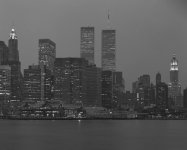
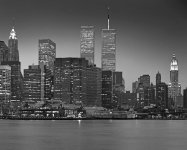
Well, the same applies to digital post processing. I'm in the process of scanning my 4x5 and 8x10 B&W negatives (I have an Epson V700) and below is a negative taken in 1996 that has always been very difficult for me to get a really good print from. Not so after scanning. The original scan is 23MB, and after Photoshop, it's now 141MB, but it prints great...as many as I want, in any size I want and all the same! I'd never go back to the darkroom to print...although I might to develop 4x5 negatives. There's just something magical about using a view camera.
Well, one of the prints was done in the early '30s and the other about twelve years later. The was a huge difference in the quality of the prints, the later one being much better. I figure it was because of several factors, one having more experience in the darkroom, and at least another on the improvements in darkroom equipment, chemicals and papers.
https://www.anseladams.com/new-modern-replica-monolith-face-half-dome/
Well, the same applies to digital post processing. I'm in the process of scanning my 4x5 and 8x10 B&W negatives (I have an Epson V700) and below is a negative taken in 1996 that has always been very difficult for me to get a really good print from. Not so after scanning. The original scan is 23MB, and after Photoshop, it's now 141MB, but it prints great...as many as I want, in any size I want and all the same! I'd never go back to the darkroom to print...although I might to develop 4x5 negatives. There's just something magical about using a view camera.
OP
Online
Well, one of the prints was done in the early '30s and the other about twelve years later. The was a huge difference in the quality of the prints, the later one being much better. I figure it was because of several factors, one having more experience in the darkroom, and at least another on the improvements in darkroom equipment, chemicals and papers.
I have to wonder what sort of magic Adams could have done had he had access to todays's post processing tools.


Offline
Gee, when I read the thread title I was thinking: Police cars?