• Hey Guest!
    British Car Forum has been supporting enthusiasts for over 25 years by providing a great place to share our love for British cars. You can support our efforts by upgrading your membership for less than the dues of most car clubs. There are some perks with a member upgrade!

    **Upgrade Now**
    (PS: Upgraded members don't see this banner, nor will you see the Google ads that appear on the site.)
Tips
Tips

TR2/3/3A Odd TR3A suspension issue

TRclassic3

Jedi Trainee
Country flag
Offline
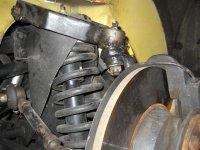
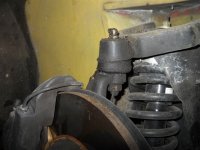
Would appreciate some input on this issue as it has me a bit stumped. A little back ground. A couple of years ago I noticed the drivers side ball joint was at a rather extreme angle when the car was off the ground. Stark contrast to the right side. Thinking it may be a bad ball joint, I changed it. Also replace upper bushes. Could not see a visual difference, and as the car was driving OK the issue fell down the list of priorities. It has come back to the top of the list again.

I tried an experiment by jacking the car, and placing stands under the lower A arms of both sides. The difference between the two sides remained. I noted that as I jack the car off the stand, or lower it back down, the "good"side shows some movement. The problem side does not move. I did a couple of rough measurements and the problem side appears to sag about an inch lower than the right.

Would this point to a issue with the spring? What could cause that side to droop so low and then not budge as it is lowered onto the stand?

Interestingly, when the car is sitting on it's tires, I do not detect any visual height difference. Where do I go from here?
 
Normally, the suspension rebound movement is limited by a rubber block, that is attached to a bracket bolted to the frame under the spring pan; and hits another bracket that is bolted to the bottom of the spring pan. With the front end jacked up, both sides should be resting on that stop.

Sounds like your driver's side is missing the block of rubber, or one of the brackets. Some photos would help.
 
The rubber stops are present and in good shape.
 

Attachments

  • 27519.jpg
    27519.jpg
    63.3 KB · Views: 255
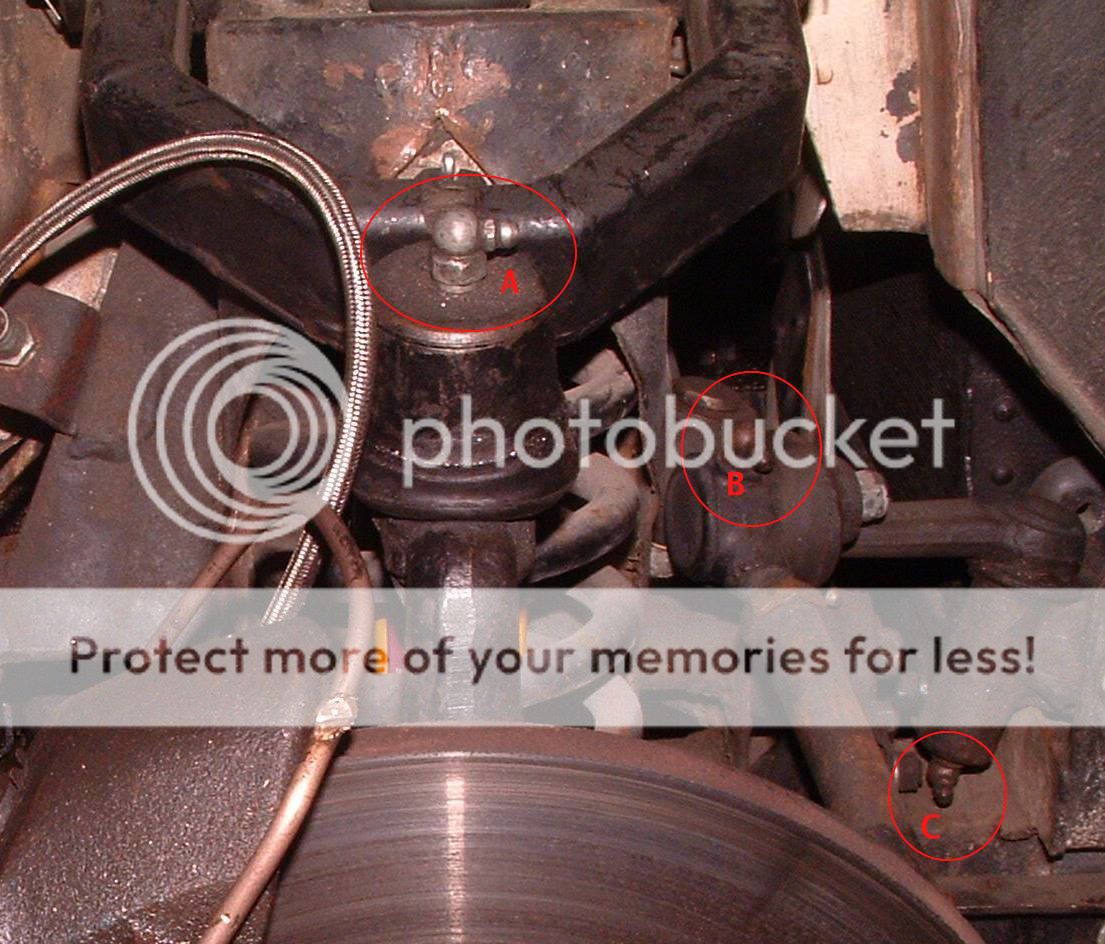
How about a shot of the rebound stop area? Your "bad" photo actually looks closer to the way my TR3 sits:

DSCF0002_ZERKS.jpg
 
Ed,

It looks like one side is just allowed to go lower than the other. Like Randall said, that is the job of the rebound stops. If the car sits level, then your springs are good. The jack stand test is not likely significant, as you are only placing a partial load on the springs, so one just may be slightly freer than the other.

The rebound bumper is mounted on the frame, and it contacts a plate on the lower arm that also mounts the shock. I bet one of these is either missing or damaged The only other thing that can restrict the rebound travel would be a damaged shock that does not extend fully.

John
 
Very interesting. Randalls pic does look more like my "bad" one than my "good" one. Further investigation appears to be in order. John, are you suggesting that there is a possibility the "good" one is not dropping as far as it should?(shock not extending fully)

Thanks to all for thoughts and suggestions.
 
Hard to say which is off. Either a shock is holding one side up, or a rebound stop issue is allowing the other side to droop. Of the 2 possibilities, I would think a rebound stop is the most likely...as it is on the bottom of the suspension and is easily hit. A damaged shock is far less likely, since it is tucked up inside the spring.

I'll be interested in seeing what you find...

John
 
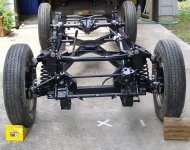
I agree, the lower control arm is limited of downward movement by the rebound bumper bottoming against the shock mount. Looking at my unloaded front end (which is close to the same situation of having the frame supporting the front of a car with an engine in it) and realizing the above condition is true, you can see that the angle of the ball joint could be affected only by changing the distance between the ball joint and the (stationary) lower control arm. This could be done during assembly by not fully threading the trunnion onto the vertical link. This would explain why it appears normal when supported by the wheels (even though the ball joint angles would still be different).

Sorry, I should have added: you can check my theroy simply by making a meassurement on both sides with the car level. Measure the distance from the bottom of the ball joint to some spot on the lower control arm -say the castelated nut. Mine are within 1/8" of each other, and I'm guessing yours have a greater difference.
 

Attachments

  • 27523.jpg
    27523.jpg
    165.1 KB · Views: 144
Back
Top