

 Hey Guest!

 Hey - did you know if you click on the title of a thread it will take you to the first unread post since you last visited that thread?
 but were afraid to ask:
  STOP!! Never post your email address in open forums. Bots can "harvest" your email! If you must share your email use a Private Message or use the
  smilie in place of the real @
 Pretty Please - add it to our Events forum(s) and add to the calendar! >>
5
57_BN4
Guest
Guest
Offline
I went for a short drive with a group of other Healeys today, interspersed with the odd TR Triumph. One thing that really caught my eye, or didn't as the case may be was that none of the Healey brake lights came on during normal round-town driving. The TR's did, presumably because they use a pedal switch rather than a pressure switch.
Seems like the amount of pedal pressure required to drive normally isn't enough to trigger the stop lights on maybe five cars, including mine which is kind of asking to get whumped from behind. Testing the brake lights puts them on ok but anyone asked to put the brakes on to test the lights instinctively gives the pedal a good shove which would result in a rather abrupt stop when moving.
I don't want to go bodgering in a pedal switch but something needs improving here. Any thoughts on replacement switches? I heard only bad things about them so far.
Andy.
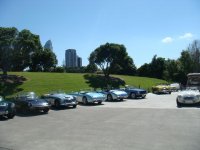
Seems like the amount of pedal pressure required to drive normally isn't enough to trigger the stop lights on maybe five cars, including mine which is kind of asking to get whumped from behind. Testing the brake lights puts them on ok but anyone asked to put the brakes on to test the lights instinctively gives the pedal a good shove which would result in a rather abrupt stop when moving.
I don't want to go bodgering in a pedal switch but something needs improving here. Any thoughts on replacement switches? I heard only bad things about them so far.
Andy.


