• Hi Guest!
    If you appreciate British Car Forum and our 25 years of supporting British car enthusiasts with technical and anicdotal information, collected from our thousands of great members, please support us with a low-cost subscription. You can become a supporting member for less than the dues of most car clubs.

    There are some perks with a member upgrade!
    **Upgrade Now**
    (PS: Subscribers don't see this gawd-aweful banner
Tips
Tips

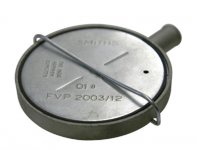
New PCV valve from Moss

Well lets see if the picture will post.
 

Attachments

  • 11816.jpg
    11816.jpg
    99.3 KB · Views: 326
Doesn't that thing fit down on to a fitting on the intake manifold? I think that it's only for the earlier cars.
 
That looks like the one I bought for my TR4A from them about four years ago. It seems to work just fine.
 
Moss advertises it as a "new" item for the TR6; 4 years ago huh. Does your PCV attach to the manifold or attach to the rocker cover?

From the pictures I have seen it appears it would need a "U" shaped tube to attach to the rocker cover and keep the oil splash out of the carbs.


You may know the stock rocker covers for the TR6 have a gauze pad inside the cover at the mouth of the breather exit. The fancy aluminum covers make no provision to keep splashing oil out of the breather tube. I just wondered if this PCV would do just that?
 
I think that is called a Flame trap . For early cars
 
What is its purpose? Does it separate the oil, or is it simply a one-way valve, to prevent damage in the case of a backfire?

Might use this for ventilation on my de-smogged 1500...
 
It is designed to keep a mild vacuum on the crankcase. The hose at the top comes from the valve cover or crankcase vent, the underside is to be connected to intake vacuum. It's a "slug" valve with a weak spring and a rubber diaphragm inside. Heavy vacuum will close it, mild vacuum allows the crankcase to be 'scavenged' of fumes and reintroduced to the intake.
 
Somewhere I've got a document on the PCV valve. As I recall, it serves as both a check valve to keep fuel/air from being sucked into the crankcase during WOT and as a regulator to limit how low the crankcase pressure can go. Maybe it also restricts flow, don't recall for sure.

The concept is sound, to suck any crankcase fumes or blowby into the intake so it can be burned instead of being dumped into the air. But IMO, Triumph blew it on the execution. The biggest problem happens when you mash on the loud pedal, blowby goes to maximum but there is no manifold vacuum to suck it through the PCV. Pressure builds up in the crankcase, and blows oil out through every seam and seal.

The second problem is more subtle, but still unpleasant. Since there is no fresh air being admitted to the crankcase, it eventually fills with blowby (at somewhat lower pressure than ambient) which eventually condenses to form varnish and acid.

PS, No, it doesn't help with oil separation. There is supposed to be wire mesh inside the rocker cover for that.

 
My only experience has been with 'Merican PCV valves. The valve is connected to an oil separator crankcase connection. The other side to intake manifold vacuum.

Air is admitted to the crankcase through a calibrated port in the oil filler cap. This port is connected back to filtered side of the air intake.

At high manifold vacuum (idle) the valve vents the crankcase through a restricted port in the valve. Very low flow, not much manifold "leak" to screw up idle. If the idle flow is not adequate, pressure in the crankcase reverses & goes to the air filter. See zero vacuum below.

As vacuum drops on cruise, the valve opens wider against a spring load but still through a calibrated restriction & allows crankcase fumes to be vacuumed out.

At zero vacuum, wide open throttle there is no vacuum but crankcase gasses flow back through the filler cap vent to the air filter. Reverse flow.

If an intake back fire occurs, the valve seals off backflow to prevent crankcase explosions.

The valve flow rate & the filler cap restriction must be calibrated to the engine's displacement. Hard to believe that so much happens with a valve that only has one moving part & a spring.

There must be a hundred variations on this theme, each car having it's own variation of what the designers thought to be the best. One of the Brit varieties has a diaphragm in place of the spring & I don't know what else may be different. The operating principles should be similar though.
D
 
Ah, be glad it's not the oil trap from a Volvo, or the V engine BMW....
 
When I installed dual HS2's on Jerserygirl's '79 Spitfire I discovered this engine really wants a PCV valve. With the valve cover vented to atmosphere through a breather filter, crankcase pressure built up and it spewed oil out of the front and rear crank seals.

Rather than spend $100+ for a new one from the usual suspects I found a couple of used ones at Carlisle for $10 (along with different carb linkage I needed). One of them has a dried out & cracked diaphram but the other one is good. I cleaned it up and fit it into the intake manifold and piped it to the valve cover and charcoal canister. End result: oil leaks are back to normal (just the occasional drips).

The fitting you can see in the picture is piped to the valve cover. There is a similar fitting (not shown) pointing down that goes into a fitting on the manifold on the engine-side of the carbs.

FWIW, OE single-Z-S has some sort of valve integrated into the carb and thus doesn't use this PCV set-up. This may be similar on later dual Z-S cars (I've never realyl looked).

Fortunately, a replacement diaphram sell for about $6.
 
Ah, here it is. PM me your email addy if you'd like a full copy.

Looks like I was mistaken : they added the fresh air intake in 1970 as this booklet talks about it.
 
Back
Top