• Hey Guest!
    British Car Forum has been supporting enthusiasts for over 25 years by providing a great place to share our love for British cars. You can support our efforts by upgrading your membership for less than the dues of most car clubs. There are some perks with a member upgrade!

    **Upgrade Now**
    (PS: Upgraded members don't see this banner, nor will you see the Google ads that appear on the site.)

Maybe Nial knows what this is.

Basil

Administrator
Staff member
Boss
Offline
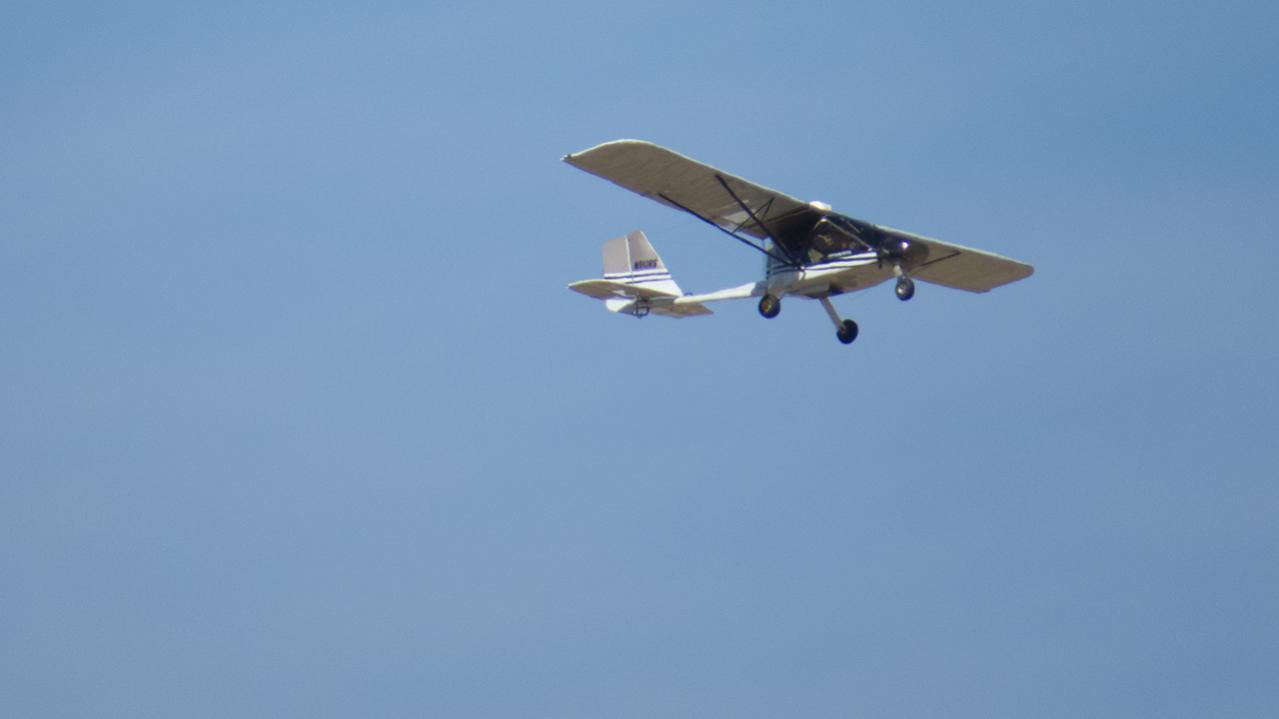
I was out trying my new "Bridge" camera, a Canon SX50, when I heard something that sounded like a mosquito on steroids. I looked up to see a small, weird looking airplane flying around. Even though it was kind of far off, I was able to snap a picture of it by using the Cameras monster 50x zoom capability.

IMG_0093.jpg
 
It's a kit! With the FAAs relaxed specs on super light aircraft, there are a lot of them popping up now days. Hard to keep track of product names. Some good, some not so good! Up to a certain gross weight, you don't even need a medical anymore. Crazy, I don't agree with that ruling as anyone up there should be medically qualified, just for the safety of other people! A hard landing or Violent turbulence on the pictured aircraft could snap such a fragile tail boom. JMHO. PJ
 
I would guess it's one of the new Sport Pilot ("Light Sport") certified planes. These were designed to work with the new FAA Sport Pilot license (which requires very minimal training, an automobile driver's license and no medical exam).

If that were a kit plane, it was have an "X" (for Experimental) at the front of the tail number (looks like a regular "N" to me).

The new SP planes are pretty limited in size (two seats only), speed and fuel capacity.

The point of the Sport Pilot initiative was to rein in all the "ultralight" planes. Ultralight aircraft are not regulated by the FAA and it's an open secret that many of them do not really comply with the ultralight rules (ie-max weight of 254 lbs......we have several 400 to 500 lb ultralights in my area).

The Sport Pilot deal is regulated under the FAA (but rules are not real strict). It's actually a decent compromise (in my opinion) to get more of the illegal ultralight flying placed under reasonable FAA regs.

The only problem is that the new Sport Pilot planes were supposed to be cheap. Most are actually north of $100,000 (including probably the one above).

You can see the entire list of legal Sport Pilot planes ~HERE~

 
Wow - wish the photo were in slightly better focus. If we could read the tail numbers we could tell what the aircraft is.

One note: Sport Pilot - is an FAA program for certifying pilots, not aircraft. A Sport Pilot can only fly what's designated as a "Light Sport Aircraft", as Nial says, only two seats, limited HP and limited gross weight, etc.

The Sport Pilot program was touted at first as a way to incease the number of General Aviation pilots, which has been declining for many years. Sport pilots can only legally fly Light Sport Aircraft, which as Nial says, turned out to be way more expensive than they were supposed to be. Reality is that many sport pilots are actually full Private Pilots, who can afford to buy a Light Sport Aircraft, and who fly as sport pilots to circumvent the Private Pilot medical requirements. The total pilot numbers didn't increase much, but aircraft manufacturers got a whole new chance to design, build, and sell aircraft.

Tom
a/k/a disappointed frustrated almost-a-sport pilot
 
Tom,
The image I posted is a scaled down version. When I zoomed in on the original (shot in RAW), I can see the tail number is: N912RS
Also, it does say Experimental on the door.

Nial, I looked at all the sport planes on that list and saw none that looked like this.

tailnumber.jpg
 
........ Reality is that many sport pilots are actually full Private Pilots, who can afford to buy a Light Sport Aircraft, and who fly as sport pilots to circumvent the Private Pilot medical requirements..........

Yes.....this has probably been the biggest outcome of the Sport Pilot / Light Sport Aircraft (LSA) initiative.

Glad you were able to zoom the tail numbers on that Rans......and see the "experimental" markings.
Sport Pilots can fly experimental or homebuilt planes, so the guy flying might still be a Sport Pilot.
Actually, they also have a new "E-LSA" class of LSA planes.

The only homebuilt I've ever flown was a Weedhopper. Not for the faint of heart on a windy day!

Unknown_AX2.jpg
 
Nial-
I flew one like the one in your picture only engine was in rear. At the time I flew it, I already had my private license. There was absolute NO INSTRUMENTS in the one I flew.
As I prepared to land, I could see the airport about 2 miles away; since I had no vertical speed (or anything else!) it was hard to judge how my descent was going. When I finally realized that I would not make the field, I pulled up and the dam thing stalled. It was only my pilot training that helped me to recover from the stall and save my bacon.
I landed the POS and walked away vowing never to fly another one. I only fly the ones with N numbers on the tail!
 
Elliot - "pull stick back and open the throttle". Not just one or the other! :jester:

Sometimes I wonder how non-instructed or self-instructed ultralight flyers survive. Your stall recovery showed how important instruction is. Yikes.
 
The Idea of an ultralight used to interest me until a good freind (an airforce fighter pilot) told me his simple rule of ultralights.."don't fly higher than you are afraid to fall" I'll stick to cars
 
Elliot - "pull stick back and open the throttle". Not just one or the other! :jester:

Sometimes I wonder how non-instructed or self-instructed ultralight flyers survive. Your stall recovery showed how important instruction is. Yikes.

More like "put nose down, gain airspeed, then slowly pull nose up"... I'll tell you without an airspeed indicator it was frightening.
You are exactly right Tom- No instruction to fly ultralights is a disaster waiting to happen.
 
I don't know what you guys are talking about.
I was self taught
1.jpg
 
Don't think anyone walked away from that one don.
 
I don't know what you guys are talking about.
I was self taught

Don-
We weren't talking about sex-ed here :devilgrin:
 
Oh, he was fine.
Right before he hit he jump out and landed on his feet.
:devilgrin:
 
I would guess it's one of the new Sport Pilot ("Light Sport") certified planes. These were designed to work with the new FAA Sport Pilot license (which requires very minimal training, an automobile driver's license and no medical exam).

If that were a kit plane, it was have an "X" (for Experimental) at the front of the tail number (looks like a regular "N" to me).

The new SP planes are pretty limited in size (two seats only), speed and fuel capacity.

The point of the Sport Pilot initiative was to rein in all the "ultralight" planes. Ultralight aircraft are not regulated by the FAA and it's an open secret that many of them do not really comply with the ultralight rules (ie-max weight of 254 lbs......we have several 400 to 500 lb ultralights in my area).

The Sport Pilot deal is regulated under the FAA (but rules are not real strict). It's actually a decent compromise (in my opinion) to get more of the illegal ultralight flying placed under reasonable FAA regs.

The only problem is that the new Sport Pilot planes were supposed to be cheap. Most are actually north of $100,000 (including probably the one above).

You can see the entire list of legal Sport Pilot planes ~HERE~

All aircraft registered in the United States, regardless of their classification, have registration numbers with the first letter being an "N". N designates a US registered aircraft. If it doesn't have N as the first letter, it is not a US aircraft.

Here's an experimental mini Jet. N number N60LC.


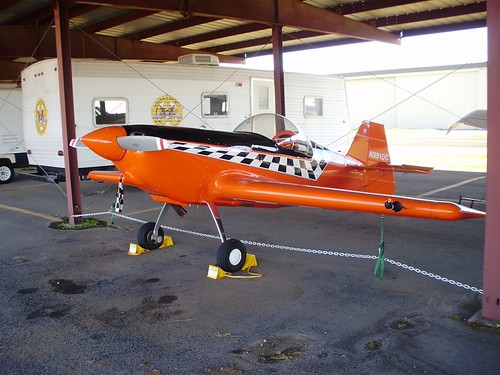
My sons power aerobatic aircraft, kit built, Experimental N991DC.


My sons Swift Glider. Fully aerobatic, factory built, classified Experimental due to aerobatics. Registration number starts with an "N".

 
Back
Top