
• Hey Guest!
    British Car Forum has been supporting enthusiasts for over 25 years by providing a great place to share our love for British cars. You can support our efforts by upgrading your membership for less than the dues of most car clubs. There are some perks with a member upgrade!

    **Upgrade Now**
    (PS: Upgraded members don't see this banner, nor will you see the Google ads that appear on the site.)
Tips
Tips

Made it to the shop, but...

tdskip

Yoda
Country flag
Offline
So the good news is that I made the drive OK.
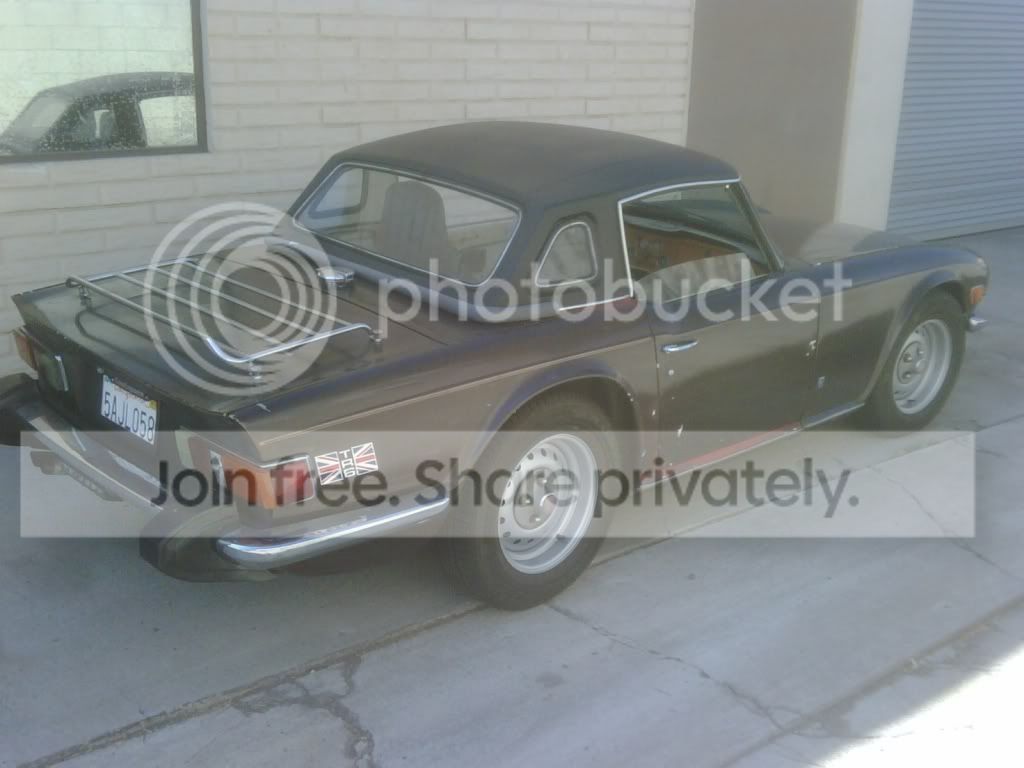
First30minutedrivetoBritishMotorinO.jpg


All of the systems that were rebuild are working properly, which was good to see, but the real reason for the trip was to shake down her hot oil pressure. And then do something about it, because here was what she was reading at idle after 45 minutes of driving with lots of start/stop for the 10 minutes prior to the picture. (the squeamish among you are advised to look away at this point)

hotidlebeforethebearingchange.jpg
 
Optimistically, as oil pressure goes down, horsepower goes up.
Lucas Oil Stabilizer will give you more protection and raise the oil pressure a bit, but not enough to raise your confidence level.
If that is an accurate reading, you definitely don't want to run it hard. Looks like you have a good winter project.
What weight oil are you running? What is you oil pressure at speed?
 
I don't mean to imitate Don Elliott in this, but I'm getting pretty close to two hundred thousand miles on my TR3, and I learned long ago not to get excited by the oil pressure dropping coming to idle after some serious driving. I would be worried (that is, it would seem unexpected) if the pressure weren't somewhere near the center of the gauge while driving at a normal RPM.
 
Does a mechanical guage show the same pressure? Wouldn't want to panic over a wonky sender.
Second, just bringing the rpm's up immediatly bring the pressure up, or does it kinda slowly come up.
I have seen engine's with low pressure at idle run for a long time.
You might spend a lot of money for only a few pounds of idle oil pressure because it's going to take main and rod bearings and a new oil pump to change it.
If you are really worried about it, go the oil modifier route first, either lucas or stp
 
Hi guys, good morning. The oil pressure does quickly come up in response to adding RPM, at 2500 RPM the pressure reads about 40 or so. No knocks or rumbling, she otherwise runs great.

I'm running 20w50, but expected this was going to be the result of getting her good and hot so I'm having the shop put in new bearings, potentially a pump depending upon the wear we find and likely thrust washer. I'm cautiously optimistic that will keep me going for a while.
 
I suggest you drive it as it is. And as long as it stays like that don't worry. Enjoy a nice ride on a nice day like we have here.

At speed - say 2500 - 3000 RPM, the oil gauge in my 1958 TR3A reads about 40 psi and I don't worry. It reaches 70 psi when cool right after starting but drops when it's hot. When it's hot, I get about 10 to 20 psi at idle. I'm not worried there because at idle, there is virtually no load on the engine. I have driven about 8,000 miles since I rebuilt the engine (new rings and bearing inserts for the crank & con-rods. I'm using Castrol 10W30 and 4 oz of ZDDP Plus. I have not had to add any oil during the last two summers like this.
 
tdskip said:
I'm having the shop put in new bearings, potentially a pump depending upon the wear we find and likely thrust washer.

If your having any work done which requires the sump to be removed, do yourself a favor and replace the oil pump or at least remove it and measure the clearances. Also, take the rocker cover off and make sure your getting oil all the way to the front of the rocker shaft.

good luck
 
Hi Tdskip,

A quick side question...

How do you like that aftermarket hard top? There is one for sale near me for a reasonable price, and I'm thinking of picking it up. (would really prefer a factory hard top but they are rare as hens teeth around these parts)

Thanks.
 
angelfj said:
If your having any work done which requires the sump to be removed, do yourself a favor and replace the oil pump or at least remove it and measure the clearances. Also, take the rocker cover off and make sure your getting oil all the way to the front of the rocker shaft.

good luck

Thanks - we will be checking the pump for wear. I did confirm that I'm getting good oil flow to the rockers when I first got her and then when I adjusted the valves (good time to check).
 
Don Elliott said:
I suggest you drive it as it is. And as long as it stays like that don't worry. Enjoy a nice ride on a nice day like we have here.

At speed - say 2500 - 3000 RPM, the oil gauge in my 1958 TR3A reads about 40 psi and I don't worry. It reaches 70 psi when cool right after starting but drops when it's hot. When it's hot, I get about 10 to 20 psi at idle. I'm not worried there because at idle, there is virtually no load on the engine. I have driven about 8,000 miles since I rebuilt the engine (new rings and bearing inserts for the crank & con-rods. I'm using Castrol 10W30 and 4 oz of ZDDP Plus. I have not had to add any oil during the last two summers like this.

Hi Don - I understand that I could drive it like this but for my personal peace of mind I'm going to have the bearings and the pump done if necessary. I think I'm actually under those figures you quotes with 20w50.

I'm treating it as an on-going cost of running her, I totally respect your opinion but I know it will bug be if I don't address it. Again, my personal hang-up on it.

Thanks!
 
rooster said:
Hi Tdskip,

A quick side question...

How do you like that aftermarket hard top? There is one for sale near me for a reasonable price, and I'm thinking of picking it up. (would really prefer a factory hard top but they are rare as hens teeth around these parts)

Thanks.

I actually like having the top, but just make sure you can get all the mounting pieces and seals for it. This top doesn't have the seals where the back of it meets the top of the deck (behind the cockpit) which is why I have $5 worth of pipe insulating foam tucked underneath it. Not a long term solution, even for me, but I haven't had time to really think about the mounting work around and how to approach the seals.

Good hardtops aren't exactly falling off trees, at least around here, and since they are big shipping is an expensive proposition. I like not baking in the sun all the time. And in the winter at night is gets positively chilly at night, sometimes as low as 50 degrees, and it is nice to have the top on for long drives. Let's see who is first to pick up on the 50 degrees is chilly comment...
 
The engine in my TR6 had low oil pressure. I pulled the pan for inspection/cleaning and checked the bearings and replaced them. Number 1 & 2 rod bearings were both very worn. I replaced them and the mains as a bandaid repair knowing that the crank needed turned. The new bearings started showing signs of wear after maybe 8-10,000 miles.
Your oil pressure is a little lower than mine was, making me think your crank will also need turned. If you are going to pay somebody to replace the bearings, I wouldn't do it. Run Lucas Oil Stabilizer until you decide to rebuild the motor and save the repair bill money toward a proper engine rebuild.
 
tdskip said:
Let's see who is first to pick up on the 50 degrees is chilly comment...
<snort> After it's been winter around here for 5 or 6 months, the first 50 degree day is the day all the college girls are walking around in halter tops and short shorts. :banana:

And ---- I routinely drive mine open (though well dressed) until the temps go below 35-F. If it weren't for the salt, I'd drive it in SNOW -- though probably with the top up.

And now, back to our discussion of oil pressure....
 
DougF said:
Your oil pressure is a little lower than mine was, making me think your crank will also need turned. If you are going to pay somebody to replace the bearings, I wouldn't do it.

Hi Doug - thanks for the input.

We're going to check the crank before deciding on a course of action, but she's a driver for now and if it ends up costing me $500 parts/labor for the bearings that only $.05 a mile if I get 10,000 miles out of it. I'm not at a point where I can do a rebuild myself, and since getting a proper rebuild down here is at least $4k, that's not in the plans right now either.

Now this could all go pear shaped if it turns out she's more gone that I'm expecting...
 
71MKIV said:
Does a mechanical gauge show the same pressure? Wouldn't want to panic over a wonky sender.

That is a mechanical gauge, no electronic sending units involved. Checking it with a second mechanical gauge wouldn't be a bad idea though.
 
Doh, sorry,
Used to my Spitfires.

I can be very annoying to those of you who know everything :laugh:
 
Got some good news today - the bearings in the car were by all appearances the original ones (which fits the mileage on the O/D). Crank was fine and everything else looked good under there.
 
Back
Top
