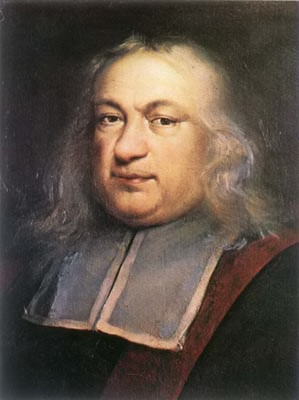
If you want to get technical (!) - here's an explanation from the New York Times a few years ago:
"In 1637, ... Fermat apparently had one of those flashes of deep insight that have produced historic leaps in the field of pure math. Everybody knew that it is possible to break down a squared number into two squared components, as in 5 squared equals 3 squared plus 4 squared (or, 25 = 9 + 16). What Fermat saw was that it was impossible to do that with any number raised to a greater power than 2. Put differently, the formula [xn + yn = zn] has no whole number solution when n is greater than 2.
"Fermat then wrote the phrase that has tantalized mathematicians ever since: 'I have discovered a truly marvelous proof of this, which, however, the margin is not large enough to contain.' The buried treasure, sought all these centuries, is the proof that Fermat said he had discovered but had no room to set down. In fact, when Mr. Wiles finally did prove that the theorem is true, he used techniques that could not have been known to Fermat, so whether the thinker of the 17th century really did have a solution to his problem cannot be known."
In other words, Fermat had said he could prove the formula, but never wrote the proof down. Now, Wiles has proved the formula.
Voila!


 Hey Guest!