• Hey Guest!
    British Car Forum has been supporting enthusiasts for over 25 years by providing a great place to share our love for British cars. You can support our efforts by upgrading your membership for less than the dues of most car clubs. There are some perks with a member upgrade!

    **Upgrade Now**
    (PS: Upgraded members don't see this banner, nor will you see the Google ads that appear on the site.)
Tips
Tips

Lost - and found.

NutmegCT

Great Pumpkin
Bronze
Offline
After 300 years, the proof has been found:

https://edition.cnn.com/2016/03/16/europe/fermats-last-theorem-solved-math-abel-prize/index.html

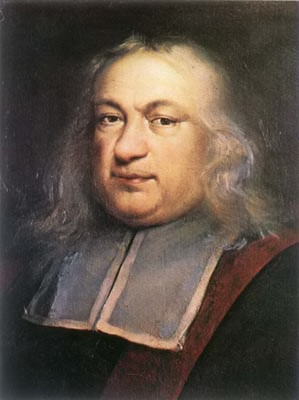
Pierre_de_Fermat.jpg
 
Fascinating! I love that there are still many problems still to solve and questions to answer (and for that matter, questions to raise!)

That said, I must say that looking at the title of the post and the picture, I naturally assumed you had relocated your high school grad photo! :p :devilgrin:
 
Gol' durn it - that's my college graduation photo!

(You young whipsnapper ...)
 
Important to emphasize that he figured this out nearly 20 years. The problem is that his method of solution relies on some complex, partially statistical, math. This made the "proof" difficult to initially accept. One wonder what Fermat was thinking on the puzzle.
 
So what's the answer??? They never mentioned what it is! :confuse:
 
So what's the answer??? They never mentioned what it is! :confuse:

There is no integer that solves the equation (above 2). That's it! It's just a proof.
 
If you want to get technical (!) - here's an explanation from the New York Times a few years ago:

"In 1637, ... Fermat apparently had one of those flashes of deep insight that have produced historic leaps in the field of pure math. Everybody knew that it is possible to break down a squared number into two squared components, as in 5 squared equals 3 squared plus 4 squared (or, 25 = 9 + 16). What Fermat saw was that it was impossible to do that with any number raised to a greater power than 2. Put differently, the formula [xn + yn = zn] has no whole number solution when n is greater than 2.


"Fermat then wrote the phrase that has tantalized mathematicians ever since: 'I have discovered a truly marvelous proof of this, which, however, the margin is not large enough to contain.' The buried treasure, sought all these centuries, is the proof that Fermat said he had discovered but had no room to set down. In fact, when Mr. Wiles finally did prove that the theorem is true, he used techniques that could not have been known to Fermat, so whether the thinker of the 17th century really did have a solution to his problem cannot be known."

In other words, Fermat had said he could prove the formula, but never wrote the proof down. Now, Wiles has proved the formula.

Voila!

 
THE answer!!!!!!!!!!!!!
 
Back
Top