• Hey Guest!
    British Car Forum has been supporting enthusiasts for over 25 years by providing a great place to share our love for British cars. You can support our efforts by upgrading your membership for less than the dues of most car clubs. There are some perks with a member upgrade!

    **Upgrade Now**
    (PS: Upgraded members don't see this banner, nor will you see the Google ads that appear on the site.)
Tips
Tips

TR4/4A Lightened Flywheel for TR3A/TR4 engine

FordFiesta

Senior Member
Offline
Looking to replace the heavy stock (bolt-on ring gear) flywheel on our recently acquired late-TR3A with a lighter flywheel. We're in the boonies, so no good access to custom machining services locally. Seeking information from the Group Mind:

1. Are there any lighter steel or iron flywheels on the market, including re-machined stock units ? I'm aware that I can switch flywheels and put on the earlier TR2/3 unit - but that's still a little heavier than I'd like to use.

2. I'd also consider an aluminum flywheel (Fidanza or other), but wonder if others out there have had real-world experience with these. I've heard that there may be a concern with enlargement of mounting bolt holes over time (and consequent loosening of the flywheel), but wonder if this really happens if the mounting bolts are properly torqued.

Thanks!
 
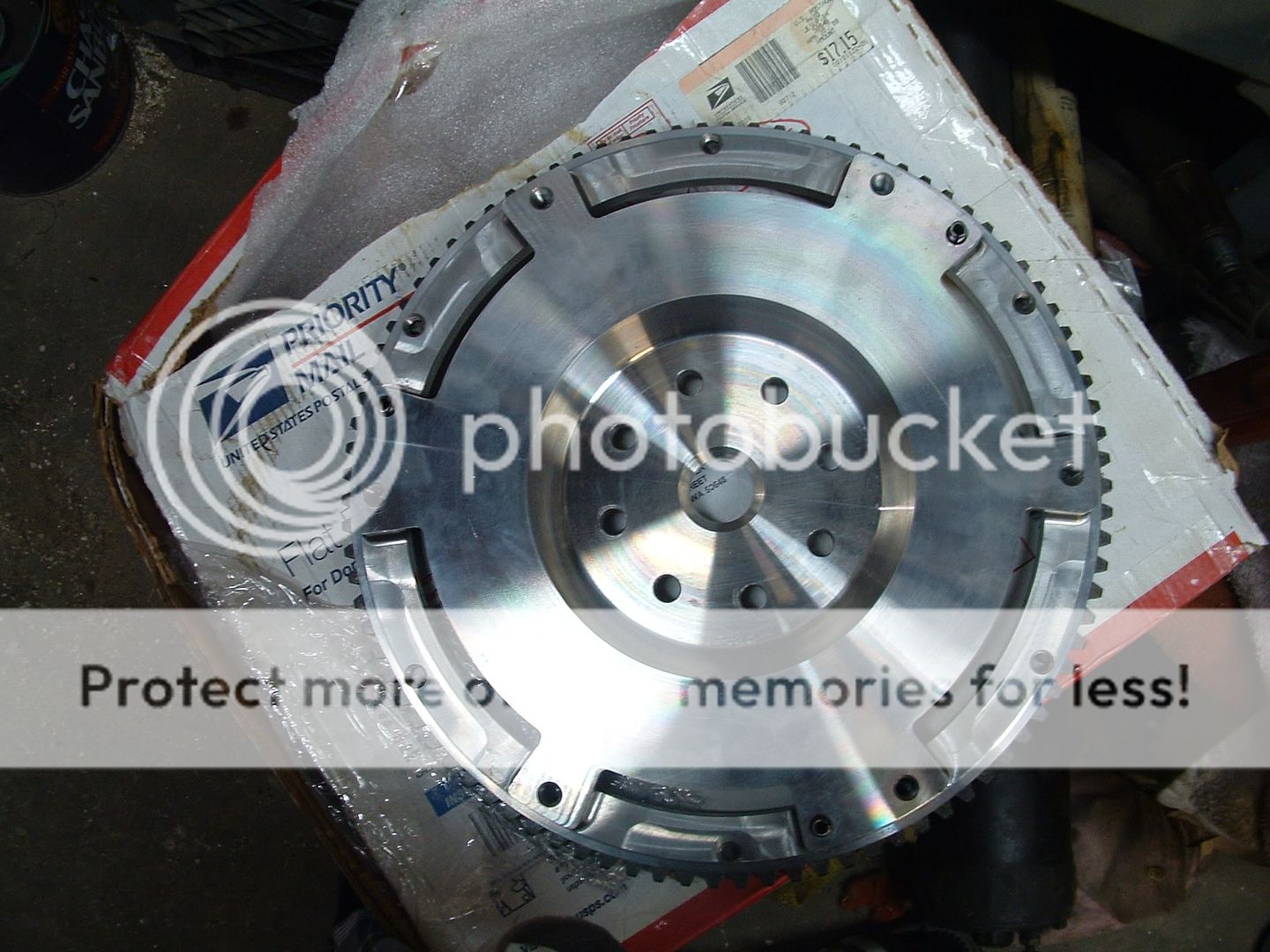
Joe Alexander offers this service on a stock flywheel, or at least used to - and its easy to do since you can use a USPS flat rate box that just fits the flywheel. Might be worth shooting him an email.

Alexander Racing Enterprises
 
Local shop can do it as well, don't go crazy with it but it can make a nice differnce in how willing she is to rev.

(Joe Alexander does great work if your decide to go that way)
 
I've been running an alloy flywheel (Fidanza I think, got it from Jim Donato) for several years now on the street, with no problems. I can believe there might be issues if you were revving to 7000 rpm, but I mostly stay under 5500 (engine isn't prepared otherwise, so it runs out of breath anyway). After the TR3A got wrecked, I moved it to the "new" TR3 and saw no signs of damage to the mounts whatsoever. The (steel) friction surface was worn more than I expected, it might need to be replaced in another 100,000 miles.

Unlike some of the others, the one I have is deliberately a light press fit onto the end of the crankshaft. There's a chamfer, so you can pull it into place with the mounting bolts, but it did not want to come off until I heated it up with a torch. And the heat probably explains why the clutch stuck a few days later. Hasn't happened again, so I haven't worried about it.

Joe also offers (or did at least) new lightweight steel flywheels, which ISTR are lighter than it is deemed safe to lighten a cast iron original. They're really pretty:

BilletsteelTR4Aflywheel-ARE.jpg


Oops, forgot to mention, both the Fidanza and the new steel flywheel from Joe are only drilled for the TR4A-TR6 pressure plate. It is also quite a bit lighter than the PP used on TR2-4, so it makes sense to switch; but you'll also need the TOB & carrier to match the later clutch, and to shorten the front cover on the gearbox by about 3/8".
 
FordFiesta said:
2. I'd also consider an aluminum flywheel (Fidanza or other), but wonder if others out there have had real-world experience with these.

Thanks!

I value my feet too much to use an aluminum flywheel on the street. They have a nasty habit of coming apart, making a scatter shield mandatory if you use one.

John
 
CJD said:
FordFiesta said:
2. I'd also consider an aluminum flywheel (Fidanza or other), but wonder if others out there have had real-world experience with these.

Thanks!

I value my feet too much to use an aluminum flywheel on the street. They have a nasty habit of coming apart, making a scatter shield mandatory if you use one.

John

John,

Do you actually know of a case where this has happened? My other car is a BMW and aluminum flywheels are quite common, and I have never heard of this happening.
 
I have spent a lot of time at the track...yes, it has happened, but the "mandatory" scattersheild contained the explosion both times I witnessed it. The shields are about 1/4" steel, and they were mauled and split badly. I saw a picture once of a chevelle that lost a flywheel without a scattershield. It split the car like a can opener...I can't imagine the driver walked away, as it sliced the tunnel just behind the pedals.

So, even though the likelyhood of a flywheel coming apart may be very small...the consequences if it does are very bad.

Now for the engineer in me commenting:

Steel has a stress point, called the fatigue limit, which if you remain below it, it will never fatigue. So, a well designed steel flywheel can last indefinitely if it is not damaged.

Aluminum, does not have a fatigue limit. In other words, all aluminum will eventually fatigue, no matter how low the stress. In a stock car, with a stock red line, engineers can predict the failure point in cycles (miles) and design the wheel to last the predicted life of the car. But they make assumptions that include you not exceeding any limits, including peak revs, average revs, and temperature. So, all aluminum parts have a limited life. All the racers I knew that used aluminum flywheels threw them away at the end of the season. Aluminum aircraft have to be inspected anually, and get parked when they reach their cycle limit.

If I were given an aluminum wheel for free that I did not know the history of...I personally would not use it, because, as I said, I value my feet way too much. But again, that's just me. A lot of guys use them without problems all the time.

John
 
Google for "flywheel explosion" and you'll get lots and lots of hits. But notice that they invariably involve engines turning faster than the original design limits, and do not always involve alloy flywheels. Both stock and lightened stock flywheels can also explode.

Here's a photo of a stock Ford flywheel that blew up on the dyno. Doesn't say what rpm destroyed it, but they had apparently already passed 6400 rpm on an engine originally designed with a redline of 5000 rpm.

100_6752.jpg


https://www.460ford.com/forum/showthread.php?t=138991
 
I note they used a scatter shield! And who among us won't admit to pushing the red line every now and then?

John
 
For one year the school buses were equipped with 366CI engines. These were de-stroked 396CI Chevy engines. After a school bus driver got her high heel stuck under the gas pedal the steel flywheel blew and almost cut the bus in half. We had to run chains to the back axle in order to tow the bus in to the shop.We installed over 400 Lakewood blow proof bell housings on the fleet of school uses over the next month.
 
At the time I was building my TR250 engine Fidanza did not offer a aluminium replacement so I took my 32 lb anchor to a local race car machine shop and had it lightened. I told the guy to take 10 lbs off but when all was said and done it was 20 lb. It sure does spool up quickly but It's made me a little nervous driving the car especially auto crossing. So I'm sure you'll like the results no mater which way you go. Some of the info I read some guys went into the teens in lighting theirs. Any how do you think I need a scatter shield? Reading CJDs comment I shouldn't be too worried. What do you think John?
 
CJD said:
I have spent a lot of time at the track...yes, it has happened, but the "mandatory" scattersheild contained the explosion both times I witnessed it. The shields are about 1/4" steel, and they were mauled and split badly. I saw a picture once of a chevelle that lost a flywheel without a scattershield. It split the car like a can opener...I can't imagine the driver walked away, as it sliced the tunnel just behind the pedals.

So, even though the likelyhood of a flywheel coming apart may be very small...the consequences if it does are very bad.

Now for the engineer in me commenting:

Steel has a stress point, called the fatigue limit, which if you remain below it, it will never fatigue. So, a well designed steel flywheel can last indefinitely if it is not damaged.

Aluminum, does not have a fatigue limit. In other words, all aluminum will eventually fatigue, no matter how low the stress. In a stock car, with a stock red line, engineers can predict the failure point in cycles (miles) and design the wheel to last the predicted life of the car. But they make assumptions that include you not exceeding any limits, including peak revs, average revs, and temperature. So, all aluminum parts have a limited life. All the racers I knew that used aluminum flywheels threw them away at the end of the season. Aluminum aircraft have to be inspected anually, and get parked when they reach their cycle limit.

If I were given an aluminum wheel for free that I did not know the history of...I personally would not use it, because, as I said, I value my feet way too much. But again, that's just me. A lot of guys use them without problems all the time.

John

John,

Thanks for sharing. I had never imagined this was a real concern. I suppose there isn't much to worry about with our tractor motors, but good information nonetheless.
 
The concern is real, even with our TRactor motors. I'll definitely use a scatter shield when I build a race car (though maybe one of the carbon fiber mats rather than steel plate).

But even driving one of these cars is taking a significant risk over driving a more modern car. If you are planning on living forever, you should probably drive a new Volvo or MB instead.
 
Back
Top