
• Hey Guest!
    British Car Forum has been supporting enthusiasts for over 25 years by providing a great place to share our love for British cars. You can support our efforts by upgrading your membership for less than the dues of most car clubs. There are some perks with a member upgrade!

    **Upgrade Now**
    (PS: Upgraded members don't see this banner, nor will you see the Google ads that appear on the site.)
Tips
Tips

Inner fender repairs

tdskip

Yoda
Country flag
Offline
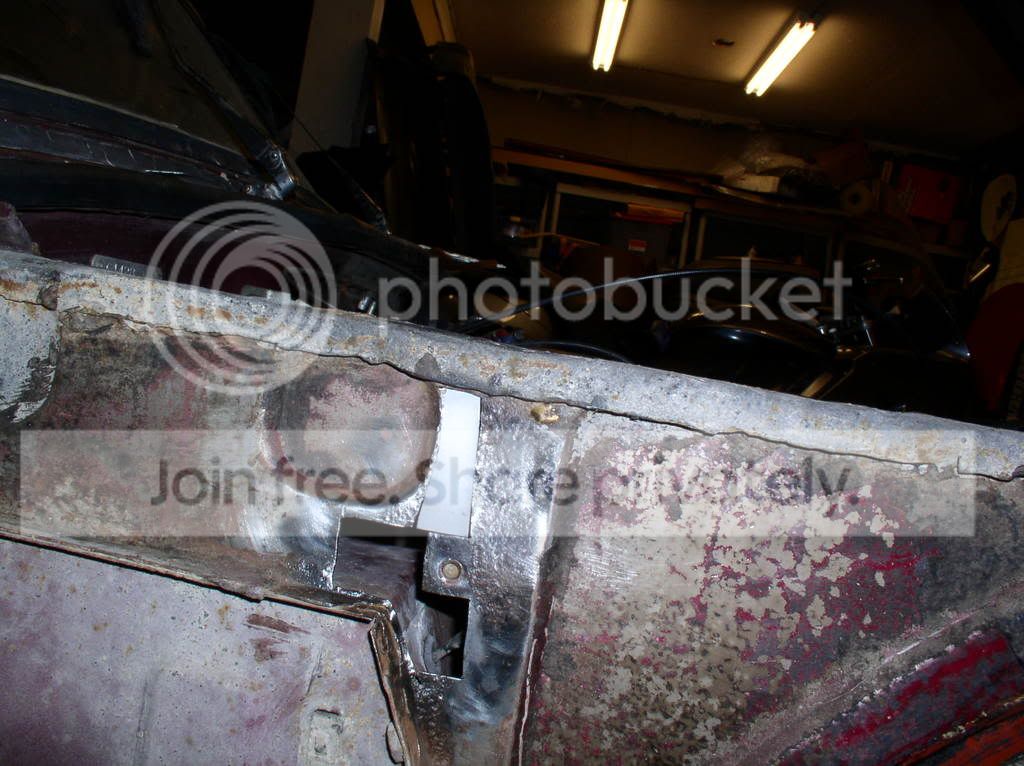
Still learning here, and these welds need to be ground down still, but starting to come together. The metal here is really thin, and it can be hard not to blow holes in it.

Initial test fitting of the patch panels;
Passengersideinnerfender1-12-09.jpg


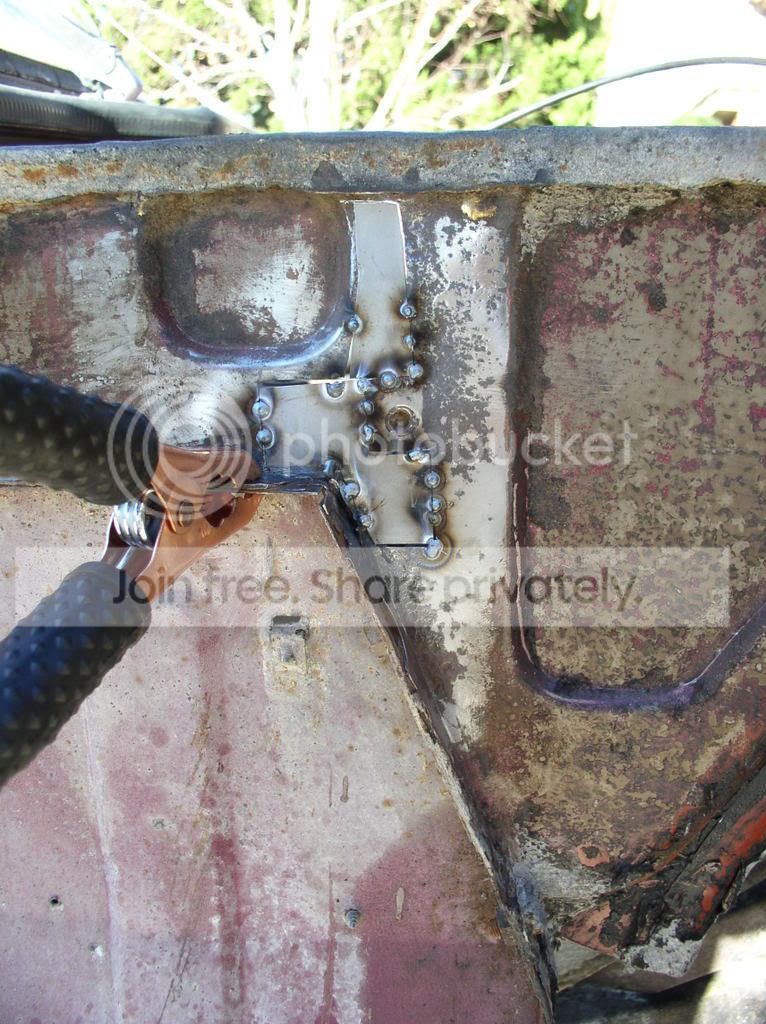
Some tack welds to hold the panel in place;
Passengersideinnerfender1-12-093.jpg


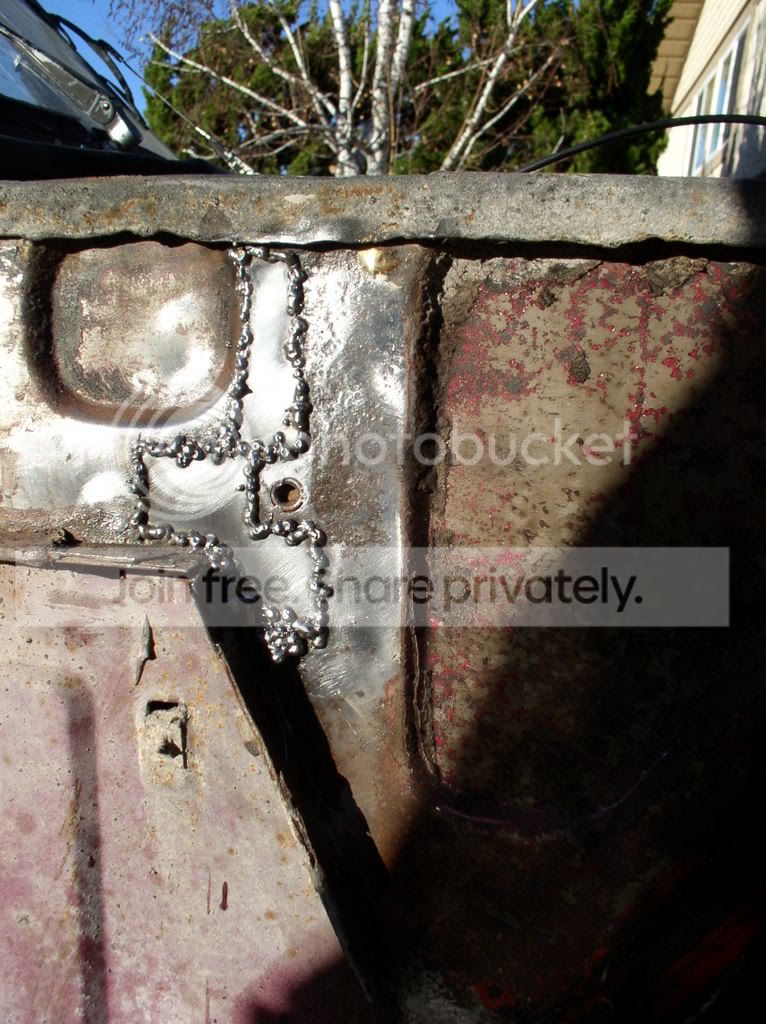
These welds are a bit "bulky" but will probably grind down OK. I usually have some touch up to do after the first pass at grinding the welds down, and tend to over compensate by putting more new metal in than is ideal.
Passengersideinnerfender1-12-094.jpg


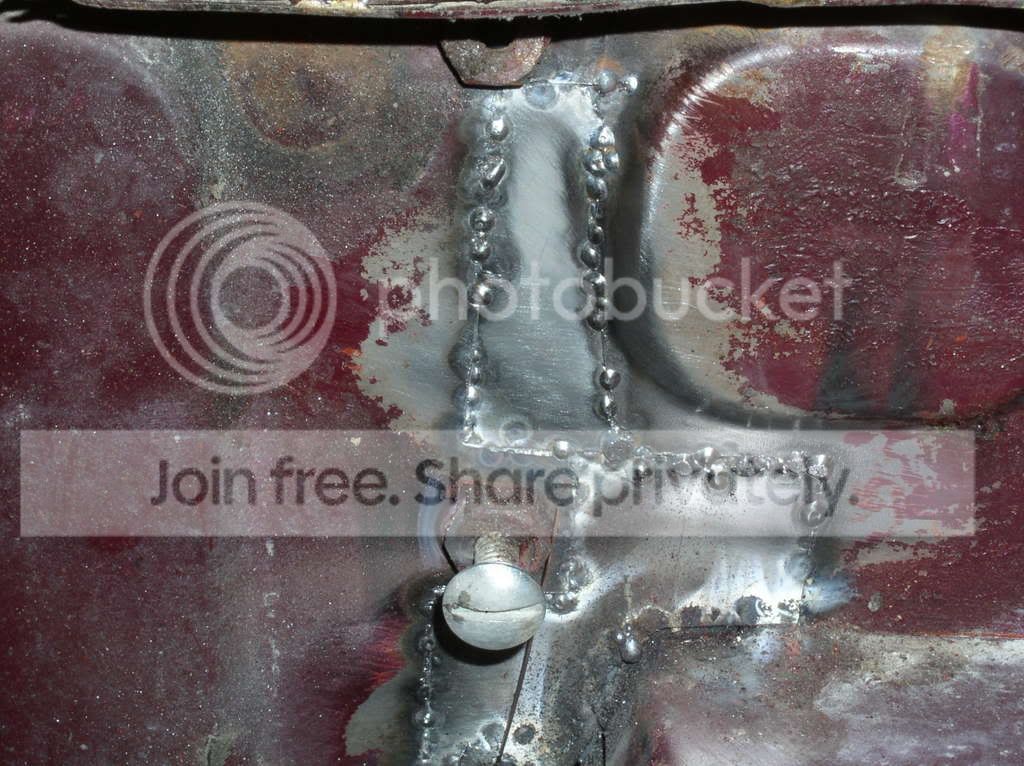
The only view that <span style="font-weight: bold"><span style="font-style: italic">really</span></span> counts is looking at the inner fender from the engine bay. The outside fenders will hide the ugly welds where I had to build up some metal. I was trying to balance getting acceptable weld penetration with not distorting the metal and trying to minimize the need for any filler.
Passengersideinnerfender1-12-095.jpg


As you can see I still have some work to do...
 
Tom,

You are doing fine. It will grind out nicely when you are done.

The key to welding is to have patience and to take your time. There is never a good outcome to a rushed welding job. Ever...............

Please don't ask me how I know that to be true.

About four times........I was a slow learner, when I should have been a slower welder.
 
Brosky said:
Tom,

You are doing fine. It will grind out nicely when you are done.

The key to welding is to have patience and to take your time. There is never a good outcome to a rushed welding job. Ever...............

Please don't ask me how I know that to be true.

About four times........I was a slow learner, when I should have been a slower welder.

LOL Paul - been there, burned through that...
 
Hey, that looks really good! I'm starting my welding class next week prior to getting into the TR3A. Is that with shielding gas?

Randy
 
Hi Randy - I using a Hobart MIG running gas.

handler140.jpg


I tried gas-less welding and I found it much harder than using gas. Some of that may be the differences in the machines, but I'd go straight for a set up like this if you can.

I think you'll enjoy your class - make sure to pass along any tips or tricks you pick up.
 
Looks like the same unit I picked up at Northern tool. Only briefly used it, but with flux-core. Didn't want to touch sheet metal without a class first and shielding gas.
 
If it is the same unit you'll love it, I've found it easy to use and to dial-in the setting for a given welding need.

Ultimately you'll need to just go at it, I found the combination of metal, location, strength and all that stuff to be enjoyable to try and figure out.

I have lots and lots to learn still, but it as totally changed my view of what sort of car I can manage to get back on the road and will hopefully save my butt on a bad pre-purchase inspection (my fault) on the TR4 I bought.
 
A friend of mine had a Miller with flux core. He didn't like it at all. When he used my Lincoln with Co2-Argon, he thought he was in heaven.
That all falls apart if you try to use gas outside in even the slightest of breezes.
 
As I am in the process of doing repair of the same sort, I would offer this:
Try to get a close fit of the new piece. There needs to be some gap for penetration on thicker pieces, but this thin sheet is too prone to burn-through with much gap. Find a 3" or so piece of 3/4" copper pipe such as used in house water plumbing (type L or M it doesn't matter) and hammer it very flat. Clamp this behind the area being welded, and it will sink some of the heat and lessen burn-through. Also try to have the new and old metal very clean. MIG doesn't like rust or corrosion (well, neither do we or this conversation wouldn't be taking place! Good luck and keep at it. Also, as mentioned above, C-25 is probably the better gas for sheet metal. I think CO2 might be cheaper but too hot.
Dennis
 
Back
Top