Hey Guest!

Online
In order to harden the BCF server from possible hacker attacks, I have installed a set of a few hundred different "security rules" which prevent potential hackers from accessing the site or from issuing commands via their browser that could damage the forum.
99% of the time, these security rules don't interfere with legitimate users, however, every once in a while, one of the rules may cause problems for legitimate forum members.
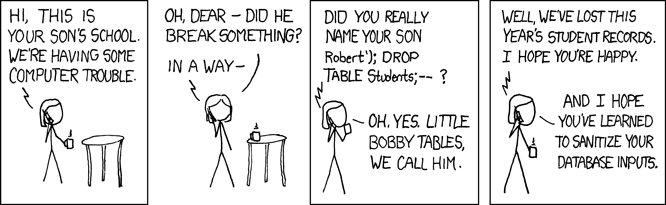
One such rule was recently discovered to cause problems when a member was prevented from accessing a thread that had a specific word in the thread title. When you would try to go to that thread, one of the many security rules installed on the server would see the word "update" in the thread title, which of course puts that word in the browser address bar. This security rule is meant to prevent hackers from issuing a database "update" command to alter the contents of our database ("update" happens to be an SQL database command used to modify a database). The security rules, not wanting to allow a possible database injection attack, prevents your browser from accessing the server with that word in the browser address bar (thus you will get a "forbidden" error).
So as not to have to disable that security rule, I have done a mass update of thread titles and replaced the word "Update" with "Up-date" in all threads with "update" in the title. That should prevent the security rule from being triggered for anyone clicking on any links for those threads.
IMPORTANT: The following words are also database manipulation commands, and should be avoided in your thread title when you post a new thread:
union|select|create|rename|truncate|load|alter
delete|update|insert|desc
Using any of these words in a thread title, will cause anyone clicking a link for that thread to trigger the security rule and be blocked from the site.
If you must use, for example, "update" in a thread title, then hyphenate it, like this: up-date
Using the word update in the body of a post should not (I think) be a problem, but avoid using the above words in thread titles.
Thanks,
Basil
99% of the time, these security rules don't interfere with legitimate users, however, every once in a while, one of the rules may cause problems for legitimate forum members.
One such rule was recently discovered to cause problems when a member was prevented from accessing a thread that had a specific word in the thread title. When you would try to go to that thread, one of the many security rules installed on the server would see the word "update" in the thread title, which of course puts that word in the browser address bar. This security rule is meant to prevent hackers from issuing a database "update" command to alter the contents of our database ("update" happens to be an SQL database command used to modify a database). The security rules, not wanting to allow a possible database injection attack, prevents your browser from accessing the server with that word in the browser address bar (thus you will get a "forbidden" error).
So as not to have to disable that security rule, I have done a mass update of thread titles and replaced the word "Update" with "Up-date" in all threads with "update" in the title. That should prevent the security rule from being triggered for anyone clicking on any links for those threads.
IMPORTANT: The following words are also database manipulation commands, and should be avoided in your thread title when you post a new thread:
union|select|create|rename|truncate|load|alter
delete|update|insert|desc
Using any of these words in a thread title, will cause anyone clicking a link for that thread to trigger the security rule and be blocked from the site.
If you must use, for example, "update" in a thread title, then hyphenate it, like this: up-date
Using the word update in the body of a post should not (I think) be a problem, but avoid using the above words in thread titles.
Thanks,
Basil