
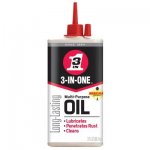
Seems to me I topped up the dampers on the SU's about a week ago. Now the level is down substantially. I did use "3 in 1" oil as some people recommend. If I switched to SAE 20 would there be less of a leak down issue or is there something else going on with the carbs? How long, on average ,should the damper level stay at it's correct level before it starts to go down??


-
 Hey Guest!
British Car Forum has been supporting enthusiasts for over 25 years by providing a great place to share our love for British cars. You can support our efforts by upgrading your membership for less than the dues of most car clubs. There are some perks with a member upgrade!**Upgrade Now**
(PS: Upgraded members don't see this banner, nor will you see the Google ads that appear on the site.)
You are using an out of date browser. It may not display this or other websites correctly.
You should upgrade or use an alternative browser.
You should upgrade or use an alternative browser.
TR2/3/3A How long should an SU damper top up last?
- Thread starter karls59tr
- Start date

Geo Hahn
Yoda
Offline
On a TR3 there is nowhere for that oil to go & oil, if it evaporates at all, does so very slowly. So what is going on?
I suspect you are overfilling the reservoir. No harm in that, the excess is just being sent thru the intake and out the exhaust.
You might re-read the fill instructions though once you notice the level has gone down you essentially have the right level.
I suspect you are overfilling the reservoir. No harm in that, the excess is just being sent thru the intake and out the exhaust.
You might re-read the fill instructions though once you notice the level has gone down you essentially have the right level.

Offline
Use only 20W nondetergent. There is a book available free on the web called "practical hints" that gives recommended frequency. The oil does evaporate.
Bob
Bob


Marvin Gruber
Yoda
Offline
I've always used engine oil.
Marv
Marv

Darrell_Walker
Jedi Knight
Offline
Some have the view that you should use something thin, so that the pistons react quickly. But what that does is cause a lean mixture on acceleration. A thicker oil will cause a temporarily richer mixture on acceleration, which is usually what you want. The reason I think people suggest a thinner oil is that they think opening up the needle faster will cause a richer mixture, but it also reduces the air speed over the jet. Using a thicker oil will keep the piston down longer, so while the jet opening will be smaller, the increases air speed over the jet will actually pull more fuel.
Some have the view that you should use something thin, so that the pistons react quickly. But what that does is cause a lean mixture on acceleration. A thicker oil will cause a temporarily richer mixture on acceleration, which is usually what you want. The reason I think people suggest a thinner oil is that they think opening up the needle faster will cause a richer mixture, but it also reduces the air speed over the jet. Using a thicker oil will keep the piston down longer, so while the jet opening will be smaller, the increases air speed over the jet will actually pull more fuel.
So you would use 20SAE or ?

Roger
Luke Skywalker
Offline
You can spend many happy hours experimenting with different viscosities and springs, until you get it how you like it. There aren't any hard and fast rules.
I find Marvel Mystery works well in the dashpots of the Strombergs on my Europa Twin Cam, arrived at by experiment. If it stumbles at low revs, try a higher viscosity, if it's sluggish higher up the rev range, try something thinner.
I find Marvel Mystery works well in the dashpots of the Strombergs on my Europa Twin Cam, arrived at by experiment. If it stumbles at low revs, try a higher viscosity, if it's sluggish higher up the rev range, try something thinner.
Roger
Luke Skywalker
Offline
The laws of combustion are extremely hard and fast. The ability to interpret them is what alludes most.
Since you alluded to my post by quoting it directly, I gather that the correct word eluded you. ��
What I mean is that there's no hard and fast rule about viscosity of dashpot oil. Springs, temperature, engine tune, and lots of variables that today's cars sort out with computers mean we compromise as best we can.

poolboy
Yoda
Offline
Anything will work..anything from air to water to STP, but some things work better than others when it comes to affecting acceleration and you'll never know the difference unless you try different viscosities
Having ZS carbs with the O-ring seal, I use a blend that contains a seal preservative..but if I had SU's I'd use something equivalent to a straight 30 wt motor oil.
Having ZS carbs with the O-ring seal, I use a blend that contains a seal preservative..but if I had SU's I'd use something equivalent to a straight 30 wt motor oil.
Geo Hahn
Yoda
Offline
...I find Marvel Mystery works well in the dashpots of the Strombergs...
Plus it has that delightful Wint-O-Green smell.
What I mean is that there's no hard and fast rule about viscosity of dashpot oil...
Indeed, I know of one application (Weller engine in an AC Ace) where the SUs use no oil at all. Look like other SUs but just a brass cap - no damper under it.
Roger
Luke Skywalker
Offline
Plus it has that delightful Wint-O-Green smell.
Indeed, I know of one application (Weller engine in an AC Ace) where the SUs use no oil at all. Look like other SUs but just a brass cap - no damper under it.
Common pre-war practice. Heavy pistons, no spring or damper. Gravity was your friend!
I had 2 x 1" like that on my Austin Seven special.

CJD
Yoda
Offline
Since you alluded to my post by quoting it directly, I gather that the correct word eluded you. ��
What I mean is that there's no hard and fast rule about viscosity of dashpot oil. Springs, temperature, engine tune, and lots of variables that today's cars sort out with computers mean we compromise as best we can.
Little alluded me. I started working on my first engine in 1st grade...a cox .049 glow engine. That started my love of anything engine related for the rest of my life. I have found that either One understands carbs and mixtures and how to tune them almost intuitively,...or they never will. I truly meant no offense in my remark. In fact, you have had the most accurate response to Karl's questions so far on the thread. Rather, I was really expressing the frustration I get from these "what oil do I use" threads. As you pointed out...there is no correct answer for every engine. You must understand what the oil does, and then you can find the correct mixture for YOUR particular engine through tuning. Some will get it...most will not
Last edited:

luke44
Jedi Warrior
Offline
For what it's worth, the standard race car trick on my old Spitfire was to remove the plunger altogether for much faster throttle response. I don't think it's really critical what you use, but stay with something lightweight. On my streetcars I use 3-in 1 sewing machine oil.
Roger
Luke Skywalker
Offline
Little alluded me.
Still think you mean eluded, not alluded. But hey ho
