Hi all I used the silicon brake fluid in my 61 tr3 and the pedal feels soft, plus I heard that that might be normal. I have bled them several times and no joy. I am thinking about making a homemade bleeder with a bicycle pumpand old MC cap. My concern is I do not want to damage the MC and what would be the best way to approach the whole bleeding process. I also thought about those one-way bleeding fittings. Any suggestions or information is appreciated.


-
 Hey Guest!
British Car Forum has been supporting enthusiasts for over 25 years by providing a great place to share our love for British cars. You can support our efforts by upgrading your membership for less than the dues of most car clubs. There are some perks with a member upgrade!**Upgrade Now**
(PS: Upgraded members don't see this banner, nor will you see the Google ads that appear on the site.)
You are using an out of date browser. It may not display this or other websites correctly.
You should upgrade or use an alternative browser.
You should upgrade or use an alternative browser.
TR2/3/3A homemade bleeder tr3
- Thread starter sp53
- Start date


martx-5
Yoda
Offline
The problem with silicon brake fluid is it's affinity to entrap air. This can sometimes make bleeding difficult. Here's a couple of tips from Moss Motors that might help...
https://www.mossmotors.com/SiteGraphics/Pages/Brake_Fluid/page4.html
Basically, the biggest thing is not to pump the brake pedal or too much air will mix in with the fluid. Slow deliberate strokes should keep from introducing too much air into the fluid. Also, you might want to let it sit for a day or two and then go back and bleed. Moss also recommends if you're using a bleeder pump that it be the type that separates the air pump chamber from from the reservoir by a diaphragm in order lessen the introduction of more air.
https://www.mossmotors.com/SiteGraphics/Pages/Brake_Fluid/page4.html
Basically, the biggest thing is not to pump the brake pedal or too much air will mix in with the fluid. Slow deliberate strokes should keep from introducing too much air into the fluid. Also, you might want to let it sit for a day or two and then go back and bleed. Moss also recommends if you're using a bleeder pump that it be the type that separates the air pump chamber from from the reservoir by a diaphragm in order lessen the introduction of more air.

TR3driver
Great Pumpkin - R.I.P
Offline
A slight softness in the pedal is normal, but you shouldn't be able to move it more than 1/2" (maybe 5/8" tops) farther than with non-silicone fluid. Many people (myself included) have switched to the "braided SS" soft brake lines, in part to regain the pedal feel. (The lines actually use Teflon internally, the outer braid is just protection for the Teflon.)
I have found that the front calipers will gravity bleed quite well. Loosen the bleed screw, slip on a length of clear line, and leave it until the bubbles are gone. The line is optional if you don't mind the mess (but don't let the fluid get on the brake pads). This might not work if you still have the residual pressure valve, though (mine is disabled).
On the rear, I use the spring-loaded bleed valves. FLAPS had them on the shelf (on a hook actually) and they worked a treat for me.
I have found that the front calipers will gravity bleed quite well. Loosen the bleed screw, slip on a length of clear line, and leave it until the bubbles are gone. The line is optional if you don't mind the mess (but don't let the fluid get on the brake pads). This might not work if you still have the residual pressure valve, though (mine is disabled).
On the rear, I use the spring-loaded bleed valves. FLAPS had them on the shelf (on a hook actually) and they worked a treat for me.
Thanks for the input. My fear with building some kind of pressure system for bleeding is not understanding what the effect would be on the main bore rubber seal and if I would be pushing the fluid on it the wrong way, and in addition if I would need to slightly depress the pedal to let the fluid move better or something. I am going to try some of those speedy bleeders like Randall suggested and work the pedal different like Art suggested. I still have the valve in line, so perhaps the gravity will not work on the front. I am curious why you did not use the speed bleeders in the front Randall?
TR3driver
Great Pumpkin - R.I.P
Offline
Mostly because I'm cheap, and didn't have them at the time. I bought them for the rear brakes later, but still only two of them (they came 2 to a pack and the pack was nearly $20 IIRC plus I think they only had one pack in the right size anyway).I am curious why you did not use the speed bleeders in the front Randall?
Putting some pressure on the reservoir shouldn't harm the master cylinder in any way; it has to deal with hundreds of psi while you won't want to put more than maybe 10 or 12 on the reservoir (which is not designed to take pressure, is only held together by soft solder).
The pedal will need to be fully up, so that the valve between the piston chamber and the reservoir will be open.
The only concession I make to the air problem is to let the fluid "breathe" after adding to the reservoir. Take a break, have lunch or whatever, give the air a chance to rise to the top before it gets pushed into the system.
SteveBones
Jedi Trainee
Offline
Thought I would comment since I used silicon brake fluid for the first time a few months back after rebuilding. I have a couple of comments or input:
- After replacing various parts including all hydraulics including master & slave cylinders, wheel cylinders, and paying to have the calipers rebuilt, I found that I had a few leaks with a couple of brake lines connection points that I was able to address by tightening the connections. For some reason it was harder to notice the silicon brake fluid leaking without really looking.
- I also found that I had success after bleeding the system 2 or 3 times and waiting a few days between. I believe it gave the brake system a chance to "push" the air pockets closer to the end of the brake lines. Each time I did this, it was much easier and took less time.
Overall, I found that the silicon brake fluid does provide good resistance and is not result in a less solid or mushy feel. I expected it to be worse or more of a compromise but the results are favorable.
I had a vacuum brake kit but instead used a brake bleeding bottle purchased from TRF. I liked this set up more than I expected since the hoses fit well over the "bleed bolt fittings" on the brake calipers and rear wheel cylinders. The other features that I like about this brake bleeding bottle was that it had an extra fitting on the cap. I would connect the hose end to the fitting on the bottle so the extra fluid would feed back to the bottle vs dripping on the floor. This bottle also has a magnet so I could secure the bottle vs. having it hang free and fall over or pull the bleed hose off the brake "bleed bolt fittings" . I did not really think these brake bottle features would really make a difference on making things easier, but they really did.
Bottom line is that I found even with the silicon brake fluid, the brakes feel solid. Good luck on this.
Steve
- After replacing various parts including all hydraulics including master & slave cylinders, wheel cylinders, and paying to have the calipers rebuilt, I found that I had a few leaks with a couple of brake lines connection points that I was able to address by tightening the connections. For some reason it was harder to notice the silicon brake fluid leaking without really looking.
- I also found that I had success after bleeding the system 2 or 3 times and waiting a few days between. I believe it gave the brake system a chance to "push" the air pockets closer to the end of the brake lines. Each time I did this, it was much easier and took less time.
Overall, I found that the silicon brake fluid does provide good resistance and is not result in a less solid or mushy feel. I expected it to be worse or more of a compromise but the results are favorable.
I had a vacuum brake kit but instead used a brake bleeding bottle purchased from TRF. I liked this set up more than I expected since the hoses fit well over the "bleed bolt fittings" on the brake calipers and rear wheel cylinders. The other features that I like about this brake bleeding bottle was that it had an extra fitting on the cap. I would connect the hose end to the fitting on the bottle so the extra fluid would feed back to the bottle vs dripping on the floor. This bottle also has a magnet so I could secure the bottle vs. having it hang free and fall over or pull the bleed hose off the brake "bleed bolt fittings" . I did not really think these brake bottle features would really make a difference on making things easier, but they really did.
Bottom line is that I found even with the silicon brake fluid, the brakes feel solid. Good luck on this.
Steve

Geo Hahn
Yoda
Offline
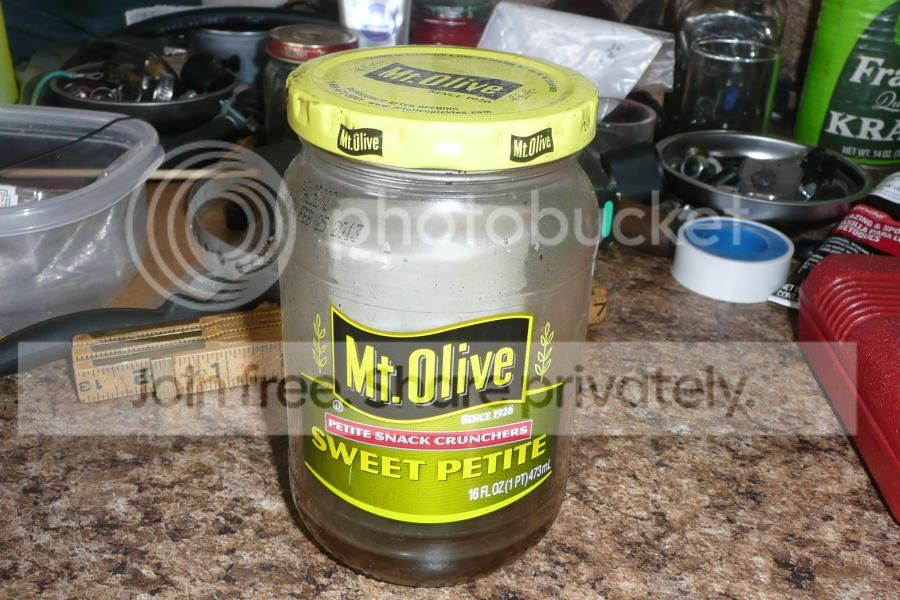
The manual specifies the use of a 'clean pickle jar' so that, of course, is what I use.
For pressure bleeding, I found a replacement gas cap (lawn mowers, etc) at the hardware store that fits the TR3 Girling reservoir perfectly.
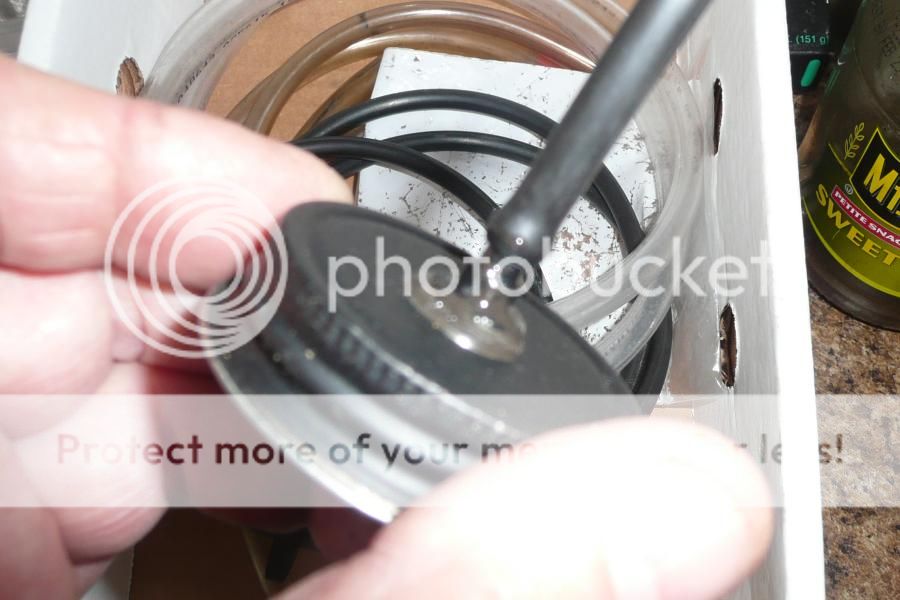
Yeah, irrigation line & barb (JB Welded). I have a portable air tank that I load to <20 lbs. Works for me.
I top up the reservoir the day before to let the silicone fluid settle down.
For pressure bleeding, I found a replacement gas cap (lawn mowers, etc) at the hardware store that fits the TR3 Girling reservoir perfectly.
Yeah, irrigation line & barb (JB Welded). I have a portable air tank that I load to <20 lbs. Works for me.
I top up the reservoir the day before to let the silicone fluid settle down.

sail
Darth Vader
Offline
Geo I also have a pickle jar but not the lid you devised, if I didn't have that Ebay guy https://www.ebay.com/itm/Triumph-TR...Parts_Accessories&hash=item5aee1c6347&vxp=mtr figured out the size for speed bleeders.