• Hey Guest!
    British Car Forum has been supporting enthusiasts for over 25 years by providing a great place to share our love for British cars. You can support our efforts by upgrading your membership for less than the dues of most car clubs. There are some perks with a member upgrade!

    **Upgrade Now**
    (PS: Upgraded members don't see this banner, nor will you see the Google ads that appear on the site.)
Tips
Tips

Good tappet cover

EV2239

Jedi Warrior
Offline
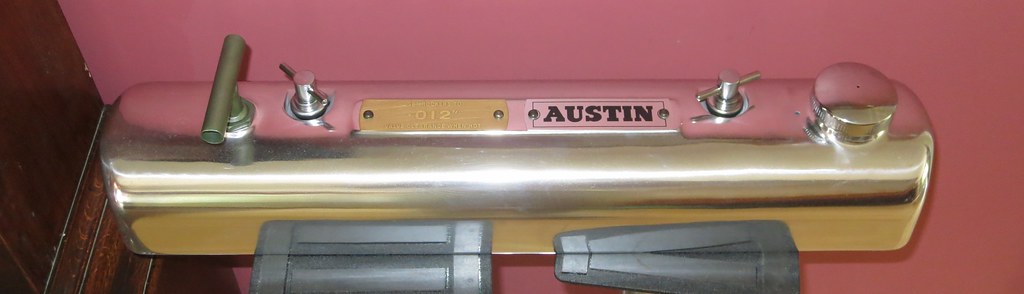
I was lucky to find a rocker cover for an Austin Princess 3 Litre and modify it to suit my BJ7, which is in the paint shop having an extensive body overhaul, so for the time being I have this in the house to cheer me up.
7655474156_6e358f61c4_b.jpg


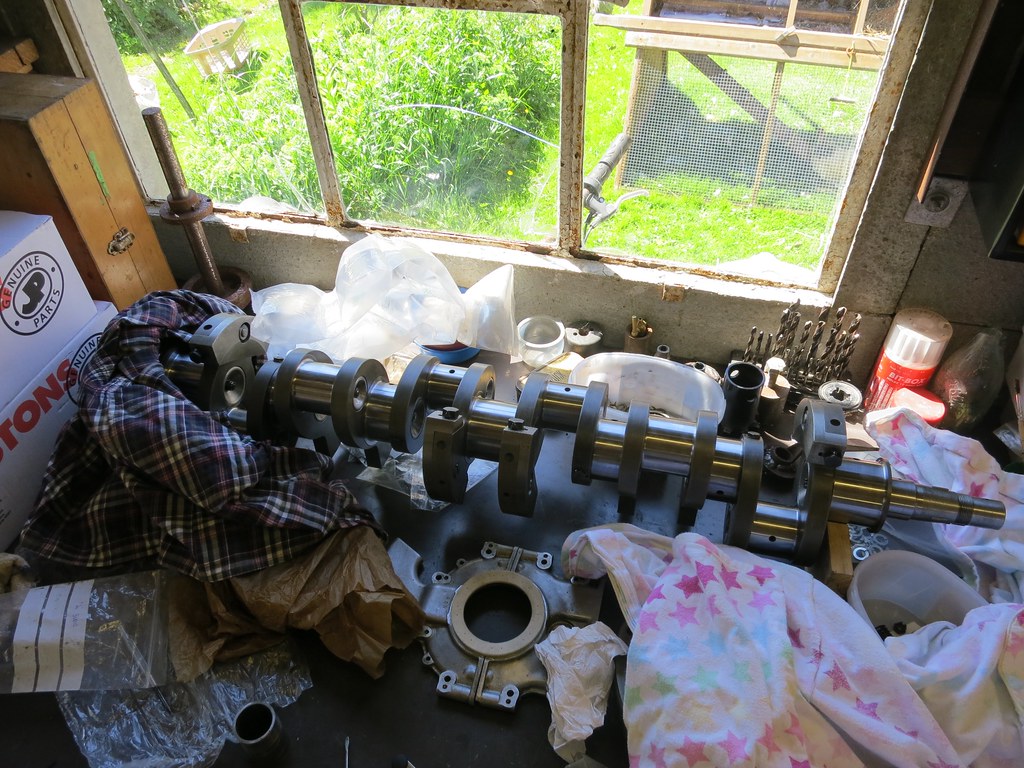
Meanwhile the TR is in bits because the crank broke! First bit of sun we've had in the UK and the crank breaks and I'm working in a sweltering garage.

7637726106_f9d827acd8_c.jpg


Ash
 
Ash, Beautiful rocker cover. On your crankshaft breakage, I've been around automobile, aircraft and boat engines most of my adult life and I've never seen so many broken crankshafts until I got involved in older British cars. I wouldn't say the technology wasn't there, I guess the quality of the steel used wasn't the best. Realizing just how old these cars are, it still amazes me on the amount of crank breakage. PJ
 
PJ

TR engines always broke the odd crank and almost always on the first web inside from the flywheel, but most motored past 100,000 without problem.

This one has cracked because it wasn't ground correctly. The idiot concerned didn't leave a radius at the side of the mains and big end journals, which is literally fatal. Recently a gent named Charles Church crashed his Spitfire (Aircraft with Rolls-Royce Merlin engine) because his crank had the same treatment and it killed him.

Here's a Brit crank that I've never heard of breaking:

7655357184_4499d3f028_b.jpg


Interestingly on this industrial estate is a 1994 Corvette that's bust its crank, which surprised me.

Ash
 
EV2239 said:
PJ

TR engines always broke the odd crank and almost always on the first web inside from the flywheel, but most motored past 100,000 without problem.

This one has cracked because it wasn't ground correctly. The idiot concerned didn't leave a radius at the side of the mains and big end journals, which is literally fatal. Recently a gent named Charles Church crashed his Spitfire (Aircraft with Rolls-Royce Merlin engine) because his crank had the same treatment and it killed him.

Here's a Brit crank that I've never heard of breaking:

7655357184_4499d3f028_b.jpg


Interestingly on this industrial estate is a 1994 Corvette that's bust its crank, which surprised me.

Ash

Not that it hasn't happened in the past, but that's the first time I've ever heard of a Rolls Merlin breaking a crank. Sorry for Mr. Church and his family. I know what you mean about the radius not being there on the crank journal. Any sharp angle is a built in fracture point. I am pleased with the new hard 4 cyl cranks Moss is selling now. Not cheap, but supposidly very well made. PJ
 
Crankshaft breakage = they sure run rough & noisy when that happens. A friend's BJ8 had the snout break off his crank just like yours (@ #1 brng) when his vibration dampener delaminated. Check yours closely upon reassembly.

My own personal experience breaking a crankshaft, though it occurred while driving a British car (1970 MGBGT) cannot be blamed on antiquated British engineering; the car was fitted with a relatively late model (late 70s/early 80s) Buick <span style="font-style: italic">oddfire</span> V6. Its crankshaft multiplied itself (became TWO pieces) doing 80 MPH on the freeway, and though startled, I didn't immediately cut the engine, as it still showed (approximately...) 65 psi. I coasted to the side of the road, with my exit ramp looming in sight, and just kept going at about 40 MPH down the shoulder. With no cars approaching as I neared the stop sign at the bottom of the ramp, I just *blew through* and headed the mile and a half or so to the safe haven of my garage.

I have this long-standing policy, that if the car <span style="font-style: italic">runs</span>, I don't walk!

After taking another (74-1/2 stock engined) MGBGT to work the following day, when I got home I pulled the oil pan off the Buick engine and couldn't see anything wrong. It was only when I repositioned myself and looking back to front, that I could see "some daylight" through one of the counterweights__the crank had split at the #2 main brng, leaving the front two (2) cylinders to drive the anciliary devices and the back four (4) spinning the flexplate (TH350 trans). The crankshaft halves staying locked together by the shape of the break keeping both ends of the engine timed as one.

If you're going to "blow up" an engine, it's nice to have one that'll still allow you to drive it home :cheers:
 
Back in about 1970 or so I broke a crank in my '56 BN2. Similar to Randy's experience, mine broke in the middle of the #4 rod journal so the rod & cap kept both front & rear halves of the crank turning together.

Foolish teenager, I had been drag racing a buddy from a standing start & when I hit 2nd there was a loud bang & it started knocking. I drove it about 5 miles home and when I dropped the pan I couldn't see anything wrong until I started pulling rod caps...needless to say I destroyed the rod & cap but the block was undamaged.
 
Back
Top