• Hey Guest!
    British Car Forum has been supporting enthusiasts for over 25 years by providing a great place to share our love for British cars. You can support our efforts by upgrading your membership for less than the dues of most car clubs. There are some perks with a member upgrade!

    **Upgrade Now**
    (PS: Upgraded members don't see this banner, nor will you see the Google ads that appear on the site.)
Tips
Tips

Fun w/ Fuel Pumps

mrv8q

Luke Skywalker
Country flag
Offline
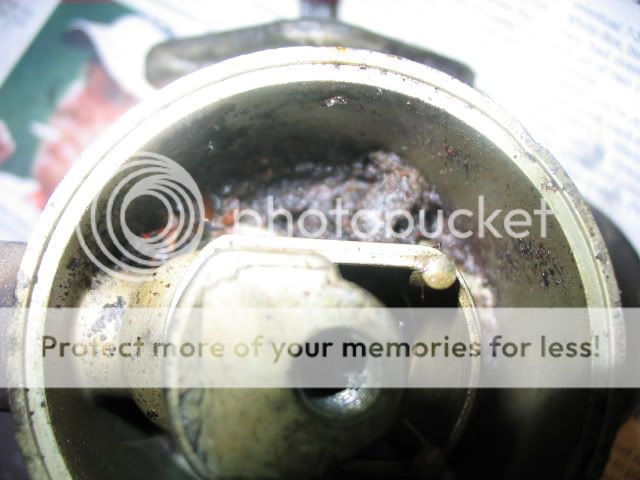
After getting the alternator and starter rebuilt for my '74 TR6, I thought I'd do a quick rebuild of the fuel pump. The TR3's was a piece of cake, how hard could the 6's be? Here's a pic of the crud before:
IMG_0586.jpg

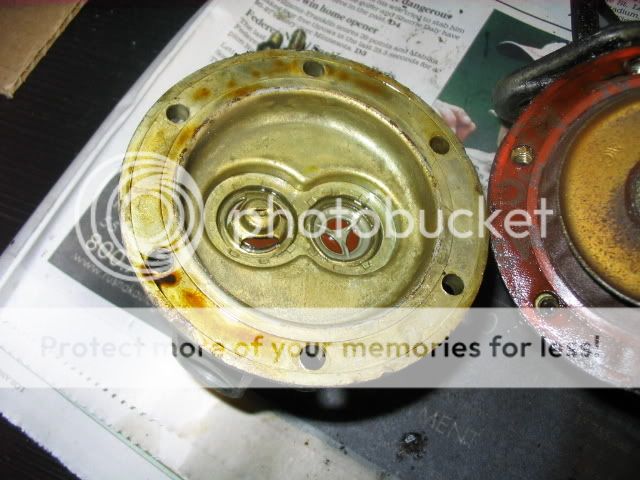
I thought I paid close attention to the valves:
IMG_0587.jpg


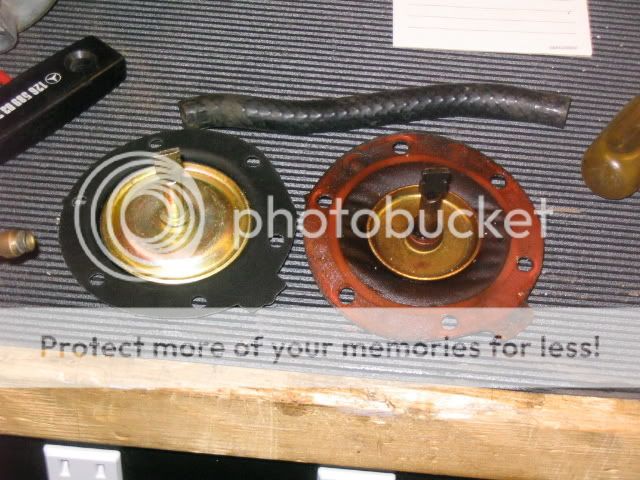
One interesting difference between old and new was the size of the dish for the internal spring; The new was seemingly reversed:
IMG_0590.jpg


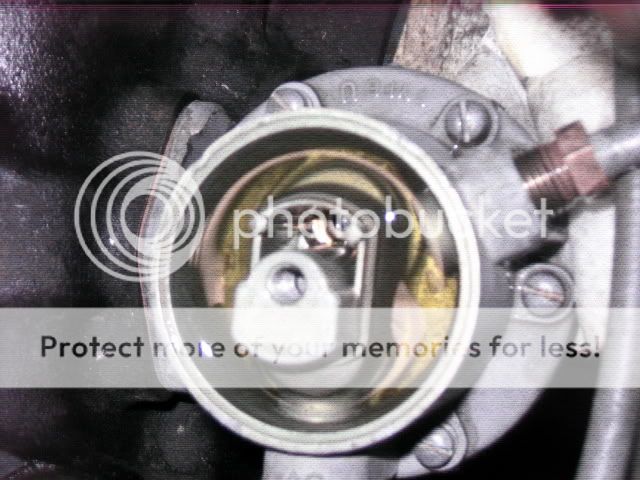
The new valves were waaaay tight, no fun getting them in. Installed the pump, and the car started right up, and ran for about 7-8 minutes, and then felt like it ran out of gas. Of course, now it won't start, no gas getting to the carbs. There is suction when I pump the bottom lever, but can't get gas to the carbs. Other than mixing up the valves, for which I inexplicably don't have a picture, is there anything else to go wrong?
IMG_0592.jpg


This car hates me! Fuel pumps are the easy stuff.... at this rate, it's going to be a long frustrating summer..... Thanks for any advice....
 
mrv8q said:
There is suction when I pump the bottom lever, but can't get gas to the carbs. Other than mixing up the valves, for which I inexplicably don't have a picture, is there anything else to go wrong?
I can only offer two thoughts if you haven't already thought of these. First is to make sure the pump arm is riding on top of its cam, and not underneath it. Second, make sure you have a gravity feed from the tank to get fuel flow started again (i.e you don't have the front on the car on jackstands and the rear end down).

Other than that, maybe try pulling the pump and bench testing it by manually pumping the arm to see if you can get fuel flow.
 
Kevin,

With all that crud build-up in your old fuel pump;
it had to originate somewhere. Maybe you have a crud
blockage in your tank or lines.

I too am having major pump/carb/fuel delivery problems.
Here is a photo of what came out of my fuel tank last
weekend when I pulled it and flushed it out. Not a
pretty sight:

krud.jpg


hope this helps,

d
 
Back in the late 60's, I used to get that sort of silt in the filter bowl next to the fuel pump of my TR3A. The really fine silt used to get up into the float bowls too. It would be hard to start the engine until I found that this fine silt was settling to the bottom of the float bowls and this prevented the fuel from flowing into the carbs. If it did start, it was because the engine would shake on the motor mounts while the starter was trying to start the engine and this shaking would stir up the silt and then the fuel would flow. If I stopped the engine for, say 15 minutes, it would always start right up again because the silt had not yet settled to the bottom of the float bowls. But if it sat for several hours or overnight, it would be hard to start again.

The quick fix was to clean out all the silt in the float bowls and the long term solution to the problem was to have the inside of my tank slushed. I had this done in 1990 and have never had the problem recur since then (94,000 miles).

Don Elliott, Original Owner, 1958 TR3A

https://mysite.wanadoo-members.co.uk/trebor/don3a_big.JPG
(Photo at VTR 2001)
 
Just today, I re-installed my fuel pump. I took it off in January and re-built the spare I had with new valves and the full diaphram kit. It's this spare that I put on. Because of the point mentioned above, the kit had a different center flange for the diaphram so I decided to test it. I connected two short lengths of metal tubing the correct size and connected them with "olive" gland seals and threaded fittings to the inlet and outlet of the pump. Then I stuck the inlet end down into the gas tank of my lawn mower and pushed on the lever that operates off the cam. After a few pulls on the cam lever, I saw the glass bowl fill and then I got it to squirt about four feet across my driveway. Then I did the same but this time I pulled on the "trigger" that's located on the bottom. That works too. Now the pump is back on the engine and I know it'll work fine.

I'll re-build the other one with a new kit later on and keep it as my spare.
 
So, when in doubt, check your work..... of course, I installed the valves the wrong way. I looked at my digital picture "wrong", and didn't double-check the Bentley, which had two excellent diagrams. No one to blame, but the DCO.

I ordered a rebuild kit from Goleta, but if I thought the TRF valves were big, these were just that much bigger. Though I bashed them getting them out, I was able to reform the TRF valves, and coax them back into shape, and into their rightfull places. 4 or 5 squeezes of the plunger, and I had fuel again going to the carbs, and the car fired right up.

So, I learned a couple things. Next time, I'll write w/ a Magic Marker, fuel "in" , or something as a visual reference, besides just the digital picture. I think the quality of the Pennsylvanian parts is, in this isolated case, better than the West-Coast supplied UK parts. And I'll have to find a better way to pinch the fuel line closed, other than a Vise-Grips. I was amazed how much gas is gravity fed from the tank. And why the DPO didn't have an in-line fuel filter, I'll never know. Thanks to all for their excellent advice. Happy Father's Day, to all applicable...
 
Kevin,

I am installing all new fuel lines and in-line
filters (5 total) for my TR6. I have a special order
fuel cut-off valve flying in from Wisconsin. It should
arrive early in the week.

I'll post a few photos of my new fuel delivery system
once I get it installed and functional

regards,

d.
 
I had some problems with my TR6 fuel line and tank. I guess it sat long enough for the gasoline (and water vapor/condensation) to cause the fuel line to filled with a crystallized substance much like your pictures. Some of it was black, brown but most was white and as hard as rock. Nothing would dissolve it; nothing short of a drill would break it out of the fuel line. I don't know how far it ran in the gas line but I know it started a few inches from the gas tank end of the line and ran a long way. If your line is closed off, your TR6 is not pristine, and you want a quick fix, let me know.
 
Thanks, 72, for now it's running OK.... As soon as I start to really go thru the car, I'm going to pull the tank and have it cleaned out. A good time to check the fuel lines as well. On to the next adventure!
 
Back
Top