but were afraid to ask:
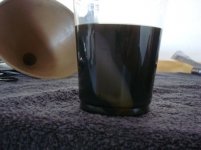
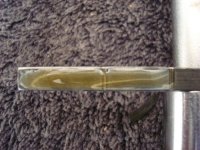
 Other words come to mind but this a family channel. Well the master cylinder is back in the car after rebuilding. Before the test drive a quick check of the fluids shows this. Looks like a blown head gasket. I hope it's not bearing material. The last drive was last weekend about 90 miles round trip. Average speed around 75-80mph, all freeway. I did check the oil before the trip and all was fine. I have not done a compression check or anything else. I did remove the valve cover and it shows only clean oil on top of the head. If it's a head gasket it must have gone bad a few miles from home. Any other ideas to look at?


-
 Hey Guest!
British Car Forum has been supporting enthusiasts for over 25 years by providing a great place to share our love for British cars. You can support our efforts by upgrading your membership for less than the dues of most car clubs. There are some perks with a member upgrade!**Upgrade Now**
(PS: Upgraded members don't see this banner, nor will you see the Google ads that appear on the site.)

Tips
- We have a special forum called "Member Articles" where you can submit actual articles for consideration for publication. Learn More
- Don't have an Avatar? If not, your avatar will default to the 1st character in your username. Go into "Account Details" to change your Avatar.
- Some basic forum navigation info: click
 Hey - did you know if you click on the title of a thread it will take you to the first unread post since you last visited that thread?
- Hey Guest - Is your British Car Club in our Clubs database? If not, send me a PM - Basil

- Looking for a local club? Click the "Clubs" tab above and browse hundreds of clubs world-wide.
- Add Android or iPhone APP: click
- Did you know - any picture or video you add in your posts in any marque-specific forum will also get added to the Media Gallery automatically.
- A few more tips about posting and replying: click
- Hey there Guest - be sure to keep your profile page up to date with interesting info about yourself: learn more
- More tips and tricks on Posting and Replying: click
 STOP!! Never post your email address in open forums. Bots can "harvest" your email! If you must share your email use a Private Message or use the
  smilie in place of the real @
- Want to mention another member in a post & get their attention? WATCH THIS

- So, you created a "Group" here at BCF and would like to invite other members to join? Watch this!
- Hey Guest - A post a day keeps Basil from visiting you in the small hours and putting a bat up your nightdress!
- Hey Guest - do you know of an upcoming British car event?
 Pretty Please - add it to our Events forum(s) and add to the calendar! >> Here's How <<
- Hey Guest - you be stylin' Change the look and feel of the forum to fit your taste. Check it out
- If you run across an inappropriate post, for example a post that breaks our rules or looks like it might be spam, you can report the post to the moderators: Learn More
- If you would like to try some different "looks" or styles for the site, scroll to the very bottom, on the left and click the Style Selector.
You are using an out of date browser. It may not display this or other websites correctly.
You should upgrade or use an alternative browser.
You should upgrade or use an alternative browser.
Darn Darn Darn
- Thread starter mallard
- Start date
D
Deleted member 8987
Guest
Guest
Offline
Pull the drain plug over a clean container just enough to drain what's on the bottom, sticking the plug back in quickly.
If it's water, usually a lot will lay below the pickup and not get "homogenized" by the pump gears, and you'll know if it's water or any bearing material.
If you have that much bearing material, you would have heard it.
If it's water, usually a lot will lay below the pickup and not get "homogenized" by the pump gears, and you'll know if it's water or any bearing material.
If you have that much bearing material, you would have heard it.
vettedog72
Jedi Knight
Offline
What does the water in the very top or the radiator look like? Any oil? When my head gasket leaked I could feel the motor miss. I am hoping you have much less problems.


Offline

D
Deleted member 8987
Guest
Guest
Offline
Well, I thought so too....except he had checked it before he drove it, so he knew what it looked like.....and this is "different". Which is the exact reason I suggested pulling the drain plug over a clean pan for a moment. If there IS water, he'll know it immediately.
Oil in the radiator....depends. If the oil pressure passage blew into a water jacket passage, yes.
Don't see that very often at all.
Oil in the radiator....depends. If the oil pressure passage blew into a water jacket passage, yes.
Don't see that very often at all.

Brosky
Great Pumpkin
Offline
I'm tending to agree with Randall, but draining a little oil won't hurt and neither will a pressure test of the system (don't exceed 16 lbs...you have a heater core to protect) and a compression test won't be hard either.
The picture, while pretty clear, is very speculative from our vantage point.
The picture, while pretty clear, is very speculative from our vantage point.
I'll try all the suggested test Sunday and see what I come up with. This all happened so fast that it's hard to believe I caught it so soon. The oil in the car has been sitting for about six hours now and does not look as bad. I did run the car for about five minutes before checking the oil level just to make sure the PDWA did not move after bleeding the brakes. The oil in the car has about 300 miles on it. This is the first time I have put Eastwoods ZDDP oil additive in the oil. Could it be that is what I see on the dip stick?
D
Deleted member 8987
Guest
Guest
Offline
You'll know when you drain the bottom of the sump. If it's no water, it may be the additive, but never seen that.
I come at these things a bit differently.
If you have ever worked or run a shop, you don't mess around on the clock trying to do a whole bunch of things.....you may, but first things you do are to try to eliminate some of the possibilities.
You have....something in the oil.
You think it may be a head gasket.
Once you drain the bottom of the sump (after it has set for a while), you can confirm the necessity for further surgery or eliminate it.
If you have no clouds of steam out the tailpipe, the chances of water just migrating past the rings without turning to steam are not good.
On a V-type, intake water ports can go bad and run coolant directly into the sump, but you don't have a V-type engine (unless you're not telling us...).
On older Triumphs, sleeve seals, maybe, or on any car, cracked block internally, leaking into sump, but all of them will be identifiable by draining the bottom.
Tomorrow, if it's coolant, it will have separated enough for the water to be on the bottom (oil floats on water).
I come at these things a bit differently.
If you have ever worked or run a shop, you don't mess around on the clock trying to do a whole bunch of things.....you may, but first things you do are to try to eliminate some of the possibilities.
You have....something in the oil.
You think it may be a head gasket.
Once you drain the bottom of the sump (after it has set for a while), you can confirm the necessity for further surgery or eliminate it.
If you have no clouds of steam out the tailpipe, the chances of water just migrating past the rings without turning to steam are not good.
On a V-type, intake water ports can go bad and run coolant directly into the sump, but you don't have a V-type engine (unless you're not telling us...).
On older Triumphs, sleeve seals, maybe, or on any car, cracked block internally, leaking into sump, but all of them will be identifiable by draining the bottom.
Tomorrow, if it's coolant, it will have separated enough for the water to be on the bottom (oil floats on water).
D
DougF
Guest
Guest
Offline
What brand of oil are you using? If Brad Penn Racing/(now)High Performance oil, it has a green tint to it.


Brosky
Great Pumpkin
Offline
1. Pressure test cooling system
2. Compression test all cylinders at WOT
If those show nothing unusual, you probably DON'T have a problem. I'd drive it a bit more to see if anything shows up on some short runs close to home, watching the temp gauge closely as you're driving.
2. Compression test all cylinders at WOT
If those show nothing unusual, you probably DON'T have a problem. I'd drive it a bit more to see if anything shows up on some short runs close to home, watching the temp gauge closely as you're driving.

hondo402000
Darth Vader
Offline
just change the oil flush the radiator and go from there, you know if you live in a humid environment that moisture will condensate inside the block and will eventually run down into the oil if you drive a car every day the water eventually evaporates if not it builds up. when its been very cold and all of a sudden spring appears and it gets humid all my tool condensate water on them, rusted up a lot of tool that way, thats why I spray them with wd40 especially my jointer deck
Hondo
Hondo
D
Deleted member 8987
Guest
Guest
Offline
hondo402000 said:just change the oil flush the radiator and go from there, you know if you live in a humid environment that moisture will condensate inside the block and will eventually run down into the oil if you drive a car every day the water eventually evaporates if not it builds up. when its been very cold and all of a sudden spring appears and it gets humid all my tool condensate water on them, rusted up a lot of tool that way, thats why I spray them with wd40 especially my jointer deck
Hondo
Really? He goes out and romps it at 70+MPH for 90 miles, and that's going to give him condensation on the stick that wasn't there when he left? You get rid of condensation and petrol in the oil by doing just that.
"The last drive was last weekend about 90 miles round trip. Average speed around 75-80mph, all freeway. I did check the oil before the trip and all was fine."
Where does he have a cooling system issue that would require a flush?
And he's in Arid-Zone-A. Yeah, been there, and you can have snow up in the higher bits, but he's not going to have that issue given the events as listed.
I'm getting a late start today. I have three Golden Retriever puppies in the house this weekend and they require alot of attention. The only thing I've done to the car it drain some oil out. The picture is not the best but this is what I see. When I checked the dip stick today the oil on it looked fine.
John the 80mph was done last weekend
Hondo the humidity here is very low in the winter but the nights are down in the upper 30s.
Poolboy Maybe the wording happened so fast was not the best discription. I check the oil before every drive. This is the first time the film was in the oil. If I do have abad gasket it just happened.
Paul I plan to do those tests later today. When you mention compression test WOT what do you mean? When I do a compression test I get the engine temp up and open the trottle all the way.
Randall the oil looked nothing like that. But I'm sure that engine has a problem.
John the 80mph was done last weekend
Hondo the humidity here is very low in the winter but the nights are down in the upper 30s.
Poolboy Maybe the wording happened so fast was not the best discription. I check the oil before every drive. This is the first time the film was in the oil. If I do have abad gasket it just happened.
Paul I plan to do those tests later today. When you mention compression test WOT what do you mean? When I do a compression test I get the engine temp up and open the trottle all the way.
Randall the oil looked nothing like that. But I'm sure that engine has a problem.