• Hi Guest!
    If you appreciate British Car Forum and our 25 years of supporting British car enthusiasts with technical and anicdotal information, collected from our thousands of great members, please support us with a low-cost subscription. You can become a supporting member for less than the dues of most car clubs.

    There are some perks with a member upgrade!
    **Upgrade Now**
    (PS: Subscribers don't see this gawd-aweful banner
Tips
Tips

Group statistics

Members:
18
Threads:
1727
Messages:
4244
Discussions:
3
Photos:
116

Latest posts

Group events

Photography

B&W Exposure

waltesefalcon

Yoda
Platinum
Country flag
Offline
This next week I'm going to be heading out with my 50mm 1:1.8 Nikkor and work on some B&W landscapes.

I haven't really shot with the purpose of making my photos B&W before. What kind of exposure works best with B&W, over, under? Any tips are welcome.
 
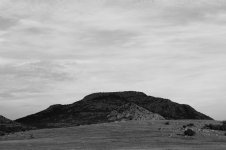
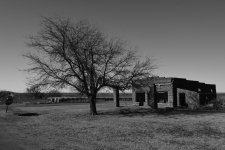
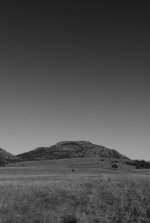
Exposure is pretty much the same , meaning you want the main subject of the shot exposed properly. Going back to the buffalo, shoot 2 stops down from your spot metering. Contrast becomes a bigger player in B&W. Generally speaking, landscapes are done with the sun closer to the horizon. This gives longer shadow that help create that contrast. Here is an example with the mountains in the background and the tree shadows in the foreground. Remember, photography is art, so you can bend the rules.
DSC_4738.jpg
 
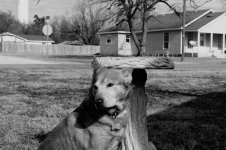
A test photo of my dog, Zeus:
_WWK0274.jpg
 
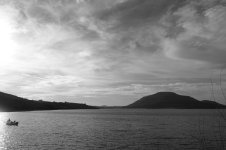
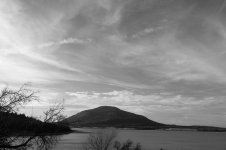
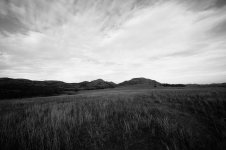
Just making sure that I could make a decent B&W from a color photo.
 
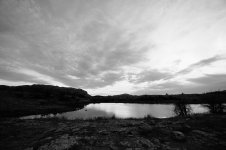
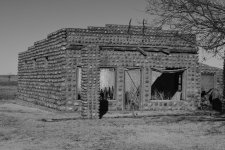
Some taken with my prime lens and some with my wide angle.
_WWK0284_01.jpg
_WWK0292.jpg
_WWK0300.jpg
_WWK0302.jpg
_WWK0315.jpg
 
Just making sure that I could make a decent B&W from a color photo.
Walter, I think in my opinion, is that one has to think in B&W from the outset. In my experience in B&W, I look for textures, patterns, shapes and landscapes that catch the eye. Exposure is something the "tool" (camera) can make. It's what the human eye sees. Once you get some images under your belt, you can play with exposures ie; bracketing, deliberate over/under exposure. On my old Olympus OM1-n I use either a yellow or red filter. Depending on the light I may even use a polarizer to darken the skies and whiten the clouds. B&W is more of an emotional way of interpreting a scene. Having used a DSLR for quite awhile, I am looking forward to slowing down and keeping it simple. A 50mm F1.4 normal lens and some Ilford B&W. Landscapes need something to draw the eye's attention. A focal point, a leading line etc. Just enjoy the whole process and slow down...
 

Attachments

  • Boston alley.JPG
    Boston alley.JPG
    2.1 MB · Views: 5
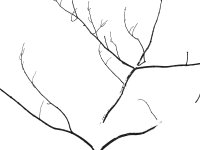
  • Tree banch in snow Jan 2024 (7).JPG
    Tree banch in snow Jan 2024 (7).JPG
    416.3 KB · Views: 5
That is exactly, what I am trying to do, teach myself to think in B&W. I'll go out again before too long and get another half dozen or so images that will hopefully translate into B&W decently.

I like the idea of using a polarizer to get better contrast between the clouds and the sky. I was going for that in a couple of my photos but struggled with it.
 
In my experience in B&W, I look for textures, patterns, shapes and landscapes that catch the eye. Exposure is something the "tool" (camera) can make. It's what the human eye sees.
My old friend Ansel would have agreed back then.;)
I gave up trying to take artistic B&W and color photos.
Everything I did turned out like bad snapshots.
 
I assume that you are using a DSLR? If so, check for a monotone setting. Try to avoid color and use the monotone (B&W) setting.
I figured that out while I was out yesterday. My camera is way more advanced than I am.
 
Too late.
Nah, you've got to get back on that horse, even if it's just with a cell phone at first. Look at my photography. It lacks a lot to be desired, but I'm sticking with it. My photos have gotten better over the past two years but I'm still not able to produce good ones consistently .
 
Hey guys... I seriously doubt that even Ansel Adams or any of the well known photo artists consistently produced quality images. They have probably tossed more than we know. I read a long time ago that the hardest thing to do is edit your photos. Be critical of every image and don't let emotion guide the editing process. I told my wife that at 77 I need to sit with all my little yellow boxes of slides, having a keep pile and a wastbasket and start editing. Also like I said earlier, with the spray and pray photo method used today, the best invention is the DELETE button.
 
Back
Top