• Hey Guest!
    British Car Forum has been supporting enthusiasts for over 25 years by providing a great place to share our love for British cars. You can support our efforts by upgrading your membership for less than the dues of most car clubs. There are some perks with a member upgrade!

    **Upgrade Now**
    (PS: Upgraded members don't see this banner, nor will you see the Google ads that appear on the site.)
Tips
Tips

atwhay ethay eckhay isyay isthay ?

NutmegCT

Great Pumpkin
Bronze
Offline
Was checking a Microsoft page for the update problem I was having. Here's one of the suggestions:

  1. Extract the cab from the msu via this PowerShell cmd (using the package for KB5000842 as an example): expand Windows10.0-KB5000842-x64.msu /f:Windows10.0-KB5000842-x64.cab <destination path>
  2. Extract the SSU from the previously extracted cab via this command line: expand Windows10.0-KB5000842-x64.cab /f:* <destination path>
  3. You will then have the SSU cab, in this example named SSU-19041.903-x64.cab. Slipstream this file into your offline image first, then the LCU.

Got that?

:wall:
 
This guy can help explain it....

 
I think that guy works for MicroSoft ...
 
It's a lot like a car service manual I think. The audience it is aimed at already know all the terms and general processes so all it does is outline the steps.
 
toilet.jpg

It's a lot like a car service manual I think. The audience it is aimed at already know all the terms and general processes so all it does is outline the steps.
:applause:
 
I've used slipstream once to load a driver into a WinXP install disc. It is a pretty cool program but I don't recall having to use the powershell or cmd. Extracting works easily with mouse clicks.
 
Pig Latin! :devilgrin: :cowboy2:
 
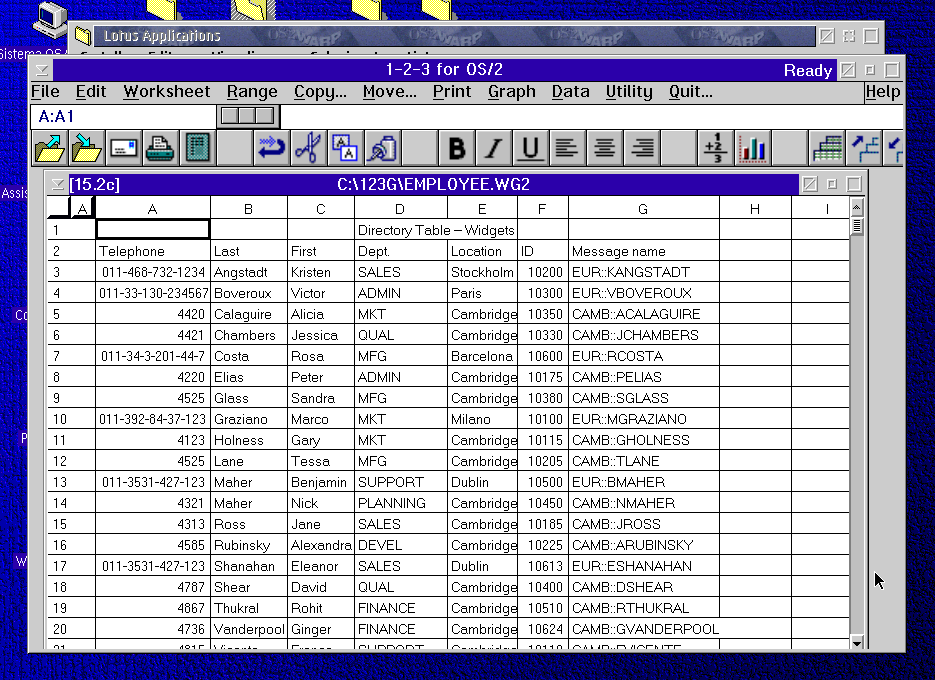
Back when the first of the 286 engined PC's came out and were being displayed and sold by the office supply chain stores, Microsoft had released the first iteration of Windows. We made a floppy disc with a .gif file and would load it onto all the display machines (clandestinely!) as the screen saver. Red background with the message: "Microsoft error 666: Insufficient money spent. Insert twenty dollar bill in Drive A!"

Needless to say, the store managers found out how to password protect the machines shortly thereafter. :devilish:
 
Doc - remember this fake "screensaver"?

lotus123w4.png


If you were playing Windows Solitaire and the boss came near, you could hit the "hot" key and the boss would think you were hard at work.
 
And Solitare... "Just doin' a mouse test, Boss."
 
Wow Tom, digging up OS/2. I dabbled a little with version 2.1. What a waste of time. They were not allowed to run any 32 bit Windows programs at the time. So even though OS/2 was fully 32 bit, you could only run 16 bit programs on it. IBM finally bought Lotus so they had 2 or 3 programs.
 
Greg - remember ... I started with COBOL, BASIC, FORTRAN and ALGOL.

Had to prime the CPU with kerosene before you turned the crank.

:jester:
 
I've an IBM O/S 2 version in the box, if anyone's interested... :rolleyes:
 
I looked for my OS/2 disc a couple days ago. It must have gone during a household purge years ago, along with a copy of Be.
 
I used to have an old Sinclair that was programmed in Basic.... I miss that little computer.
 
Lurking under the bed is a TI 99-4A in the box, had to use a portable Sony cassette player to store the BASIC proggies I'd written for it. And a small B&W "portable" TV. Whole thing was a PITA to set up. Made me appreciate the Trash-80's when they came out.
 
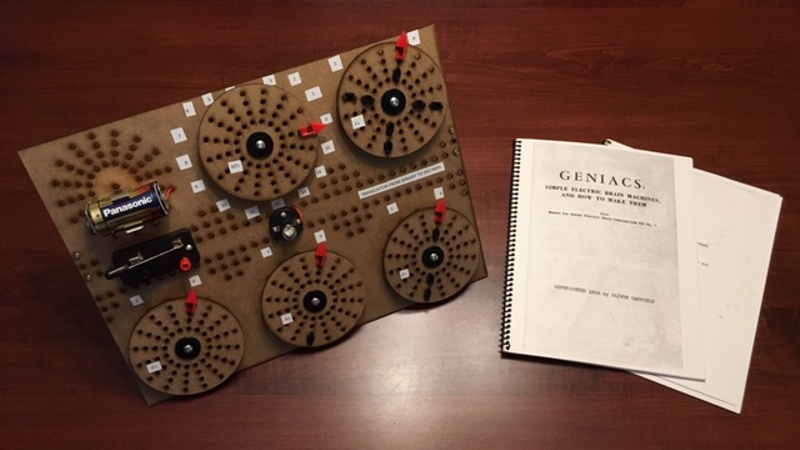
My first "computer" -

geniac_feat.jpg


And yes - I still have it. "The Wonder of the Age!"
 
Had to look that one up, Tom. I was still goosin' around with cat's whisker and crystal radios back then. Wasn't 'till the late '60's and while "auditing" a pal's college Fortran classes that I got an intro to "real computing."

Popular Electronics was subscribed to by Dad, but I don't recall the Geniacs. Came to appreciate the publication at the advent (and availability) of transistors. Dad had access to all the newest components, up to that point it had all been vacuum tubes. He built a transistor pre-amp for one of his stereo rigs and I was convinced the future was "here". Started messing with flip-flop circuitry, PNP-NPN, AND/NAND gates and Thyristors after that.

Heady days!
 
Back
Top