• Hey Guest!
    British Car Forum has been supporting enthusiasts for over 25 years by providing a great place to share our love for British cars. You can support our efforts by upgrading your membership for less than the dues of most car clubs. There are some perks with a member upgrade!

    **Upgrade Now**
    (PS: Upgraded members don't see this banner, nor will you see the Google ads that appear on the site.)
Tips
Tips

Attaining desired compression ratio

2wrench

Luke Skywalker
Country flag
Offline
Instead of performing calcs myself, I make reference
to: Richard Good TR6 Compression ratio chart.

First column of chart is headed: "Approximate thickness
of head in inches."

How is the thickness of the head measured? Seems it
would be from the bottom face that meets the block to
the top of the head where the head gasket lays.

I believe this to be such an important issue that I
check and double check so no mistakes are made.

Looking to achieve the desired 9.5:1 compression.
 
2wrench said:
How is the thickness of the head measured? Seems it
would be from the bottom face that meets the block to
the top of the head where the head gasket lays.

This is correct. Bottom of the head to the top where the gasket sits.
 
70herald said:
Then fill up a big syringe with a light weight oil and fill up the combustion chamber. you will know exactly how much to shave the head then.
Actually you won't ... all you'll know is how much volume you want to take out of the combustion chamber. But since the combustion chamber in the head is not the same diameter as the cylinder, and in fact isn't round at all, you still need to know it's area in order to calculate how much to shave to eliminate a certain amount of volume.

And call me a Luddite, but I'd much rather do the calculations myself than trust some anonymous web site to have them done correctly.
 
Crank being reduced 10-10. Pistons will be 20 over.
Greg from British Parts Northwest says if the head
is 88 millimeters thick, will yield just under the
9.5:1. Suggests not bad to go just a bit under
because of unleaded gas.

I am a parrot, here. No less of what all this means.
Measuring with fluids sounds beyond me, I must say.
I want to believe that head size works, because it is
easier....and it seems to be something the machine
shop understands; i.e., "shave the head to this size."

Greg did not pause nor hesitate one bit before giving
his answer on this issue after hearing from the
machine shop regarding crank reduction and piston size.

I am hoping this will work and simplify my life, here.
 
The problem with the head is you don't know what it is off of or maybe had been done once before.
 
TR3driver said:
70herald said:
Then fill up a big syringe with a light weight oil and fill up the combustion chamber. you will know exactly how much to shave the head then.
Actually you won't ... all you'll know is how much volume you want to take out of the combustion chamber. But since the combustion chamber in the head is not the same diameter as the cylinder, and in fact isn't round at all, you still need to know it's area in order to calculate how much to shave to eliminate a certain amount of volume.

And call me a Luddite, but I'd much rather do the calculations myself than trust some anonymous web site to have them done correctly.

If you know the desired cyl head volume, and fill it with the correct volume of liquid, you can then measure how much to remove. I agree about not blindly following whatever calculations the web site comes up with, however ,there are many different sites, and it is quite easy to double check.
In any case, since most of our engine heads have been worked on at least once in the last 30+ years, the first step to any modification of the head is to find out what the actual volume of the cylinder head is.
 
Hello 2wrench,

because the Triumph head has a machined combustion chamber, unless it has been 'modified, a head thickness of 3.400" should give 9.5:1. I don't know about American specification heads but all the U.K carburettor 2.5 litre engines had 3.475" thick heads.
Note that the pushrod lengths are also different, 8.1252 for a 3.300" head and 8.3125" for the 3.475" head. So if you do machine your head be prepared to change the pushrods.
Triumph part numbers, are 149513 for the former and 148916 for the latter.
Certainly, if you need to be sure then some measurement and mathematics is required. (Don't forget the volume of the cylinder from the piston top at TDC to the block deck)

Alec
 
Back to compression effects this time.

So, presume the desired compression ratio is attainted,
do I need, therefore, to do any upgrades to exhaust
to any extent, to acheive benefits?

Inotherwords, if we jump through hoops to machine 9.5:1,
etc., is it all for not if I leave standard
exhaust manifold with standard (stock) pipes and
muffler?
 
IMHO ,You wasted your time. You'll get some benefit but not all
 
Kastner's book shows a dyno plot for a TR6 engine at 10:1 compression with an S2 cam and stock exhaust giving 139 HP vs. 103 for the stock engine. Going to the extractor exhaust increased peak HP to 148. With the stock cam, 10:1 gave 113 HP with the stock exhaust. This was in December of 1968 so we can suppose that the stock exhaust was the 6 into 1 manifold rather than the later dual downpipe exhaust and the stock cam was the early one.

Bryan
 
Now come to think of it wasn't it Kasner who said that the stock extractor was as good as a header?
 
The stock exhaust should easily be able to handle the increase in compression. The compression mod (and cam if you choose to go that route) is just giving you a really nice platform to base other modifications on. You're basically spending very little over the cost of a normal rebuild. Now, down the road if you wanna go a little nuts with the car, it's all ready, if you choose to leave it alone, you've got a nice increase from the stock mill with no drive-ability problems.
 
Puts it into perspective.

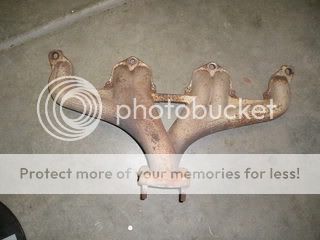
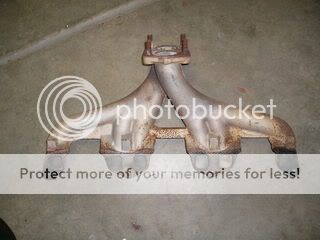
So here's photos of my exhuast manifold.


P1060001.jpg


AND

P1060002.jpg


I think you anticipate where I'll be as I grow into
my mechanic's costume.
 
Not a mechanic, of course, but looks like a six to two
as described above, therefore adequate, huh?

Sounds like if you got a six to one and that works
that the six to two sounds even more efficient at
handling the greater compression and slightly
hotter cam. Am I on, here?
 
When the time comes, I plan to do what you are planning, that is bump the compression ratio to 9.5 and insert a reasonable street cam and use the existing exhaust system on my '73.
 
Hello 2wrench,

the exhaust manifold can make a huge difference if you get the correct one.

Have a read of this link :-https://www.jagclub.ru/triumph_tun.html and then click on the 'links' at the end of the page and next click on 'other peoples copies' on the new link. There are some pictures of the best type of manifold for this engine.

Alec
 
Back
Top