• Hey Guest!
    British Car Forum has been supporting enthusiasts for over 25 years by providing a great place to share our love for British cars. You can support our efforts by upgrading your membership for less than the dues of most car clubs. There are some perks with a member upgrade!

    **Upgrade Now**
    (PS: Upgraded members don't see this banner, nor will you see the Google ads that appear on the site.)
Tips
Tips

American Racing Silverstones

MadRiver

Jedi Knight
Country flag
Offline
Howdy all:

With winter now firmly here (despite being 60 degrees in the Nation's Capital), I'm making out my hibernation punch list. I've had my original Silverstones sitting in the garage for over a year, and figure that I might get around to installing them.

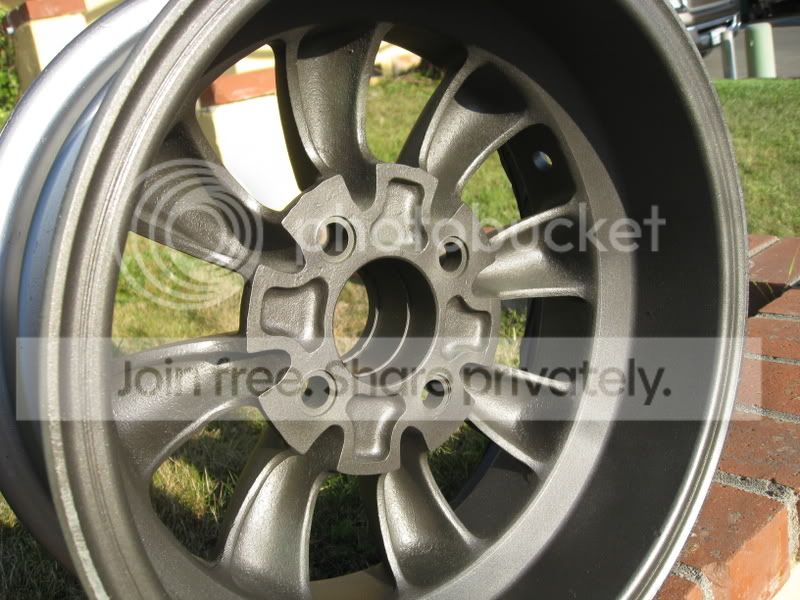
My question is this. Were Silverstones painted or bare metal or perhaps clearcoat? The prior owner painted them, but I'm not sure if this is right.

Thanks!

B.
 
Hi Bill,

I purchased a set in 1968 and they were not painted, but had a clear coating that American sold. The bare metal would oxidize and develop a white powder on it as well as gradually disintegrate and weaken the casting itself. Besides the cosmetic effect was rather unsightly. American may still sell the coating in spray cans.
 
I've told you this before, Bill.

I asked the vendor at VTR if he had those wheels dye-penetrant inspected before painting them. He didn't know what dye-penetrant inspection was, so I steered clear of those wheels.

I think you should strip the paint from the wheels using a chemical (non-mechanical) method and have the wheels dye-penetrant inspected before using them. A mechanical method of paint removal (abrasive blast, wheel, brush, etc.) can burnish the material over a crack and could prevent the dye from penetrating a crack.

I'm just looking out for you.
 
Twosheds said:
I've told you this before, Bill.

I asked the vendor at VTR if he had those wheels dye-penetrant inspected before painting them. He didn't know what dye-penetrant inspection was, so I steered clear of those wheels.

I think you should strip the paint from the wheels using a chemical (non-mechanical) method and have the wheels dye-penetrant inspected before using them. A mechanical method of paint removal (abrasive blast, wheel, brush, etc.) can burnish the material over a crack and could prevent the dye from penetrating a crack.

I'm just looking out for you.

Hi John -- now that you mention it, you did in fact tell me that before. Wow, so much for medium-term memory. *blush*

I knew there was a reason I hadn't installed them yet. Guess I'm starting to get old!

Thanks guys!
 
Twosheds-I agree, if the rims are prone to cracking getting them dye-penetrant (PT) inspected is a good idea and it is better to check and not have an issue with cracking then to not check and have a rim shear off. The hard part is if they have a rough casting or smooth. If it is rough the dye for solvent removable....spray cans is hard to remove and over cleaning might remove more excess dye then you want to. If you do not remove enough of the excess dye then you can have false indications. If they are smooth then over removal of dye could be an issue as well! If you are going to paint them or even use a clear coat and plan on getting them PT inspected you need to make sure they are cleaned extremely well. The dye does attract moisture and will bleed out of surface openings and through paint. I am in the DC area and have been doing NDT (NonDestructive Testing)for a living almost 14 years now and check all kind of parts; flywheels, rims, hubs, roll cage welds, cranks, blocks, etc. Better safe then sorry!
Twosheds-You at Peach Bottom?
 
Good point, Wedge. The Silverstones I have seen are indeed rough (porous, even?) which does not make for good dye-penetrant inspection. I have taught dye-penetrant inspection to a Level 1 (basic idea) level. I have seen entire castings turn red if they are rough because the dye would not remove easily!

Maybe eddy current would be better. This is used alot on aircraft magnesium wheels.

I am near Myersville, Maryland. The Soggy Bottom is my yard where the TR3 Lab is. It is soggy since that three-inch rain we had!
 
Twosheds-
I think if you were to do any testing it would be a water washable flourescent PT this way you see the smallest of cracks and you are sure to get all the dyes out of the part. In the end if it was me I would get the rims checked out somehow if they have a rep of cracking. Good luck guys!
 
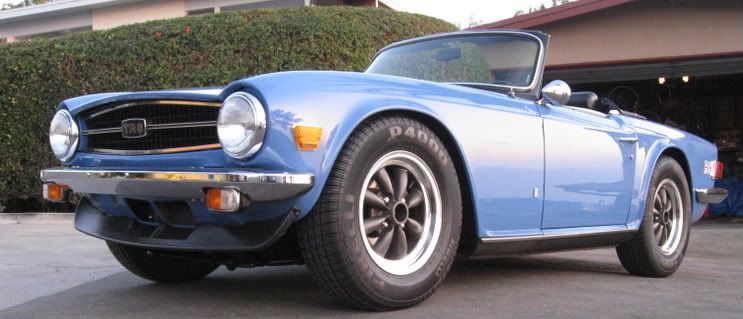
I believe I have responded to this in the past but that's OK. You might be able to find that thread in case I forget something important. <span style="text-decoration: underline"><span style="font-weight: bold">"Real" AR Silverstones were never sold painted.</span></span> There were a few knock-offs produced and they may have been painted. The original wheels had polished rims which made a very nice contrast against the un-polished spokes. The spokes take on a very nice greyish patina after exposure to moisture. The rims will also eventually turn grey if you don's keep after them or clear coat them. As you may be aware, I have been running my set of ARS's since 1985 and except for the incident with the bad tire last year, I have never had a problem. If you need to remove paint be careful to use a gentle plastic media at a medium pressure, say 50 - 60 psi. Magnesium corodes in the presence of moisture. The corrosion can be bad and open up fissures in the material leading to failure. The place that I have seen the worst corrosion in an ARS is the inside of the wheel (the area that holds the air). This is due to the fact that the air that we use to fill our tires is generally wet. What I did and I got this suggestion from an old LBC racer, was to paint the entire inside of the wheel with a good epoxy paint. This fills the pores and delays corrosion. Another benefit of painting the inside of the wheels - if you go tubeless as I did, you wont have to top-off the air as often. These really go flat fast without tubes (if not painted). After you are happy with the "look" of the wheels you can clear coat them. Another thing that I can not stress enough is proper balancing. The standard spin balancing equipment may not be sufficient. Go to someone with the "Road Force" machine. They can also check the run out of the wheels. What I did was to bring the tires to them unmounted. First they checked run-out of the wheels - it was OK. Then they checked the balance of the wheels without tires and marked the place that would have required a balance weight. Then they repeated this operation with the tires and they were able to move the tires relative to the wheels to counteract most of the unbalance and made up the difference with very little weight - just a few ounces! In other words, they were able to use the heavier part of the tires to balance the wheels. One reason why I had this problem was that my BFG Redline are very low production - almost handmade and lay-up variations happen. I had one tire that was way off - and this had to be replaced. Your tires may be more uniform. But IMHO, if you don't go through these extra pains you may end up with a resonant vibration like I did. good luck

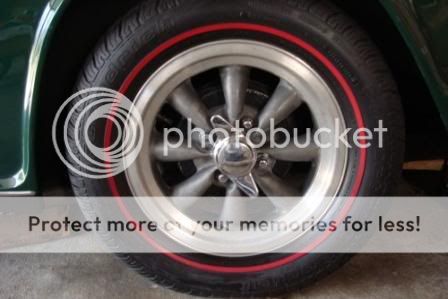
DSC01843-sml.jpg

<span style="font-weight: bold">My ARS's - on the TR250 since 1985 with authentic Nok-Offs </span>

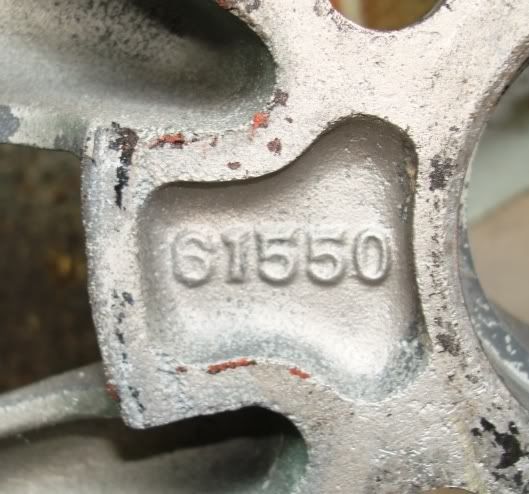
arw-11.jpg

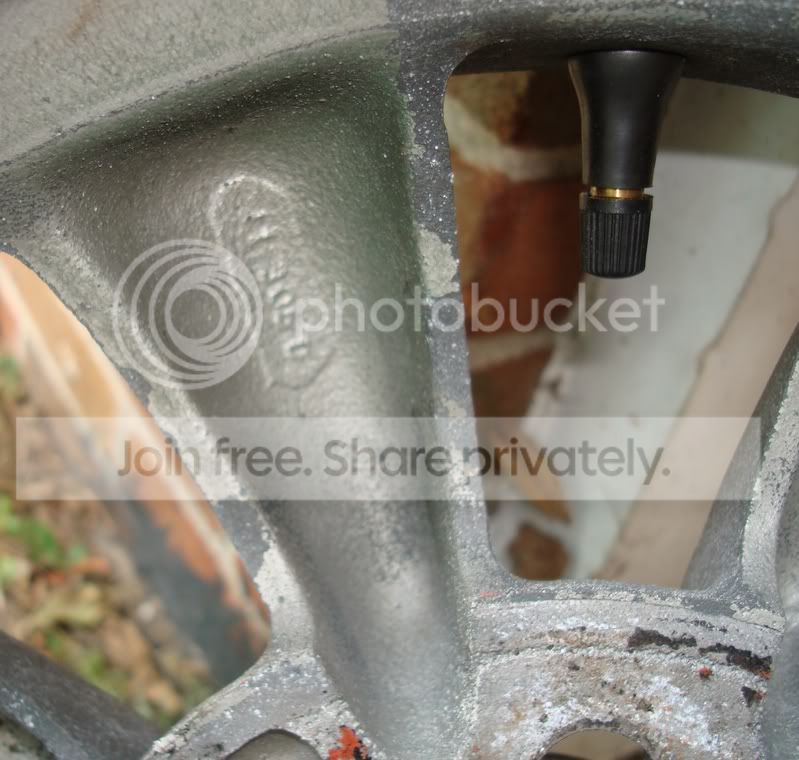
<span style="font-weight: bold">Real ARS's have a casting number - 61550</span>
 
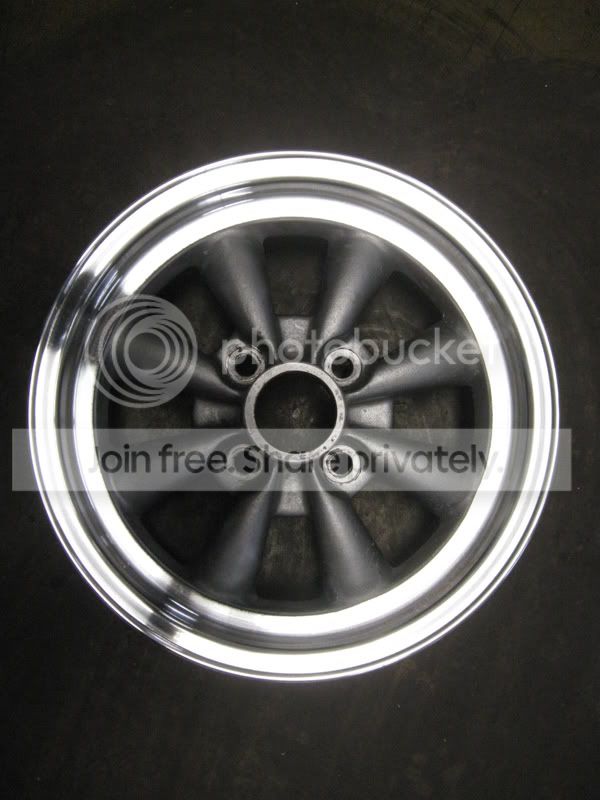
Part one: have wheels inspected, cleaned, trued, rim machine polished:
Copy2ofIMG_0313.jpg

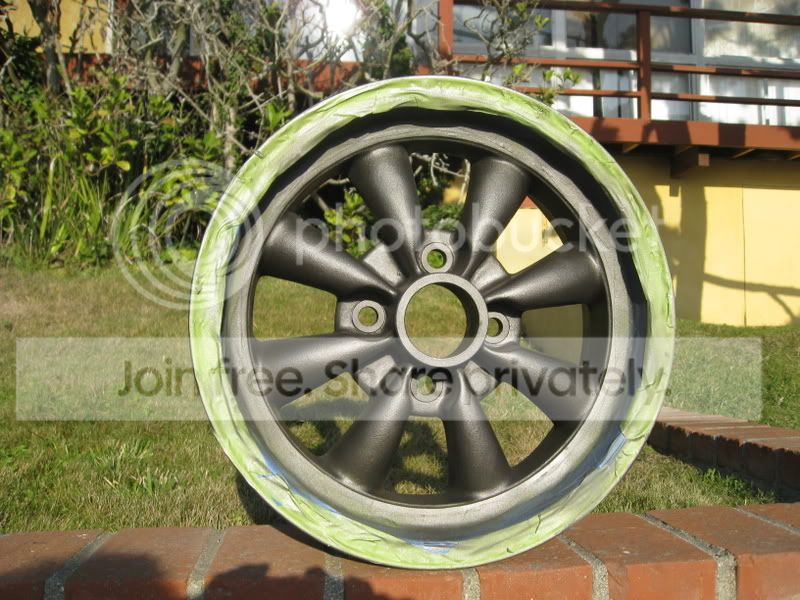
Part two: I could not get the "natural" look of the "mag" to be stain free, so I painted them:
IMG_0502.jpg
IMG_0504.jpg

Then, after a lot of work and a lot of polishing, put them on the car:
TRNEWMAGS-1.jpg


RMS TR6
 
Richards ARE's do not have a part number on the inside. Does that mean it was sold by ARE and not installed as a factory or dealer option? There is a set of 13 inch spit silverstones on ebay right now with the original spinners!search magnesium wheels. These are the best looking wheels ever made. Also the aluminium version silverstones have a slightly different spoke design. The area around the lugnut is not as rounded. I like the look of the magnesium casting but the ease of maintainance of the aluminium ones. NICE wheels!!!!bob
 
Here is a pic of my old aluminium wheels. They were all rh thread and no lettering on the spinners. bob
 

Attachments

  • 14597.jpg
    14597.jpg
    29.2 KB · Views: 348
The original sales literature for the GT6 states that the racing wheels (AR's) were available in aluminum or magnesium. I don't know if the TR250 wheels were available in both or just one or the other.

I certainly wouldn't put a 40-year-old magnesium wheel on the ground except for sitting stock still at a car show. If nothing else, remember XJ-13. I don't know if the aluminum versions were as prone to deterioration.

Every now & then I see a set of the magnesium wheels come up on ebay, & just hope that the buyer knows better than to drive on them.
 
I've put over 40k miles over 25 years on my magnesium ARS wheels. Maybe I'm lucky, but I see no unusual risk here. Of course I drive the car in a spirited manner but have never raced or driven it in an abusive manner. I believe there is much greater risk in driving some of our vintage sportscars with old tires. I can't tell you how many TR's and MG's I see with original Michelin X tires.

Concerning wheels without the casting numbers, there is anecdotal evidence that knock-offs were produced. So, the only way to be absolutely sure that you have the real thing is the evidence from the original molds - which would be very difficult to counterfeit.

Magnesium is over 50 percent lighter at 1.738g/cmÂł vs 2.7g/cmÂł for aluminium. Magnesium also has some advantages in casting and machining. BUT, aluminium corrodes badly in the presence of water. So, I guess if you were a racer trying to shed every last ounce, the mags were your choice. AND these were fairly cheap back in the 60's, about $45 each.

Here's another photo I found with additional markings.

arw-12.jpg
 
Interesting. Are you sure that the aluminum and magnesium ARS wheels were cast in different molds. Do your alum. wheels have any casting ID numbers?
 
Richards: that's a beautiful job

what is a rim machine?

I prefer the contrast that you get between the polished magnesium rim and the 'greyish' spokes!
 
angelfj said:
Richards: that's a beautiful job

what is a rim machine?

I prefer the contrast that you get between the polished magnesium rim and the 'greyish' spokes!

Frank, I think that he is saying that he had the rims polished by a machine, not that he had the wheels polished by a rim machine.

Magnesium is very susceptible to corrosion. When I taught Corrosion Control, I would make the students put different materials used in aircraft constuction into corrosive solutions and record the results. The favorite was magnesium in runway de-icer. The magnesium reacted like an Alka-Seltzer in water. Know what aircraft wheels are made of? Magnesium!
 
Hey John - How ya doing man? Ready for Christmas?

tell me because I know that you know the answer. why is magnesium so sensitive to water. Does it have to do with the electrical (galvanic) properties? Alum doesn't seem to mind water too much.

Frank
 
Back
Top