I'm doing a pos-neg conversion and also an alternator conversion on my 4A. I've read up on it, but I have some questions about the procedure. Will the GM unit bolt in with out modifications? Also what do I do about pulleys? Forgive the stupid questions, but any help is appreciated. Thanks.


-
 Hey Guest!
British Car Forum has been supporting enthusiasts for over 25 years by providing a great place to share our love for British cars. You can support our efforts by upgrading your membership for less than the dues of most car clubs. There are some perks with a member upgrade!**Upgrade Now**
(PS: Upgraded members don't see this banner, nor will you see the Google ads that appear on the site.)
You are using an out of date browser. It may not display this or other websites correctly.
You should upgrade or use an alternative browser.
You should upgrade or use an alternative browser.
Alternator Conversion ??'s
- Thread starter cozmo4A
- Start date

TR3driver
Great Pumpkin - R.I.P
Offline
I don't know of any alternator that will bolt to a TR2-4 motor without some sort of modification or an extra bracket. However, it shouldn't be too hard to create something that will work.
Last time I did it on my TR3A, I took a hacksaw to the alternator case, then cut a spacer (from iron water pipe) to fit inside the original generator bracket so I could run a single long bolt through the alternator, engine front plate, spacer and generator bracket. Worked quite well, although it was a bit of work to change belts (the long bolt had to be taken loose to get enough clearance for the belt change).
For the pulleys, you will need to either buy the narrow belt conversion, or find a pulley that will take the wide belt and fit your alternator, or have your old pulley machined to fit the alternator. The last option is probably the least satisfactory (so of course that is what I did )
)
Last time I did it on my TR3A, I took a hacksaw to the alternator case, then cut a spacer (from iron water pipe) to fit inside the original generator bracket so I could run a single long bolt through the alternator, engine front plate, spacer and generator bracket. Worked quite well, although it was a bit of work to change belts (the long bolt had to be taken loose to get enough clearance for the belt change).
For the pulleys, you will need to either buy the narrow belt conversion, or find a pulley that will take the wide belt and fit your alternator, or have your old pulley machined to fit the alternator. The last option is probably the least satisfactory (so of course that is what I did
)Rrbbeerrttoo
Banned
Offline
I did this conversion in my 66' tr4a following most advise from this forum.
1. Used the GM Delco Alt 7127, model 10 SI. , but I used the same bracket. Caution, its body is very large.
2. As mentioned above, alt. boss needs cutting off about 1/2 in.to keep in line with original belt centerline.
3. Remounted original wide pulley on alt. after reboring, machine shop work. Used it with belt TR 28400.
4. Simple minor modification to the mounting bolts/spacers are necessary
5. All electrical changes were done within the surplus voltage reg. box.
Be carefull, In my case , using a wide pulley/belt maybe was a bad idea. Lots of work just to install the belt. If it ever breaks on the road, I have problems. Some details, had to unmount the steering gear box/tie rods,etc, also moved the radiator...just to slide belt into the pulley area.
All other advise in this forum to jack the engine or elongate engine mounting bolts to allow the wide belt to pass thru was not practical, in my case. I suggest first deciding which belt to use because the wide belt was maybe a bad idea. Although everything works just perfect!. Th
The final step in mounting this wide belt, I unmounted the new alt. so I slide the belt onto the pulley..then remounted the alt. Belt was just a bit short. The alt adjustment is adequate although I think the alt. sits too close to the hot engine block...so I shielded it!
I probably did not cover everything so keep reading FOR BETTER ideas.
Robert
66' Tr4a irs
CTC 53788 L
1. Used the GM Delco Alt 7127, model 10 SI. , but I used the same bracket. Caution, its body is very large.
2. As mentioned above, alt. boss needs cutting off about 1/2 in.to keep in line with original belt centerline.
3. Remounted original wide pulley on alt. after reboring, machine shop work. Used it with belt TR 28400.
4. Simple minor modification to the mounting bolts/spacers are necessary
5. All electrical changes were done within the surplus voltage reg. box.
Be carefull, In my case , using a wide pulley/belt maybe was a bad idea. Lots of work just to install the belt. If it ever breaks on the road, I have problems. Some details, had to unmount the steering gear box/tie rods,etc, also moved the radiator...just to slide belt into the pulley area.
All other advise in this forum to jack the engine or elongate engine mounting bolts to allow the wide belt to pass thru was not practical, in my case. I suggest first deciding which belt to use because the wide belt was maybe a bad idea. Although everything works just perfect!. Th
The final step in mounting this wide belt, I unmounted the new alt. so I slide the belt onto the pulley..then remounted the alt. Belt was just a bit short. The alt adjustment is adequate although I think the alt. sits too close to the hot engine block...so I shielded it!
I probably did not cover everything so keep reading FOR BETTER ideas.
Robert
66' Tr4a irs
CTC 53788 L

martx-5
Yoda
Offline
If you need a wide pulley for the 7127 or any alternator that has a 17mm shaft (most do), these guys have them. You want part number A203.
We bushed the pulley to fit the mitsubishi alternator I am using currently. My original alternator conversion was a GM, which was really big, and I had to modify the mounts for it and could never get the belt to fit the way I wanted, so when I went to a smaller alternator I was looking for a solution that would let me fit using a close to the original generator mount and geometry as I could get. We used as much of the original brackets as we could, but still had to do some modifications. The good news is the mitsu fits nicely in there and gives me more room for adjustment. It has an internal regulator so the control box is eliminated.
But somebody offers a kit now, don't they?
Dan B
So. Charleston, WV
66 TR4AIRS EFI
80 TR7 DHC
But somebody offers a kit now, don't they?
Dan B
So. Charleston, WV
66 TR4AIRS EFI
80 TR7 DHC

M_Pied_Lourd
Darth Vader
Offline
I bought one from Art Lipp. I haven't installed it but doesn't look like much of a modification. I think that I need to flatten out the stock upper mount and grind a tiny little bit off the shape. Comes with a gutted/rewired control box so it kinda looks stock on the firewall.
Oh, and it uses the stock wide belt...
Cheers,
M. Pied Lourd
Oh, and it uses the stock wide belt...
Cheers,
M. Pied Lourd

Got_All_4
Luke Skywalker
Offline
Just depends on how badly you want the conversion. My advice is do it now. I too rebuilt my generator thinking I'll do the alt conversion in the winter. That was 8+ years ago and the generator is still in the car and not one part collected for the conversion. The good news is that it is running perfectly and I decided to keep it in the period.
Rrbbeerrttoo
Banned
Offline
The alternator does have a built-in regulator but one still needs to shorten/sodder required wire changes , someplace. This is done at the original voltage regulator...with either wires at its terminal block or internally. When alternator conversion is completed , the regulator will look as when it left the factory.
TR3driver
Great Pumpkin - R.I.P
Offline
I originally used the original control box as a tie point, to join the original NW and NU wires together as well as the new heavy wire from the alternator. Worked fine for several years, but one of the terminals on the control box eventually opened up; probably because it didn't like the increased current. I won't be doing that again. Instead, I'll probably go with something like this:

https://www.madelectrical.com/catalog/cn-1.shtml
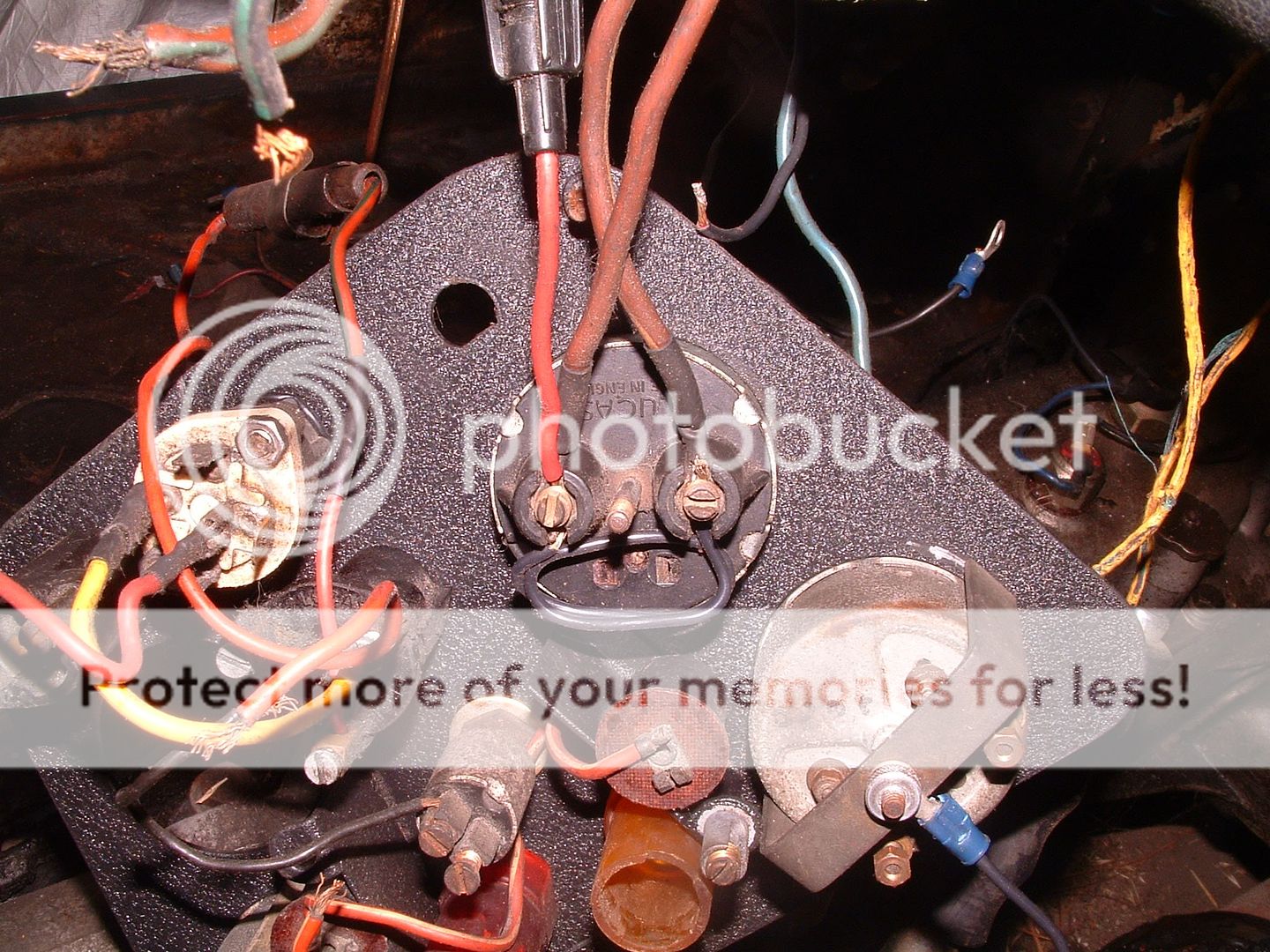
FWIW, I also ignored the conventional advice, and hooked the alternator up so the original ammeter still indicated charge or discharge. To avoid having the ammeter hit the peg at every start, I added a shunt across the back of the ammeter, to effectively convert it to 60-0-60 instead of the indicated 30-0-30. I was very happy with that setup, and will definitely do it again.
https://www.madelectrical.com/catalog/cn-1.shtml
FWIW, I also ignored the conventional advice, and hooked the alternator up so the original ammeter still indicated charge or discharge. To avoid having the ammeter hit the peg at every start, I added a shunt across the back of the ammeter, to effectively convert it to 60-0-60 instead of the indicated 30-0-30. I was very happy with that setup, and will definitely do it again.
6969ronin6969
Senior Member
Offline
Randall,
Could you sketch up some sort of rough schematic that shows how your wiring is laid out, with regards to the alternator and ammeter I mean.
Thanks,
Eric
Could you sketch up some sort of rough schematic that shows how your wiring is laid out, with regards to the alternator and ammeter I mean.
Thanks,
Eric
TR3driver
Great Pumpkin - R.I.P
Offline
Well, it isn't any more. The alternator was on my TR3A that got totaled a few years back :frown: The current TR3 still has what appears to be it's original Lucas generator from 1956 so I've been using that for now.
I don't have a diagram, but the description is pretty simple. I brought the output from the alternator out to a new tie point (really just a 1/4" bolt hanging from the wires), where all the new "high current" devices tied in (MSD ignition, electric radiator fan, high power stereo, headlight relay for 90/100 watt headlights). Also a heavy wire from the new tie point up to the original control box location, where it was joined with the original NW and NU wires (from terminals A and A1 of the original control box). I used 8 AWG wire as I had a bunch of it lying around, but 10 AWG would do fine.
The warning lamp output from the alternator/regulator joined to the original yellow wire in the harness (from the D terminal of the old control box). For my alternator (an old externally regulated Motorcraft), I needed to add a resistor across the dash lamp for it to work properly, but newer units may not need that. (The symptom without the resistor was that I would have to rev the engine up after every start, to get the alternator to begin working. The resistor also ensured that the alternator would continue to work, even if the dash lamp burned out.)
Otherwise, the only other change was the shunt across the ammeter. Originally, I used multiple strands of steel "handy wire" (aka "baling wire") and just added strands until I got about the reading I wanted. But during a later cleanup, I measured the resistance of the original ammeter (.012 ohms), and calculated that 3.5" of 16 AWG copper wire would make a 50% shunt (so half the current goes through the shunt and half through the ammeter, making it read 60 amps full scale instead of 30).
The original harness wires for the charging circuit were actually larger diameter than those on my Chevy with it's factory-optional 85 amp alternator, so I wasn't worried about the increased current through them.
I don't have a diagram, but the description is pretty simple. I brought the output from the alternator out to a new tie point (really just a 1/4" bolt hanging from the wires), where all the new "high current" devices tied in (MSD ignition, electric radiator fan, high power stereo, headlight relay for 90/100 watt headlights). Also a heavy wire from the new tie point up to the original control box location, where it was joined with the original NW and NU wires (from terminals A and A1 of the original control box). I used 8 AWG wire as I had a bunch of it lying around, but 10 AWG would do fine.
The warning lamp output from the alternator/regulator joined to the original yellow wire in the harness (from the D terminal of the old control box). For my alternator (an old externally regulated Motorcraft), I needed to add a resistor across the dash lamp for it to work properly, but newer units may not need that. (The symptom without the resistor was that I would have to rev the engine up after every start, to get the alternator to begin working. The resistor also ensured that the alternator would continue to work, even if the dash lamp burned out.)
Otherwise, the only other change was the shunt across the ammeter. Originally, I used multiple strands of steel "handy wire" (aka "baling wire") and just added strands until I got about the reading I wanted. But during a later cleanup, I measured the resistance of the original ammeter (.012 ohms), and calculated that 3.5" of 16 AWG copper wire would make a 50% shunt (so half the current goes through the shunt and half through the ammeter, making it read 60 amps full scale instead of 30).
The original harness wires for the charging circuit were actually larger diameter than those on my Chevy with it's factory-optional 85 amp alternator, so I wasn't worried about the increased current through them.

Foura
Jedi Hopeful
Offline
We were coming home from a TR club Xmas in July (when it is cold here in Oz) and needed wipers, lights, heater fan and radio to listen to my football team winning. With the generator, we were showing -15 amps! :frown: So off with the heater fan and the radio. No good!
I ordered an alternator kit from Cambridge Motorsport in the UK. I already had the thin belt conversion with the MGB crank damper. The alternator is a Nippon Denso which I think is fitted to Kubota garden tractors. It is 45 amps and weighs 2.5 kg. Cambridge supplies a machined bolt which fits the standard mount. A small amount of bending was needed with the standard belt adjuster. Very easy to fit and a quick visit to the auto electrician fixed the wiring. The car had a 60 amp ammeter when I bought it (ex USA LHD) so no change needed there. We can now run the lights, heater, wipers and Retrosound radio with no discharge. Highly recommended!
I ordered an alternator kit from Cambridge Motorsport in the UK. I already had the thin belt conversion with the MGB crank damper. The alternator is a Nippon Denso which I think is fitted to Kubota garden tractors. It is 45 amps and weighs 2.5 kg. Cambridge supplies a machined bolt which fits the standard mount. A small amount of bending was needed with the standard belt adjuster. Very easy to fit and a quick visit to the auto electrician fixed the wiring. The car had a 60 amp ammeter when I bought it (ex USA LHD) so no change needed there. We can now run the lights, heater, wipers and Retrosound radio with no discharge. Highly recommended!
Rrbbeerrttoo
Banned
Offline
I do not have any extra electrical loads with the new Delco alternator except the radiator fan but my ammeter never comes close to pegging the needle on start...not with the fan on either.

Simon TR4a
Jedi Knight
Offline
There is a specialist in British electrics near where I live who supplies alternators built inside the case of the original generator, and an empty box to replace the voltage regulator. Only 45amps or so but still a lot more than stock.
I have been very tempted, but my generator seems to be doing fine so far as the electric fan is hardly ever needed.
I have been very tempted, but my generator seems to be doing fine so far as the electric fan is hardly ever needed.
