

 Hey Guest!

sd80mac7204
Jedi Warrior
Offline
...and set this car on fire.
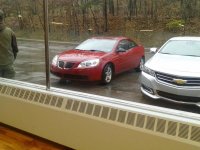
My "new" car is a 2006 Pontiac G6. The engine light was on when I got it and a quick code check indicated a "major evap leak". I replaced the broken fuel cap and reset the code. As time went on the car would enter into a non-start condition if I stopped somewhere for a few minutes and tried to leave again (ie:getting gas) and on occasion would stall at stop signs but it did not trigger the engine light. A week after I replaced the fuel cap, the light came back on. Codes said "major evap leak", "lean bank one", and "lean bank two".
As I don't have the equipment to test evap leaks in depth, I took the car to the local Chevy dealer of whom I'm pretty good family friends with the owners. Evap leak was traced to the purge solenoid on the back of the engine, easy fix. When they reset the codes, the lean codes didn't come back.
I ran the car 2 days and the stalling and non-start came back as well as the engine light....."lean bank one""lean bank two"... ugh... Back to the shop. They cleaned the throttle body and reflashed the computer. The next day... non-start and engine light again.
This time it was determined that the fuel pump was getting weak and wasn't keeping up with engine demand when under acceleration. So the car went in for surgery again on Thursday night and was ready for pick up last night. I paid for the car then took off for home, followed by my ride to the shop. 2 miles later... SURGE...hiccup... Engine light!...stall...
Once I got the car started again, I turned it back around and returned it to the shop and launched the keys through the mail slot.
When I paid the bill, the shop owner said that if the pump didn't fix the problem "the next repair will be on" him. I told him that if I had to bring the car back to him again that a new Impala better be on him.
I'm really frustrated at this point, but at least I still have my Impala to drive. Even though it needs some transmission work and struts and has no heat.
ANY THOUGHTS????
My "new" car is a 2006 Pontiac G6. The engine light was on when I got it and a quick code check indicated a "major evap leak". I replaced the broken fuel cap and reset the code. As time went on the car would enter into a non-start condition if I stopped somewhere for a few minutes and tried to leave again (ie:getting gas) and on occasion would stall at stop signs but it did not trigger the engine light. A week after I replaced the fuel cap, the light came back on. Codes said "major evap leak", "lean bank one", and "lean bank two".
As I don't have the equipment to test evap leaks in depth, I took the car to the local Chevy dealer of whom I'm pretty good family friends with the owners. Evap leak was traced to the purge solenoid on the back of the engine, easy fix. When they reset the codes, the lean codes didn't come back.
I ran the car 2 days and the stalling and non-start came back as well as the engine light....."lean bank one""lean bank two"... ugh... Back to the shop. They cleaned the throttle body and reflashed the computer. The next day... non-start and engine light again.
This time it was determined that the fuel pump was getting weak and wasn't keeping up with engine demand when under acceleration. So the car went in for surgery again on Thursday night and was ready for pick up last night. I paid for the car then took off for home, followed by my ride to the shop. 2 miles later... SURGE...hiccup... Engine light!...stall...
Once I got the car started again, I turned it back around and returned it to the shop and launched the keys through the mail slot.
When I paid the bill, the shop owner said that if the pump didn't fix the problem "the next repair will be on" him. I told him that if I had to bring the car back to him again that a new Impala better be on him.
I'm really frustrated at this point, but at least I still have my Impala to drive. Even though it needs some transmission work and struts and has no heat.
ANY THOUGHTS????


 PJ
PJ